








Q1: What Are the 10 Best HR Software for Mid-Market Companies in India (200, 1,000 Employees) in 2026?
Choosing an HCM for a 200 to 1,000 employee Indian business is a high-stakes decision that touches payroll accuracy, statutory exposure under the new Labour Codes, field-force visibility, and the CHRO’s ability to defend HR-tech spend to the board. For this guide, we evaluated 10 India-relevant HR software platforms against operator-grade criteria rather than brand visibility, with the HR Ops Lead and Payroll Manager as the primary operator-readers running the system daily, and the CHRO, CFO, and IT Director as the buying-committee shadow readers approving the final call.
Our Evaluation Criteria
Each vendor was scored against decision-grade, operator-relevant metrics, not generic feature checklists:
- India Compliance and Labour Codes 2026 Readiness 📊: Native multi-state PF, ESI, PT, LWF handling, FBP declarations, CTC-revision arrears, new wage-code two-day FFS, and gig or platform-worker compliance.
- Stack Consolidation and Workflow Breadth ⚙️: Modules native to one tenant versus bolted-on add-ons, count of pre-built hire-to-retire workflows, and front-end configurability.
- Time to Value and Implementation Economics ⏰: Go-live timeline, day-one-of-purchase billing vs go-live billing, prior-HR SPOC vs ticket queue, and data migration model.
- Support Model and G2 Satisfaction ⭐: Phone + email + SPOC vs email-only, G2 ease-of-admin rank, documented NPS, and resolution TAT during payroll cycles.
- Pricing Transparency 💰: Flat PEPM, per-entity surcharges, lock-in length, and published PEPM figures versus quote-only opacity.
- AI and ROI Instrumentation 🤖: Native AI modules (resume relevancy, receipt parser, AI agent), and whether an inbuilt ROI calculator quantifies lifetime hours saved in rupee terms.
Who This Guide Is For
- CHROs and HR Heads consolidating fragmented hire-to-retire stacks across Keka, Darwinbox, greytHR, or Excel + biometric + outsourced payroll.
- Payroll Managers running multi-entity, India-compliant monthly cycles and firefighting CTC-revision arrears at month-end.
- CFOs validating HR-tech ROI and flat PEPM commercials against day-one-billing incumbents.
- IT Directors and Operational HR teams evaluating mobile-first, SSO-ready, RBAC-secured HCMs versus legacy portals and over-engineered global suites.
The 10 Best HR Software for Mid-Market Companies in India (200, 1,000 Employees) in 2026
- HROne ⭐⭐⭐⭐⭐
- Darwinbox ⭐⭐⭐⭐
- PeopleStrong ⭐⭐⭐
- Keka ⭐⭐⭐
- greytHR ⭐⭐⭐
- Zoho People ⭐⭐⭐
- SAP SuccessFactors ⭐⭐⭐
- ZingHR ⭐⭐⭐
- BambooHR ⭐⭐
- Beehive HRMS ⭐⭐
Comparison Snapshot
| Provider (⭐ Rating) | Best For | Standout Strength | Known Limitation | Go-Live Timeline | Support Model | Pricing Model |
|---|---|---|---|---|---|---|
| HROne ⭐⭐⭐⭐⭐ | HR Ops leads replacing a 3 to 4-tool stack across multi-entity India | Super Inbox + 127 pre-built workflows + inbuilt ROI Dashboard on one tenant | Mobile app lacks admin-tab access; some reports need extra configuration | 30 to 60 days (MR DIY India: 30 days) | Phone + email + dedicated prior-HR SPOC (9.8 NPS) | Flat PEPM, billing starts post go-live, no lock-in |
| Darwinbox ⭐⭐⭐⭐ | Enterprise HR teams at 2,000+ employees needing broad module breadth | Polished mobile UX and deep configurable workflows | Day-one-of-purchase billing during multi-month implementation, multi-tab navigation | 4 to 9 months | Partner-delivered + ticket | Quote-based PEPM with multi-year lock-in |
| PeopleStrong ⭐⭐⭐ | Indian enterprises wanting talent + core HR on mobile | Mobile-first employee experience with reimbursement tracking | Implementation and support variability flagged on G2 | 3 to 6 months | Email + partner | Quote-based |
| Keka ⭐⭐⭐ | Sub-500 SMB HR teams prioritising surface UX | Clean, intuitive employee interface | Email-threads-only support and painful implementation or migration | 2 to 4 months | Email + chat only | Tiered PEPM |
| greytHR ⭐⭐⭐ | SMB payroll-first teams under 300 employees | Reliable SMB payroll and statutory filings | Rigid configuration and limited workflows at multi-entity scale | 1 to 3 months | Ticket-only | Per-user per-month |
| Zoho People ⭐⭐⭐ | Single-entity startups already on Zoho One | Breadth of apps and low entry price | Weak multi-legal-entity OU, shallow India payroll depth | 2 to 4 months | Email + community | Tiered PEPM |
| SAP SuccessFactors ⭐⭐⭐ | 5,000+ employee MNCs on SAP stack | Global compliance + SAP ERP integration | Over-engineered for Indian mid-market, costly change requests | 6 to 12 months | Partner-delivered | Quote-based, long contracts |
| ZingHR ⭐⭐⭐ | Manufacturing and blue-collar workforces | Shift and contract-labour coverage | Outdated UI and unstable mobile app per G2 | 4 to 6 months | Email + ticket | Quote-based |
| BambooHR ⭐⭐ | US subsidiaries of Indian firms | Simple core HR and time-off flows | No native India payroll or statutory engine | 1 to 2 months | Email + chat | Tiered PUPM |
| Beehive HRMS ⭐⭐ | Small Indian mid-market entrants on a budget | Affordable Indian payroll baseline | Narrower workflow library and thinner AI roadmap | 2 to 3 months | Quote-based |
1. HROne, The Full Hire-to-Retire Operating System Built for Indian Mid-Market Reality
Overview
HROne is a cloud-native, mobile-first HCM built in India for 100 to 5,000 employee organisations, with 1,500+ brands live including MR DIY India, Asia Healthcare Holdings, Haier, and Amway. The platform is ranked #3 Easiest-to-Use Core HR on G2 and carries a documented 9.8 NPS on its dedicated prior-HR SPOC support model. It is primarily used by HR Ops leads drowning in tab fatigue across three to four disconnected softwares that cannot talk to each other, and by CHROs who need a board-ready ROI number within one quarter of go-live.
Core Services
- Super Inbox: aggregates every pending approval, request, and exception across all modules into a Gmail-style unified surface, closing 110 daily HR tasks in three clicks and eliminating the need to toggle between payroll, leave, expense, and recruitment tabs. Learn more about the HR inbox.
- 127 Pre-Built Hire-to-Retire Workflows: automate onboarding, confirmation, transfer, promotion, appraisal, and FFS-clearance chains end-to-end, replacing the manual chasing game over email and compressing annual appraisals into 15 days with automated bell curves.
- One AI Suite: resume-relevancy scoring stacks qualified CVs on top, receipt parser auto-reads expense bills, AI Employee Agent answers policy queries, and JD or interview generators cut recruiter manual labour. Explore HROne AI.
- India-Compliant Payroll Engine with Auto Scheduler: triggers recurring cycles with group payout validations, CTC-revision arrears, FBP, and new wage-code two-day FFS baked in, delivering zero salary delays at 1,000-employee scale. See the payroll software.
- India’s First Inbuilt ROI Dashboard: multiplies lifetime hours saved against average HR salary to surface board-ready savings in rupee terms, refreshing live without a Power BI dependency.
- HRV Studio Low-Code Builder: lets HR teams build visitor, vendor, and seating management apps in hours without raising a developer ticket.
- 30+ Native Modules on One Tenant: Core HR, Recruitment, Workforce, Time Office, Payroll, Performance, Engagement, Helpdesk, Expense, and LMS connected through the Super Inbox.
🇮🇳 India-Specific Compliance and Localisation
- PF / ESI / TDS support: Yes, automated calculation, filing, and reconciliation per the new wage codes.
- Labour law compliance: Strong, native multi-state PF, ESI, PT, LWF, and Labour Codes 2026 readiness on the front-end policy engine.
- Payroll localisation (India-specific): Yes, FBP, CTC revisions, arrears, Form 16, Form 12B, and bank challan generation native to the engine.
- Multi-state compliance handling: Yes, unlimited legal entities on one tenant with entity-independent statutory rules.
Who This Is Built For
- Payroll Managers firefighting CTC-revision arrears and incorrect paycheques at month-end across multiple entities.
- HR Ops leads manually reconciling biometric exports against leave portals and expense spreadsheets.
- CHROs asked by the board for a ballpark HR-tech ROI number without a dashboard to point at.
Who Should Skip This
- Global-only US-centric teams that do not need an Indian statutory engine.
- Very small teams under 50 employees looking for lightweight spreadsheet-like payroll without structured workflows.
Pricing Structure
- Plan Type(s): Core, Professional, and Enterprise (module-bundle tiers).
- Starting Price: Not publicly disclosed, request a quote. Flat PEPM, no per-entity surcharge, subscription meters only after go-live. See pricing.
- Tier-wise Breakdown: Core (Core HR + Time Office + Payroll + Workforce, run by 98% of customers); Professional adds Recruitment + Performance + Engagement; Enterprise adds One AI Suite + HRV Studio + ROI Dashboard.
- Incremental Cost Drivers: None at entity level; AI Suite and HRV Studio bundled in Enterprise.
- Implementation Fee: Yes, bundled with prior-HR onboarding consultant, no separate line item.
- Cost at 200 Employees: Not publicly disclosed, request a quote. Cost at 500 Employees: Not publicly disclosed, request a quote.
Implementation and Support Reality
- Go-live timeline: 30 to 60 days (MR DIY India went live in 30 days). See the MRDIY case study.
- Support channels: Phone + email + dedicated prior-HR SPOC, not a ticket queue.
- Data migration model: Vendor-led by the onboarding SPOC, covering employee master, past payroll, and leave balances.
- Documented NPS: 9.8 on SPOC support.
Reviews
“The InboxforHR is a game-changer, centralising every HR task into one simple inbox, cutting down administrative time by 60-70% and preventing tasks from falling through the cracks. The initial setup of HROne was surprisingly straightforward, much lighter than expected for a full HRMS.”
, Waldon S., HR User HROne G2 Verified Review
“I love HROne for its cost efficiency and holistic approach, which is why I prefer it over other vendors like Workday. The initial setup process was smooth, thanks to the supportive team that helped configure everything according to our needs. I appreciate how HROne has revolutionised manual master data management, allowing me to pull reports rapidly without the hassle of multiple spreadsheets.”
, Priyanka S., HR Lead HROne G2 Verified Review
2. Darwinbox, Enterprise-Brand HCM Favoured in 1,000+ Employee RFPs
Overview
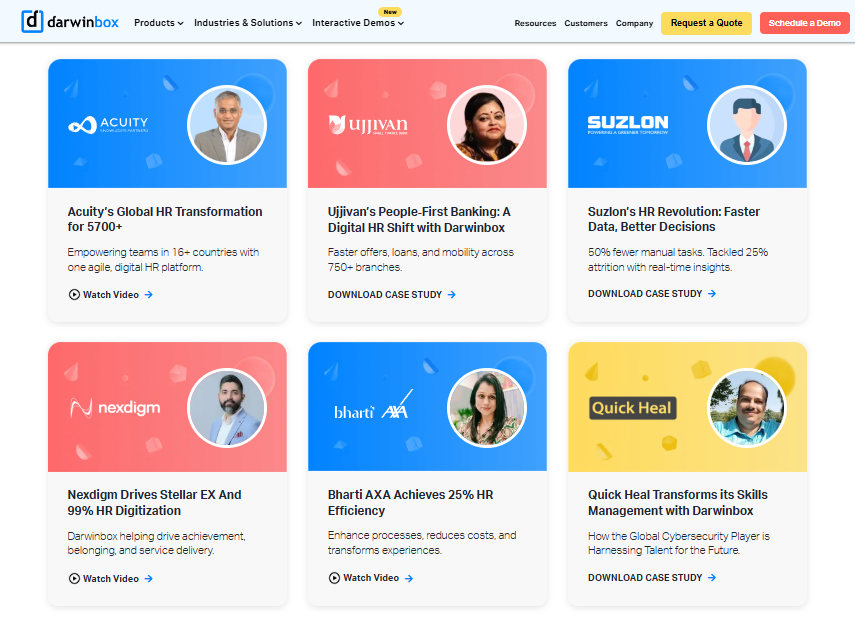
Darwinbox is an enterprise HCM unicorn widely adopted across Indian and South-East Asian enterprises at the 2,000+ employee tier, with a mobile-first design and broad module coverage. It is primarily used by enterprise HR teams prioritising brand halo and module breadth, but operators frequently flag the trade-off of multi-tab navigation and day-one-of-purchase billing during long implementation cycles. Compare details on the HROne vs Darwinbox page.
Core Services
- Core HR + Lifecycle Management: employee master, org chart, and lifecycle workflows on one platform, reducing dependence on Excel handoffs.
- Payroll Engine: multi-country payroll with Indian statutory compliance, including PF, ESI, and TDS.
- Performance and OKRs: configurable appraisal cycles and goal-tracking dashboards.
- Mobile App: single-tap leave, attendance, and payslip access on iOS and Android.
- Recruitment and Onboarding: ATS with referral and offer-management flows.
🇮🇳 India-Specific Compliance and Localisation
- PF / ESI / TDS support: Yes, supported with standard statutory logic.
- Labour law compliance: Moderate, customisation frequently requires vendor engagement.
- Payroll localisation: Yes, but with configuration complexity for FBP and CTC revisions.
- Multi-state compliance handling: Yes, configurable per entity.
Who This Is Built For
- CHROs at 2,000+ employee enterprises comfortable with 4 to 9 month implementations.
- HR teams that prioritise brand recognition and peer-group adoption signals.
Who Should Skip This
- 200 to 1,000 employee teams needing go-live billing and sub-30-day rollout.
- HR Ops leads wanting three-click task closure without multi-tab navigation.
Pricing Structure
- Plan Type(s): Quote-based enterprise tiers.
- Starting Price: Not publicly disclosed, request a quote. Subscription typically bills from day one of purchase.
- Tier-wise Breakdown: Not publicly disclosed.
- Incremental Cost Drivers: Per-module add-ons and multi-year lock-in clauses.
- Implementation Fee: Yes, separate line item.
- Cost at 200 Employees: Not publicly disclosed. Cost at 500 Employees: Not publicly disclosed.
Implementation and Support Reality
- Go-live timeline: 4 to 9 months typical.
- Support channels: Partner-delivered + ticket queue.
- Data migration model: Vendor or partner-led.
- Documented NPS: Not publicly disclosed.
Reviews
“Speed and performance, pages sometimes load slowly. Reporting and analytics, limited customisation in reports. Mobile app experience, not always as smooth as desktop. Integration issues, sync with other systems can be inconsistent. User interface, navigation could be more intuitive in some areas.”
, Saksham A., HR User Darwinbox G2 Verified Review
“Bad implementation experience, bad UI/UX, configurations getting broken in production on its own due to product deployments, terrible customer service. Basically everything.”
, Verified User in Computer Software Darwinbox G2 Verified Review
3. PeopleStrong, Indian Enterprise HCM with Mobile-First Employee Experience
Overview
PeopleStrong is a long-standing Indian HCM serving enterprise and mid-market customers with a strong mobile-first employee experience and talent modules. It is primarily used by enterprises wanting a single platform for attendance, payroll, and talent management, but G2 reviews flag variability in implementation timelines and desktop-version usability. See the side-by-side HROne vs PeopleStrong comparison.
Core Services
- Core HR and Employee Master: centralised records with org-chart and lifecycle tracking.
- Payroll with Indian Statutory Compliance: PF, ESI, TDS, and reimbursement management.
- Mobile App: attendance punch, leave, and payslip access with clear submission tracking.
- Performance and Talent: quarterly KRA management and appraisal cycles.
- Jinie AI Assistant: employee-facing conversational agent for routine queries.
🇮🇳 India-Specific Compliance and Localisation
- PF / ESI / TDS: Yes, native Indian payroll engine.
- Labour law compliance: Moderate, covered for standard mid-market needs.
- Payroll localisation: Yes, reimbursements, payslips, and tax flows India-specific.
- Multi-state compliance handling: Yes.
Who This Is Built For
- HR teams at 1,000+ employee Indian enterprises wanting a mobile-first deployment.
- Payroll Managers running structured reimbursement and claims workflows.
Who Should Skip This
- Mid-market teams prioritising fast go-live and inbuilt ROI instrumentation.
Pricing Structure
- Plan Type(s): Quote-based.
- Starting Price: Not publicly disclosed, request a quote.
- Tier-wise Breakdown: Not publicly disclosed.
- Implementation Fee: Yes, separate.
- Cost at 200 Employees: Not publicly disclosed. Cost at 500 Employees: Not publicly disclosed.
Implementation and Support Reality
- Go-live timeline: 3 to 6 months.
- Support channels: Email + partner.
- Data migration model: Vendor-led.
Reviews
“It has way too many features and the desktop version isn’t very useful because of the multiple options to get one job done. It can be simplified further for a smoother desktop version experience.”
, Nikhil S., HR User PeopleStrong G2 Verified Review
“One thing I dislike is that the reimbursement and claims process can feel a bit slow at times, especially when approvals take longer than expected. The interface can also lag occasionally, making navigation slightly frustrating.”
, Anusha, HR User PeopleStrong G2 Verified Review
4. Keka, Surface-UX HRMS for Sub-500 SMB Teams
Overview
Keka is a popular Indian HRMS favoured by sub-500 SMB HR teams for its clean employee interface and core HR and payroll modules. It is primarily used by HR teams prioritising surface UX, but G2 feedback consistently flags email-only support, painful migration, and a #16 ease-of-use rank on G2 against HROne’s #3, with overall satisfaction at #55 versus HROne’s #3. Dig deeper into the HROne vs Keka comparison.
Core Services
- Payroll and Statutory Compliance: PF, ESI, TDS automation with payslips and payroll reports.
- Time and Attendance: biometric and mobile punch tracking.
- Performance Management (PMS): goal setting and review cycles.
- Hiring (Keka Hire): ATS with offer letter automation.
- Employee Self-Service Portal: leave, attendance, and document access.
🇮🇳 India-Specific Compliance and Localisation
- PF / ESI / TDS: Yes, standard automation.
- Labour law compliance: Moderate.
- Payroll localisation: Yes, with reported edge cases around incentive handling and PT reflection.
- Multi-state compliance handling: Partial, location-specific policy configuration reported as difficult.
Who This Is Built For
- SMB HR Ops leads at sub-500 employee firms wanting a clean employee portal.
- Teams where email-threads support is acceptable for non-urgent issues.
Who Should Skip This
- Mid-market teams at 500+ employees needing phone + SPOC support during month-end payroll.
- Multi-location firms needing flexible location-specific policy configuration.
Pricing Structure
- Plan Type(s): Foundation, Strength, and Growth.
- Starting Price: Not publicly disclosed on pricing page; tier-based PEPM.
- Tier-wise Breakdown: Not publicly disclosed.
- Implementation Fee: Yes.
- Cost at 200 Employees: Not publicly disclosed. Cost at 500 Employees: Not publicly disclosed.
Implementation and Support Reality
- Go-live timeline: 2 to 4 months (longer cases documented).
- Support channels: Email + chat, no dedicated phone SPOC.
- Data migration model: Self-serve + email-based support.
Reviews
“We started working with Keka HRMS in August, and to this day, we have been unable to implement the tool in our company due to their consistently delayed responses and poor coordination between their internal teams. What was supposed to be a seamless solution for our HR needs has turned into a time-wasting ordeal.”
, Divya P., HR User Keka G2 Verified Review
“From Friday evening 6 PM to Monday morning 10 AM there is no source of support from Keka. Telephonic communication to a POC during emergency is not possible. Customisation required as per company policy is difficult to incorporate.”
, Prem K., HR User Keka G2 Verified Review
5. greytHR, SMB Payroll Specialist with Rigid Workflow Ceiling
Overview
greytHR is a long-standing Indian SMB HRMS known for payroll filings and tax declarations, with adoption primarily among sub-300 employee organisations. It is primarily used by finance-led HR teams needing reliable payroll baseline, but reviews flag rigid customisation, limited workflows, and customer-support gaps once multi-location or multi-entity complexity appears. See the HROne vs greytHR comparison.
Core Services
- Payroll Processing: PF, ESI, and PT filings with payslip generation and TDS handling.
- Leave and Attendance: basic leave balance and attendance tracking.
- Employee Self-Service: payslip, tax declaration, and holiday calendar access.
- Tax Declaration: employee tax regime selection and form generation.
🇮🇳 India-Specific Compliance and Localisation
- PF / ESI / TDS: Yes, core strength.
- Labour law compliance: Moderate, limited flexibility for multi-location policy variation.
- Payroll localisation: Yes.
- Multi-state compliance handling: Partial.
Who This Is Built For
- Finance-led HR teams at sub-300 employee SMBs wanting reliable payroll filings.
- Firms comfortable with ticket-based support and standard workflows.
Who Should Skip This
- Mid-market teams with multi-entity or shift-based manufacturing complexity.
- HR leaders needing front-end policy configurability without vendor dependency.
Pricing Structure
- Plan Type(s): Starter, Essential, Growth, and Enterprise.
- Starting Price: Published per-user-per-month tiers on the greytHR pricing page.
- Implementation Fee: Varies by tier.
- Cost at 200 Employees: Not publicly disclosed on comparison basis. Cost at 500 Employees: Not publicly disclosed.
Implementation and Support Reality
- Go-live timeline: 1 to 3 months.
- Support channels: Ticket-based; response timing variable.
- Data migration model: Vendor-led with customer-side effort.
Reviews
“The system acts as per its own whims and gives error reports. We have to spend time manually to find errors. Not one month has passed where we have not raised a ticket. Employee experience has gone for a toss.”
, Maheshkumar J., HR User greytHR G2 Verified Review
“GreytHR is not much good at customising based on our requirements. For our case, from implementation onwards, there were issues with leave balance and all. Many times we were manually correcting the leave balance of employees.”
, Verified User in IT greytHR G2 Verified Review
6. Zoho People, Global Generalist HRMS for Single-Entity Startups
Overview
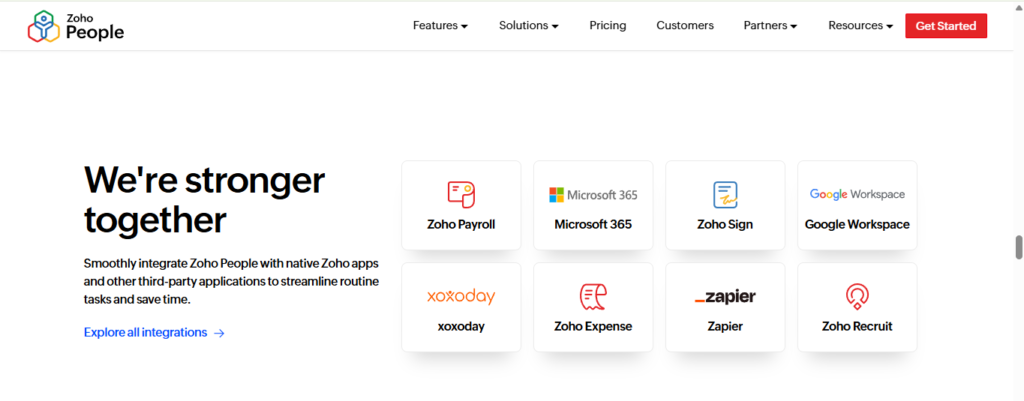
Zoho People sits inside the broader Zoho One suite and is primarily used by single-entity startups already standardised on Zoho Recruit, Zoho Payroll, and Zoho Books. It offers breadth of modules at a low entry price, but G2 reviews flag shallow feature depth, support responsiveness gaps, and limitations around multi-legal-entity OU and India-specific payroll depth. Review the HROne vs Zoho People comparison.
Core Services
- Attendance and Leave Management: digital leave approvals and holiday calendar sharing.
- Onboarding: candidate self-data entry with same-day onboarding completion.
- Zoho Ecosystem Integration: native integration with Zoho Recruit, Zoho Payroll, and Zoho Books.
- Performance Module: goal and review management.
- Case Management: employee query handling.
🇮🇳 India-Specific Compliance and Localisation
- PF / ESI / TDS: Yes, via Zoho Payroll integration.
- Labour law compliance: Moderate.
- Payroll localisation: Partial, full India payroll depth requires Zoho Payroll add-on.
- Multi-state compliance handling: Partial.
Who This Is Built For
- Single-entity startups already on the Zoho One stack.
- HR teams needing low-entry-price basic attendance and leave digitisation.
Who Should Skip This
- Multi-legal-entity Indian enterprises needing native OU structures.
- HR Ops leads needing depth on FBP, CTC revisions, and new wage-code FFS.
Pricing Structure
- Plan Type(s): Essential, Professional, Premium, Enterprise, and People Plus.
- Starting Price: Published tiered PEPM on Zoho’s pricing page.
- Implementation Fee: Typically none for base tiers.
- Cost at 200 Employees: Per published tiers; request quote for exact. Cost at 500 Employees: Per published tiers.
Implementation and Support Reality
- Go-live timeline: 2 to 4 months.
- Support channels: Email + community forum.
- Data migration model: Self-serve.
Reviews
“The biggest drawback for me has been the lack of customer support. Whenever I try to reach out, it often takes a long time to get a response. There were days when I was stuck with errors and couldn’t find a solution, which led to a particularly frustrating experience with Zoho People.”
, Dhana C., HR User Zoho People G2 Verified Review
“Features are shallow and there is no depth in each application.”
, Verified User in IT Zoho People G2 Verified Review
7. SAP SuccessFactors, Global Enterprise HCM Over-Engineered for Indian Mid-Market
Overview
SAP SuccessFactors is the global enterprise HCM of choice for 5,000+ employee MNCs already on the SAP ERP stack. It covers broad global compliance and talent modules, but G2 reviews consistently flag steep cost, customisation complexity, and user-experience gaps that make it over-engineered for the 200 to 1,000 employee Indian mid-market. See the HROne vs SAP comparison.
Core Services
- Employee Central: core HR and employee master.
- Payroll (Global): multi-country payroll with extensive statutory coverage.
- Performance and Goals: enterprise-grade OKR and appraisal management.
- Learning (LMS): compliance training tracking.
- Recruitment (SmartRecruiters integration): global ATS.
🇮🇳 India-Specific Compliance and Localisation
- PF / ESI / TDS: Yes, but configuration-heavy.
- Labour law compliance: Strong globally, moderate for fast-moving Indian code changes.
- Payroll localisation: Yes, with developer dependency for rule changes.
- Multi-state compliance handling: Yes.
Who This Is Built For
- 5,000+ employee MNCs already standardised on SAP ERP.
- Global talent teams needing cross-geo compliance in a single tenant.
Who Should Skip This
- 200 to 1,000 employee Indian firms wanting front-end policy configurability.
- HR teams without in-house SAP consulting bandwidth.
Pricing Structure
- Plan Type(s): Quote-based enterprise contracts.
- Starting Price: Not publicly disclosed, request a quote.
- Tier-wise Breakdown: Not publicly disclosed.
- Implementation Fee: Yes, separate and substantial.
- Cost at 200 Employees: Not publicly disclosed. Cost at 500 Employees: Not publicly disclosed.
Implementation and Support Reality
- Go-live timeline: 6 to 12 months.
- Support channels: Partner-delivered.
- Data migration model: Partner-led.
Reviews
“Not user-friendly, system often freezes. Data is unreliable and cannot always be trusted. Very limited functionalities compared to competitors. Customisation requires third-party vendors, every change is costly. Extremely expensive for what it delivers, Ferrari price, Trabant value.”
, Janka Z., HR User SAP SuccessFactors G2 Verified Review
“The most basic functionality is missing or severely flawed. If I could, I would take back our decision to implement the software.”
, Verified User in Internet SAP SuccessFactors G2 Verified Review
8. ZingHR, Blue-Collar and Manufacturing-Focused HCM
Overview
ZingHR is an Indian HCM with a focus on blue-collar, manufacturing, and contract-labour workforces, serving mid-market and enterprise customers. It is primarily used by manufacturing HR leads needing shift and contract-labour coverage, but G2 feedback flags outdated UI, mobile-app instability, and support responsiveness concerns. For manufacturing buyers, also see manufacturing HR and the HROne vs ZingHR page.
Core Services
- Hire-to-Retire Modules: onboarding through exit management.
- Payroll and Statutory Compliance: PF, ESI, TDS, and contract-labour payroll.
- Shift and Attendance Management: roster management for manufacturing shifts.
- Performance Management: goal and appraisal cycles.
- Learning Module: training and compliance tracking.
🇮🇳 India-Specific Compliance and Localisation
- PF / ESI / TDS: Yes.
- Labour law compliance: Moderate, contract-labour focus.
- Payroll localisation: Yes.
- Multi-state compliance handling: Yes.
Who This Is Built For
- Manufacturing HR leads managing shift-based, contract, and blue-collar workforces.
- Enterprises needing bundled Hire-to-Retire coverage on a budget.
Who Should Skip This
- Teams prioritising modern mobile UX and fast support TAT.
Pricing Structure
- Plan Type(s): Quote-based.
- Starting Price: Not publicly disclosed, request a quote.
- Implementation Fee: Yes.
- Cost at 200 Employees: Not publicly disclosed. Cost at 500 Employees: Not publicly disclosed.
Implementation and Support Reality
- Go-live timeline: 4 to 6 months, with slippage reported.
- Support channels: Email + ticket.
- Data migration model: Vendor-led.
Reviews
“System implementation experience was horrible, in 6 months the implementation was barely completed to 40%. Support is never on time. Replies to emails get delayed by days if not weeks. No ownership at any level of the organisation.”
, Sanmeet S., HR User ZingHR G2 Verified Review
“Zing is extremely slow, its server takes a lot of time to respond. Sometimes the webpage does not open at all and keeps on showing loading. Zing customer support is extremely bad, they do not resolve issues on time, ensuring that critical payroll-related issues cannot be solved on time.”
, Verified User in Pharmaceuticals ZingHR G2 Verified Review
9. BambooHR, US-Centric Core HR Without Native Indian Statutory Engine
Overview
BambooHR is a US-headquartered core HR platform widely used by North American SMBs and not built around Indian statutory requirements. It is primarily used by US subsidiaries of Indian firms needing time-off, onboarding, and document-signing flows, but G2 reviews flag limited customisation, rising pricing, and a lack of depth for India payroll.
Core Services
- Time Off and PTO Management: leave request emails with single-click approval.
- Employee Records and Self-Service: document signing and profile management.
- Basic Reporting: standard HR reports without India-specific outputs.
- Onboarding Flows: welcome emails and document collection.
- Time Tracking (US-centric): timesheet entry with partial payroll integration.
🇮🇳 India-Specific Compliance and Localisation
- PF / ESI / TDS: No, not natively supported.
- Labour law compliance: Limited for India.
- Payroll localisation: No, US-centric.
- Multi-state compliance handling: No, US-state-centric, not Indian states.
Who This Is Built For
- US subsidiaries of Indian firms needing core HR and time-off only.
- Small teams under 50 employees standardised on US HR norms.
Who Should Skip This
- Any Indian mid-market firm needing PF, ESI, PT, or Labour Codes 2026 readiness.
Pricing Structure
- Plan Type(s): Core and Pro.
- Starting Price: Published per-user per-month on BambooHR pricing page (USD).
- Implementation Fee: Bundled.
- Cost at 200 Employees: USD-denominated, not typical for Indian buyers. Cost at 500 Employees: USD-denominated.
Implementation and Support Reality
- Go-live timeline: 1 to 2 months.
- Support channels: Email + chat.
- Data migration model: Self-serve + support-assisted.
Reviews
“Biggest issue is how much they have increased prices and continue to do so. They know that switching HRMS is painful. Every year is either a large price increase or our plan being sunsetted with the only option being to switch to a more expensive plan.”
, Josh A., HR User BambooHR G2 Verified Review
“Shouldn’t be used outside of the US. No option for adding international holiday calendars but US one is built-in. Their CS openly writes, ‘we are a US-centric system’, while your sales reps swear it’s a globally fitting one.”
, Verified User in Computer Software BambooHR G2 Verified Review
10. Beehive HRMS, Budget Indian Mid-Market Entrant with Thinner AI Roadmap
Overview
Beehive HRMS is a smaller Indian HRMS serving budget-conscious mid-market customers with a standard India payroll and attendance baseline. It is primarily used by price-sensitive HR teams at smaller mid-market organisations, but its workflow library, AI roadmap, and ecosystem integrations are narrower than HROne, Darwinbox, or PeopleStrong. For a broader top 10 HR software India view, see the category listicle.
Core Services
- Core HR and Employee Master: centralised records with basic lifecycle tracking.
- Indian Payroll: PF, ESI, and TDS computation with payslip generation.
- Time and Attendance: biometric-linked attendance tracking.
- Leave Management: standard leave balance and approval flows.
- Basic Performance Module: appraisal-cycle support.
🇮🇳 India-Specific Compliance and Localisation
- PF / ESI / TDS: Yes, standard Indian baseline.
- Labour law compliance: Moderate.
- Payroll localisation: Yes.
- Multi-state compliance handling: Partial.
Who This Is Built For
- Budget-conscious HR teams at 100 to 500 employee Indian SMBs.
Who Should Skip This
- Mid-market teams needing AI modules, inbuilt ROI dashboards, or 127-workflow breadth.
Pricing Structure
- Plan Type(s): Quote-based.
- Starting Price: Not publicly disclosed, request a quote.
- Implementation Fee: Yes.
- Cost at 200 Employees: Not publicly disclosed. Cost at 500 Employees: Not publicly disclosed.
Implementation and Support Reality
- Go-live timeline: 2 to 3 months.
- Support channels: Email.
- Data migration model: Vendor-led.
Ready to Replace Your Fragmented HR Stack with One Hire-to-Retire Operating System?
Map your payroll, attendance, recruitment, and performance flows onto a single Super Inbox with 127 pre-built workflows and India’s first inbuilt ROI Dashboard. Subscription meters only after go-live, with zero per-entity surcharge and no multi-year lock-in.
Q2: What Selection Criteria and Weighted Methodology Produced This Ranking?
The 10 vendors were scored on a 100-point weighted rubric built around what actually determines HRMS success at 200 to 1,000 employees in India, not module count, brand recall, or sticker PEPM. The five weighted criteria and bands are published below so any buyer can re-score vendors against their own context. For a broader market view, see the top 10 HR software India listicle.
The 100-Point Rubric
- India Compliance and Labour Codes 2026 Readiness, 25% 📊
- Stack Consolidation and Workflow Breadth, 25% ⚙️
- Ease of Setup, Admin, and Support, 20% ⏰
- Pricing Transparency and Implementation Economics, 15% 💰
- Verified User Reviews, G2 Grid Position, and ROI Evidence, 15% ⭐
Scoring bands map to star ratings: 81 to 100 = ⭐⭐⭐⭐⭐, 61 to 80 = ⭐⭐⭐⭐, 41 to 60 = ⭐⭐⭐, 21 to 40 = ⭐⭐, and 0 to 20 = ⭐.
How Each Criterion Was Tested
Each vendor was scored against a specific, verifiable test, not a brochure claim:
- Compliance depth: native multi-state PF, ESI, PT, and LWF, FBP declarations, CTC-revision arrears, and new wage-code two-working-day FFS, verified against the vendor’s configuration engine, not the sales deck. Reference the statutory compliance payroll guide.
- Consolidation: count of modules native to a single tenant versus add-ons, number of pre-built hire-to-retire workflows, and whether policies are front-end configurable without developer tickets. Explore core HCM capabilities.
- Support: phone + email + dedicated SPOC versus email-only or ticket-only, published NPS, and G2 ease-of-admin rank.
- Pricing: go-live billing versus day-one-of-purchase billing, per-entity surcharges, multi-year lock-in clauses, and whether PEPM is published or quote-only. See HR software pricing transparency.
- Reviews and ROI: G2 Grid position, satisfaction rank, documented case studies with named customers, and presence of an inbuilt ROI dashboard that quantifies savings in rupee terms. Test with the ROI calculator.
Per-Vendor Scorecard
| Rank | Vendor | Score | Stars |
|---|---|---|---|
| 1 | HROne | 92 | ⭐⭐⭐⭐⭐ |
| 2 | Darwinbox | 74 | ⭐⭐⭐⭐ |
| 3 | PeopleStrong | 62 | ⭐⭐⭐⭐ |
| 4 | Keka | 58 | ⭐⭐⭐ |
| 5 | ZingHR | 55 | ⭐⭐⭐ |
| 6 | greytHR | 52 | ⭐⭐⭐ |
| 7 | Zoho People | 50 | ⭐⭐⭐ |
| 8 | SAP SuccessFactors | 48 | ⭐⭐⭐ |
| 9 | Beehive HRMS | 38 | ⭐⭐ |
| 10 | BambooHR | 32 | ⭐⭐ |
Why HROne Holds the Top Score
HROne clears all five criteria at the architectural level, not the marketing level. The go-live billing PEPM with no lock-in answers the pricing criterion. The HR inbox and 127 pre-built workflows on one tenant answer consolidation. The dedicated prior-HR SPOC with a 9.8 NPS answers support, multi-state statutory plus Labour Codes 2026 configurability on the front-end policy engine answers compliance, and India’s first inbuilt ROI Dashboard answers the reviews-plus-ROI-evidence criterion. We did not weight the rubric to favour HROne. The architecture simply maps to four of the five criteria without depending on external bolt-ons, which is how it surfaces at the top rather than being forced there.
Q3: Why Is 200 Employees the Inflection Point, and What Evaluation Checklist Should CHROs Use Beyond It?
At 200 employees, multi-state PF, ESI, and PT, shift complexity, and the first multi-legal-entity split break SMB tools like greytHR and Zoho People. SAP SuccessFactors and Darwinbox over-engineer and bill for 5,000+ headcount. The inflection demands a mid-market HCM built specifically for the 200 to 1,000 gap, evaluated on architecture rather than brand halo. Tailored guidance lives on the CHRO solutions page.
The Decision Dilemma at 200 Employees
Choosing an HRMS at this moment commits the company to the architecture its people operations will run on for the next three to five years. Pick wrong, and the HR team ends up running two HRMS instances by year two, reconciling employee masters in Excel, or paying full subscription during a four-to-nine-month implementation.
The Wrong Way to Decide ❌
Most CHROs and CFOs default to two flawed shortcuts at this stage. The first is brand halo, “Darwinbox is what our peer group uses”, which ignores the day-one-of-purchase billing, multi-year lock-in, and tab-fatigue operators flag in public G2 reviews. The second is cheapest PEPM, “greytHR is ₹X cheaper”, which ignores the rigid configuration ceiling that breaks the moment a multi-entity split or shift-based compliance rule appears. Neither shortcut answers the question the architecture actually has to answer: can this platform scale to the next legal entity without another implementation project? For a structured alternative, see how to choose HRIS HRMS software.
The Right 7-Criterion Framework ✅
Apply every vendor against these seven tests, in order:
- Does subscription billing start at go-live, or from day one of purchase?
- Does the platform support unlimited legal entities on a single tenant without per-entity surcharge?
- Are leave, attendance, and payroll workflows front-end configurable without a developer ticket?
- Is support delivered by a dedicated prior-HR SPOC, or via email threads and ticket queues only?
- Are FBP, CTC revisions, and new wage-code two-day FFS native to the payroll engine, not plugins?
- Is there an inbuilt ROI Dashboard that quantifies lifetime hours saved, or is reporting PowerPoint-dependent?
- Is the contract lock-in-free, with exit and data-portability rights in writing?
Applying the Framework
| Criterion | HROne | Why |
|---|---|---|
| 1. Go-live billing | ✅ | Subscription meters only after UAT sign-off |
| 2. Unlimited entities on one tenant | ✅ | No per-entity surcharge (Asia Healthcare: 20 units on one instance) |
| 3. Front-end policy engine | ✅ | HR configures rules, no developer ticket |
| 4. Dedicated prior-HR SPOC | ✅ | 9.8 NPS, phone + email + SPOC |
| 5. FBP, CTC revisions, and new wage-code FFS | ✅ | Native to payroll engine |
| 6. Inbuilt ROI Dashboard | ✅ | India’s first: hours saved × average HR salary |
| 7. Lock-in-free contract | ✅ | Flat PEPM, no multi-year commitment |
HROne scores 7/7 because the platform was built around the 200 to 1,000 employee multi-entity reality from day one. Darwinbox typically scores 3/7 (fails on billing, lock-in, front-end config, and support channel at the mid-market edge), Keka 3/7, and greytHR 2/7. Threshold reading: 6 to 7 = genuine mid-market architecture that will not force a re-implementation inside 24 months. Below 5 = single-entity or enterprise-only tool retrofitted for your size. Avoid the traps flagged in HRIS buyer pitfalls.
The Meta-Insight
The real question at 200 employees is not “which HRMS has the most modules”. It is “which HRMS lets me add my next legal entity, shift pattern, or state of operation without another implementation project?” Asia Healthcare Holdings runs 20 pan-India units on one HROne instance with unified employee master and entity-independent compliance. That is the architectural proof the framework surfaces.
Q4: How Ready Are These HRMS Platforms for India’s Labour Codes 2026, Multi-State Statutory Compliance, and New Wage-Code FFS?
India’s four consolidated Labour Codes, Wages, Industrial Relations, Social Security, and Occupational Safety, Health and Working Conditions, mandate two-working-day full-and-final settlement, revised gratuity timelines, expanded social-security coverage for gig and platform workers, and new basic-wage-floor and overtime definitions. Only HRMS platforms with a native Indian payroll software engine and front-end policy configurability can absorb these without re-implementation. For broader context, see navigating labor laws.
Vendor-by-Vendor Readiness ⚖️
| Platform | Labour Codes 2026 Native | Multi-state PF/ESI/PT | FBP | Two-Day FFS | CTC Revision Arrears | New Wage-Code Basic ≥50% | Gig/Platform Worker |
|---|---|---|---|---|---|---|---|
| HROne | ✅ | ✅ | ✅ | ✅ | ✅ | ✅ | ✅ |
| Darwinbox | ⚠️ Config-heavy | ✅ | ✅ | ⚠️ | ✅ | ✅ | ⚠️ |
| PeopleStrong | ⚠️ | ✅ | ✅ | ⚠️ | ✅ | ⚠️ | ⚠️ |
| Keka | ⚠️ | ✅ | ⚠️ | ⚠️ | ⚠️ | ⚠️ | ❌ |
| greytHR | ⚠️ | ✅ | ⚠️ | ⚠️ | ⚠️ | ⚠️ | ❌ |
| ZingHR | ⚠️ | ✅ | ⚠️ | ⚠️ | ⚠️ | ⚠️ | ⚠️ |
| Zoho People | ❌ | ⚠️ | ⚠️ | ❌ | ⚠️ | ❌ | ❌ |
| SAP SF | ⚠️ Developer-led | ✅ | ⚠️ | ❌ | ⚠️ | ⚠️ | ❌ |
| BambooHR | ❌ | ❌ | ❌ | ❌ | ❌ | ❌ | ❌ |
| Beehive HRMS | ⚠️ | ✅ | ⚠️ | ⚠️ | ⚠️ | ⚠️ | ❌ |
How to Test Labour Codes Readiness in a Vendor Demo
Do not accept the sales deck. Run these four live tests inside the actual tenant before signing:
- Trigger a test exit and time the FFS clearance. Does asset recovery, F&F computation, and letter generation fire in parallel and close within two working days? Reference the gratuity calculator for cross-checks.
- Revise a CTC mid-cycle and check whether arrears propagate into the next payroll run automatically, or whether someone has to recompute them in Excel.
- Create a new entity in a different state and verify whether the PT slab, minimum wage, and LWF contribution pick up automatically, or whether the vendor needs a change request. See professional tax slab rates.
- Simulate a gig or platform-worker engagement and verify whether social-security deduction logic fires under the Social Security Code, or whether the system treats them as vendors outside statutory scope.
Why Native Configurability Matters More Than Checklist Coverage
The Labour Codes will roll out through state-level notifications over 2026 and 2027, which means the HRMS has to absorb rule changes continuously without a re-implementation project each time. Platforms that need a developer ticket, a partner engagement, or a new SOW to change a gratuity rule will bleed compliance fees and miss notification-to-activation windows. A deeper view lives in payroll software compliance risk.
How HROne Handles It
We ship multi-state statutory rules, new wage-code logic, and two-working-day FFS natively inside the Payroll and Core HR engine, with a front-end policy engine that lets HR reconfigure overtime, gratuity, leave, and basic-wage-floor rules as the Labour Codes notifications roll in, without raising a developer ticket. Gig and platform-worker social-security deduction runs inside the same payroll flow, not a separate vendor module. That is why 1,500+ Indian brands, including multi-entity operators like Asia Healthcare Holdings and MR DIY India, treat HROne as their compliance backbone rather than layering a separate vendor for statutory filings. See the MRDIY case study for the multi-location rollout detail.
Score Your Current HRMS Against the 7-Criterion Framework
Map your vendor against go-live billing, multi-entity support, front-end configurability, SPOC support, native FBP and new wage-code FFS, inbuilt ROI, and lock-in-free contracts. We will walk you through the live Labour Codes 2026 tenant tests in a working demo.
Q5: Which HRMS Fits Best for IT/ITeS, Manufacturing, BFSI, and Retail Mid-Market Use Cases in India?
HRMS fit shifts by industry, and a flat ranking hides the real decision. IT/ITeS prioritises AI-driven recruitment and remote attendance. Manufacturing needs a shift scheduler, overtime calculation, and low-connectivity mobile attendance on the shop floor. BFSI demands RBAC, audit trails, and multi-legal-entity compliance. Retail requires geo-fenced field attendance, expense receipt parsing, and rapid multi-location onboarding across stores.
Sub-ICP Fit at a Glance
| Industry | Top Fit | Runner-Up | Third | Why It Matters |
|---|---|---|---|---|
| IT/ITeS ⚙️ | HROne | Darwinbox | Keka | AI resume relevancy, remote WFH policy engine, and One AI Suite for JD and interview generation (see ITES HR) |
| Manufacturing 🏭 | HROne | ZingHR | greytHR | Shift scheduler, biometric + mobile geo-fence, OT calculation, and 20-unit multi-entity proof (see manufacturing HR) |
| BFSI 🏦 | HROne | Darwinbox | PeopleStrong | RBAC at OU level, SSO/SAML, audit trails, and entity-independent statutory compliance (see finance HR) |
| Retail 🛒 | HROne | Darwinbox | Zoho People | 30-day multi-location rollout (MR DIY India), receipt parser, and field-force geo attendance (see retail HR) |
Why Industry-Adaptive Beats Industry-Specific
HROne’s architecture is industry-adaptive rather than industry-specific. The same Core HR + Payroll + Time Office + Workforce bundle reconfigures through the front-end policy engine and HRV Studio, which is why the same instance serves a 500-person IT firm in Bengaluru, a 1,000-person factory in Pune, and a 20-unit healthcare group across pan-India without forking the codebase or spinning up parallel tenants. See the workforce management module for scope.
For Manufacturing specifically, the mobile app handles offline attendance with automatic sync once connectivity returns, and overtime calculations against statutory slabs fire inside the payroll engine without spreadsheet handoffs. For BFSI, RBAC granularity at OU and entity level, SSO/SAML, and audit-ready logs satisfy IT-Director gatekeeping without custom development. For Retail, receipt-parser-driven expense logging and geofencing attendance system mean a field sales rep in Kochi and a store manager in Guwahati close their daily tasks from the same Super Inbox.
What the Operators Say
“The best part of HROne is smooth functioning of the employee onboarding process with checklist availability and real monitoring of live punch details can be captured easily. Additionally, salary processing along with exact calculation of Comp off and overtime is achieved now.”
, Deepak S., HR User HROne G2 Verified Review
“I find HROne’s GUI to be very user-friendly, which makes attendance tracking for out-of-office employees much simpler. My most liked feature is the GPS-based login and logout with pinpoint accuracy. It helps me track my on-field employees’ status, like where they are currently, to resolve customer service issues.”
, Krunal S., HR User HROne G2 Verified Review
Q6: What Does an HRMS Actually Cost for 200, 500, and 1,000 Employees, Including TCO, Implementation, and Go-Live Economics?
True HRMS TCO for Indian mid-market is not PEPM × headcount. It is (PEPM × headcount × 12 × contract years) + implementation fee + per-entity surcharges + integration fees + the cost of paying full subscription while the system is still being implemented, and the last two line items separate transparent vendors from opaque ones. Review pricing for the HROne commercial model.
The TCO Table 💰
| Headcount | Sticker PEPM Band (₹) | Year-1 Subscription | Implementation Fee | Day-One-Billing Penalty | 3-Year TCO Pattern |
|---|---|---|---|---|---|
| 200 | ₹80 to ₹250 | ₹1.9L to ₹6L | ₹50K to ₹3L | 3 to 6 months billed during setup | Flat + go-live vs 4 to 9 months paid upfront |
| 500 | ₹80 to ₹250 | ₹4.8L to ₹15L | ₹1L to ₹5L | 4 to 6 months billed during setup | Compounds on lock-in and per-entity add-ons |
| 1,000 | ₹80 to ₹250 | ₹9.6L to ₹30L | ₹2L to ₹10L | 4 to 9 months billed during setup | Multi-year lock-in + per-module upgrades |
Benchmarks worth pricing in: HROne goes live in 30 to 60 days (MR DIY India: 30 days), while Darwinbox and SAP SuccessFactors typically run 4 to 9 months with full subscription metering throughout. A 500-employee firm paying ₹150 PEPM during a 6-month Darwinbox setup spends ₹4.5L on air before a single payslip runs. See the MRDIY case study and run numbers on the ROI calculator.
How to Negotiate the Contract ⏰
- Demand go-live billing in writing, subscription should meter only after UAT sign-off, not the PO date.
- Lock PEPM for 3 years with no per-entity surcharge, adding a legal entity must not re-open the commercial.
- Insist on a written implementation timeline with a penalty clause, every slipped week hits the vendor, not you.
- Confirm data migration and parallel payroll run are included, not billed as professional services add-ons.
- Require ROI Dashboard access from day one of go-live, the savings story has to start computing immediately.
For additional traps, see HR software pricing transparency.
How HROne Handles It ✅
We meter subscription only after go-live, bundle the prior-HR onboarding consultant inside flat PEPM, cap multi-entity at zero surcharge, and surface quarter-one savings on India’s first inbuilt ROI Dashboard, which gives CFOs a board-ready payback number within 90 days instead of twelve months of PowerPoint estimates. The pricing philosophy is simple: you pay for the system when it is working, not while it is being configured. Explore the HR software suite for the full module map.
Q7: How Do AI, Agentic HR, and an Inbuilt ROI Dashboard Change the Mid-Market HRMS Decision, Plus Answers to the Top 5 FAQs?
AI and agentic HR are moving from buzzwords to buyer filters. Resume-relevancy scoring, receipt parsers, AI Employee Agents, JD and interview generators, and inbuilt ROI Dashboards now separate 2026-ready HRMS platforms from legacy suites that report activity without quantifying value. Start with HROne AI and the employee AI agent.
What Most Platforms Get Wrong ❌
Darwinbox, Keka, greytHR, and SAP SuccessFactors report payslips processed and tickets closed, but none compute lifetime hours saved multiplied by average HR salary into a board-facing rupee number. Most bolt AI on as a pilot module sitting beside the employee master rather than on top of it, which is why the “AI insights” they produce contradict the source of truth feeding payroll. Agentic HR promises collapse the moment the agent cannot act across Core HR, Payroll, and Workforce inside one tenant. Read AI in HR hype vs reality for the architectural breakdown.
The Strategic Shift
AI value in HRMS is architectural, not cosmetic. It must sit on the same employee master and time-office data feeding payroll, or it produces insights nobody trusts. ROI is only credible when it is computed continuously inside the HRMS, not retrofitted in Power BI after the quarter closes.
How HROne Handles It ✅
We run One AI Suite, resume-relevancy scoring, receipt parser, AI Employee Agent, and JD and interview generators, natively on the same tenant as payroll and attendance. India’s first inbuilt ROI Dashboard multiplies lifetime hours saved against average HR salary and refreshes live, with no Power BI dependency. The result: CHROs walk into board reviews with a rupee number already computed. Try the job description generator as a sample of the AI surface.
“Sometimes I also used its OneAI system to apply leaves, that is what I have seen first time in a HR application system.”
, Ayush G., HR User HROne G2 Verified Review
Ready to See It in Your Context? ⭐
- Book a HROne demo with our prior-HR consultant to map your hire-to-retire flow.
- Tour the ROI Dashboard and see board-ready savings computed on your headcount.
- Review flat PEPM pricing, go-live billing, no lock-in, and zero per-entity surcharge.













 Secures Top Spot in
