








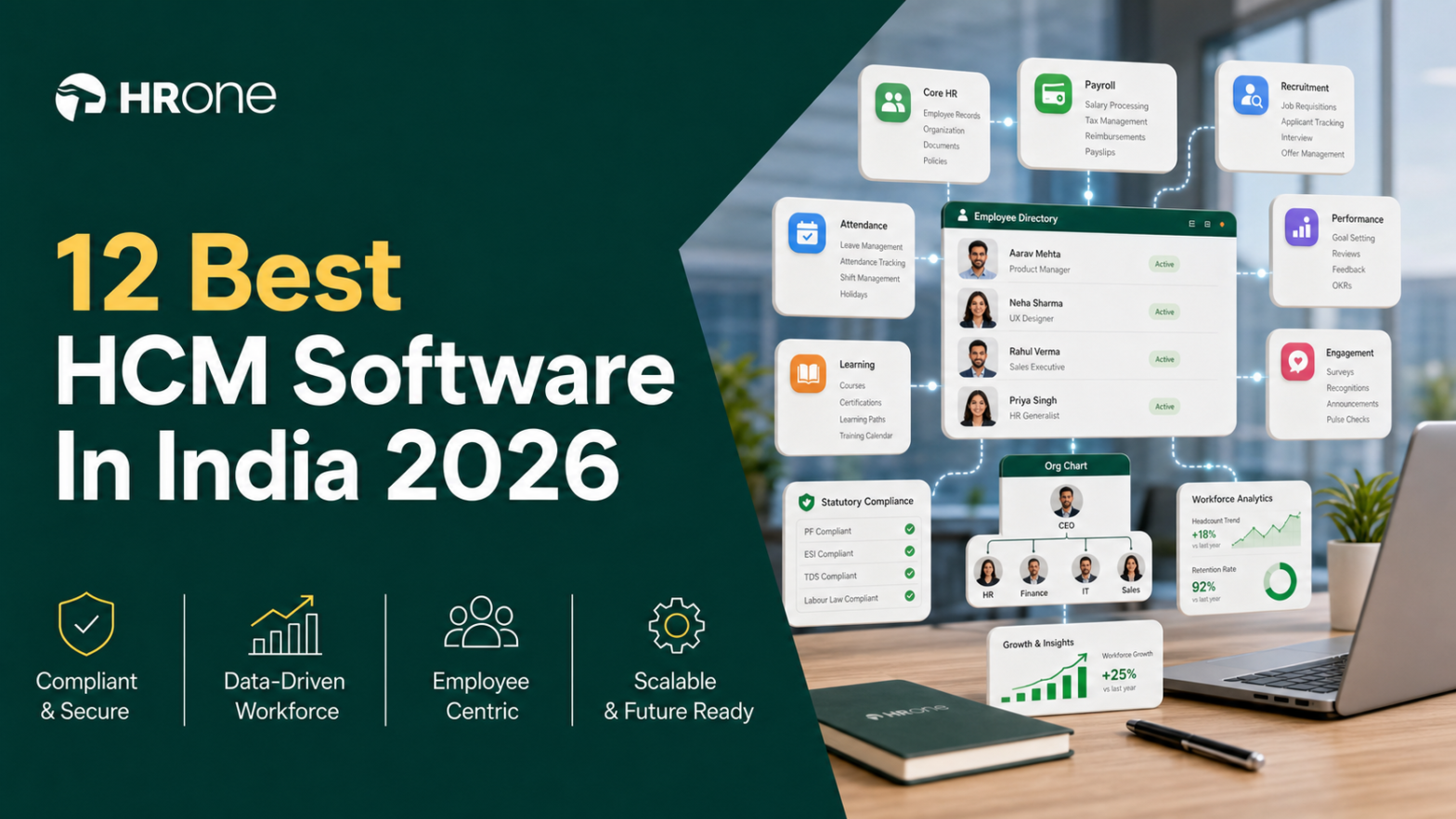
Q1. What Are the 12 Best HCM Software in India in 2026?
The 12 best HCM software in India for 2026 are HROne, Darwinbox, Keka, greytHR, Zoho People, ZingHR, PeopleStrong, factoHR, Qandle, Workday, SAP SuccessFactors, and Oracle Cloud HCM. With Gartner projecting around 75% of midsize and large enterprises to invest in cloud HCM by 2026, and the global market sitting at USD 11.82 billion, HROne leads for Indian mid-market teams that need real hire-to-retire depth.
Choosing an core HCM (Human Capital Management, meaning software that runs the full employee lifecycle) is a high-stakes call for a 100 to 5,000 employee company. Get it wrong, and you rip out a system, re-implement, and switch again inside four years. I have watched teams do exactly that. For this guide, we evaluated 12 vendors against module breadth, statutory coverage, and scalability, so the person living inside the tool every day, the HR ops lead, can shortlist for an RFP with confidence, while the CHRO, CFO, and IT Director read over their shoulder.
🧭 Our Evaluation Criteria
Each platform was scored on decision-grade, operator-relevant metrics, not generic feature checklists.
- Module Breadth & Workflow Depth 🧩 How many of the core hire-to-retire modules ship natively, and how many pre-built workflows automate real HR tasks end to end.
- Statutory & Compliance Coverage 🇮🇳 Depth of PF, ESI, Professional Tax, and TDS automation, plus readiness for the new Labour Codes and DPDP Act, 2023.
- Scalability & Configurability 📈 Whether the system grows through configuration or needs a re-implementation and developers to change a leave policy.
- Implementation & Support Reality ⏰ Go-live timeline, migration model, and whether support is a named human or an email queue.
- Pricing Transparency 💰 Clear per-employee-per-month pricing, and honesty about implementation fees.
- User-Verified Outcomes ⭐ What real G2 reviewers report, balanced across positive and critical ratings.
👥 Who This Guide Is For
- CHROs and HR Heads consolidating a fragmented hire-to-retire stack into one system.
- Payroll Managers running multi-entity, India-compliant monthly payroll cycles.
- CFOs validating HR-tech ROI and flat PEPM (per-employee-per-month) commercials.
- IT Directors and operational HR teams weighing mobile-first HCMs against legacy portals.
📊 The 12 Best HCM Software in India (2026 Comparison)
| Provider (⭐ rating) | Best For | Standout Strength | Known Limitation | Module & Workflow Depth | Support Model | Pricing Model |
|---|---|---|---|---|---|---|
| 1.1 HROne ⭐⭐⭐⭐⭐ | HR ops leads drowning in multi-entity payroll and manual task chasing | Super Inbox closes every pending HR task in three clicks across the whole lifecycle | Payroll and Performance modules carry a learning curve for first-time users | 30+ modules, 127 pre-built workflows | Phone + email + dedicated prior-HR SPOC | Flat PEPM, billing after go-live, no lock-in |
| 1.2 Darwinbox ⭐⭐⭐⭐ | Large enterprises wanting a recognised India-born brand | Broad, feature-loaded suite on one platform | Users report slow page loads and tab-and-email juggling for daily tasks | Broad enterprise suite | Vendor-led, support quality varies | Quote-based, bills from day one |
| 1.3 Keka ⭐⭐⭐ | SMBs wanting polished UX for payroll and attendance | Intuitive, well-designed interface | Email-thread support and no weekend cover leave clients stuck | Core HR, payroll, PMS, hiring | Email/ticket-led | Per-employee tiered plans |
| 1.4 greytHR ⭐⭐⭐ | Compliance-first SMB payroll teams | Long-standing, stable payroll and statutory engine | Rigid configuration and slow, understaffed support | Payroll, leave, attendance, core HR | Ticket + callback | Tiered per-employee plans |
| 1.5 Zoho People ⭐⭐⭐ | Startups already inside the Zoho ecosystem | Low price and tight Zoho app integration | Shallow feature depth and slow support responses | Core HR, attendance, leave, LMS | Email/ticket-led | Per-user/month, freemium entry |
| 1.6 ZingHR ⭐⭐ | Enterprises needing broad hire-to-retire modules | Wide module range across the lifecycle | Slow performance, outdated UI, and delayed support | Hire-to-retire suite | Email/ticket-led | Quote-based |
| 1.7 PeopleStrong ⭐⭐⭐⭐ | Mid-to-large Indian enterprises wanting mobile-first self-service | Clean mobile experience for claims, payslips, and tracking | Approvals and status updates can lag | Broad enterprise suite | Vendor-led | Quote-based |
| 1.8 factoHR ⭐⭐⭐⭐ | SMEs wanting strong India payroll on a budget | Solid PF, ESI, and TDS payroll automation | Lighter on advanced talent and analytics depth | Payroll, attendance, core HR | Email + phone | Per-employee tiered |
| 1.9 Qandle ⭐⭐⭐ | Modular SME buyers wanting to switch on only what they need | Configurable modular pricing | Smaller install base and ecosystem | Modular HR suite | Email/ticket-led | Modular per-employee |
| 1.10 Workday ⭐⭐⭐⭐ | Global enterprises above 3,000 employees | Deep global HCM and analytics | Priced and scoped for large enterprise, not mid-market | Full global HCM suite | Partner-delivered | Quote-based, high entry |
| 1.11 SAP SuccessFactors ⭐⭐ | Global SAP-standardised enterprises | Wide module coverage across geographies | Not user-friendly, costly customisation via third parties | Full global HCM suite | Partner + ticket | Quote-based, high entry |
| 1.12 Oracle Cloud HCM ⭐⭐⭐⭐ | Global enterprises on Oracle stack | Strong analytics and enterprise scale | Over-engineered and heavy for 100 to 5,000 employee firms | Full global HCM suite | Partner-delivered | Quote-based, high entry |
Star ratings reflect our rubric applied to publicly documented G2 evidence and India-fit; global suites score well on depth but lose points for mid-market fit and cost. If you want the deeper head-to-head, our HROne vs Darwinbox and HROne vs Keka comparisons break the trade-offs down module by module.
1.1 HROne
HROne The full hire-to-retire operating system built for Indian mid-market reality.
🏢 Overview
HROne is a cloud-based, mobile-first HCM founded in 2016 and now live across 1,500+ brands, including MR DIY India and Asia Healthcare Holdings. It is built for Indian mid-market and enterprise teams of 100 to 5,000 employees. On G2, it ranks among the top platforms for satisfaction, and it is primarily used by HR ops teams struggling to close everyday HR tasks scattered across five disconnected tools. The register here is India-first: CTC revisions, FBP declarations, and statutory filings are treated as core, not add-ons.
🛠️ Core Services
Here is the thing most vendors skip. A real HCM is not a database with a login. In my experience, it is closer to 10 modules and 127 workflows that carry a person from pre-boarding to exit. HROne ships that breadth on the page.
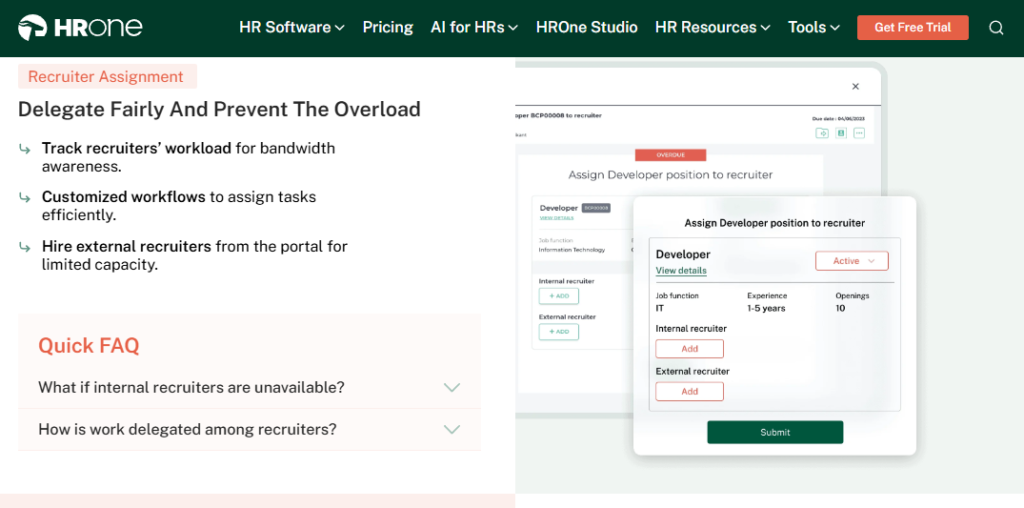
- Super Inbox collapses every pending task, request, and approval into one Gmail-style HR inbox, closing each in three clicks, so HR stops switching between five tabs to finish one thing.
- 127 pre-built workflows define who does what and by when across onboarding, confirmation, transfer, promotion, and exit, so HR stops chasing managers over email.
- Payroll Engine automates PF, ESI, and TDS with an auto-scheduler and group payout validation, cutting month-end reconciliation errors under Indian statutory law.
- One AI Suite scores resume relevancy and parses expense receipts automatically, so recruiters and finance drop the manual data entry.
- HRV Studio is a low-code builder that lets HR ship custom apps, like visitor or vendor management, without raising a developer ticket.
- India’s first inbuilt ROI Dashboard calculates lifetime hours saved against average HR salary, so the CHRO walks into a board review with a rupee figure ready.
🇮🇳 India-Specific Compliance & Localization
- PF / ESI / TDS support: Yes (automated calculation, filing, and reconciliation)
- Labour law compliance: Strong (Labour Codes and multi-state slab handling)
- Payroll localization (India-specific): Yes (CTC revisions, FBP, PT, LWF slabs)
- Multi-state compliance handling: Yes (multi-legal-entity on a single instance)
🎯 Who This Is Built For
- Payroll Managers firefighting CTC-revision arrears and multi-state PT slabs every month-end.
- HR Ops leads manually reconciling biometric exports against a standalone leave portal.
- CHROs who cannot answer “how many days to close a confirmation letter” in a board review.
⚠️ Who Should Skip This
- Very small teams under 30 people wanting a lightweight, spreadsheet-style tool without structured workflows.
- Buyers who only need a standalone ATS and nothing else across the lifecycle.
💰 Pricing Structure
- Plan Type(s): Flat PEPM subscription, tiered by module scope.
- Starting Price: Around ₹85 per employee per month, billed after go-live, with no lock-in.
- Tier-wise Breakdown: Not publicly disclosed at a per-tier level, request a quote for module-specific tiers.
- Incremental Cost Drivers: Additional modules or AI add-ons; no separate mobile-app fee.
- Implementation Fee: Bundled, subscription meters only after go-live rather than from purchase day.
- Cost at 200 Employees: request a quote. Cost at 500 Employees: request a quote.
You can sanity-check the commercials yourself on the pricing page or model the savings with our ROI calculator.
🤝 Implementation & Support Reality
- Average go-live timeline as short as 30 days for mid-market rollouts.
- Support channels: phone, email, and a dedicated prior-HR onboarding SPOC (single point of contact) who has actually run HR, not a technical PM reading a checklist.
- Data migration: vendor-led, with reviewers reporting ERP transfers completed within hours.
- Publicly reported NPS: 9.8 on dedicated SPOC support.
We built HROne so HR stops being a backlog to process. When we run payroll software across 2,000+ customer organizations, the connective tissue, one Super Inbox feeding 127 workflows into an ROI Dashboard, is what turns HR from a cost centre into a function that compounds. That is the difference between a prettier portal and an operating system.
💬 Reviews
“I like HROne for its zero-touch payroll and compliance automation… The InboxforHR is a game-changer, centralizing every HR task into one simple inbox, cutting down administrative time by 60-70%.”
Waldon S., Rating 4/5 HROne G2 Verified Review
“It can sometimes feel a bit overwhelming for new users. Certain features take time to understand, and without enough guided support, the learning curve can feel quite steep.”
Nijanthan R., Rating 3.5/5 HROne G2 Verified Review
1.2 Darwinbox
Darwinbox Enterprise-grade India-born suite with strong brand weight.
🏢 Overview
Darwinbox is an Indian HCM founded in 2015 and adopted by large enterprises across Asia, carrying real brand recognition in the enterprise segment. It brings scattered HR processes, attendance, payroll, and performance, onto one platform. On G2, it holds solid ratings, and it is primarily used by big-company HR teams replacing a mix of Excel sheets and legacy tools. Where it leads is enterprise credibility; where it strains, as reviewers note, is speed and everyday task friction.
🛠️ Core Services
- Unified HR platform brings attendance, leave, payroll, and performance together, reducing the manual tracking that scatters across tools.
- Mobile app supports quick actions like leave, attendance, and payslip checks on the go, though reviewers say it is less smooth than desktop.
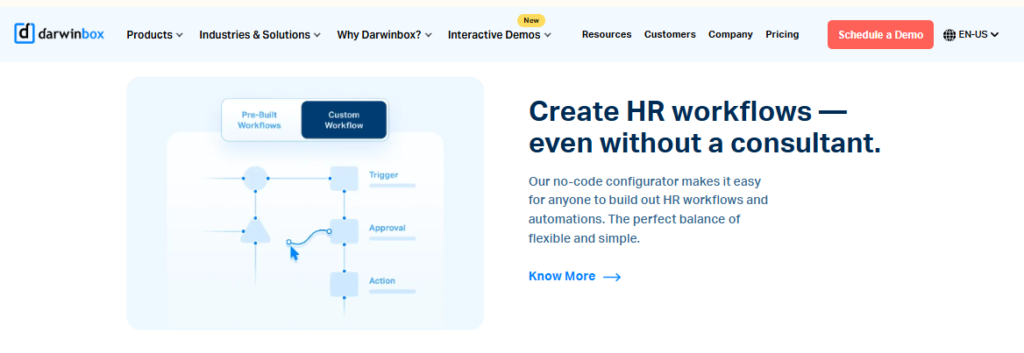
- Configurable workflows adapt to internal processes with limited technical input for standard cases.
- Performance and recruitment modules cover the talent lifecycle, but reviewers report these are not intuitive without training.
- Org structure and directory give employees a clear reporting and hierarchy view.
🇮🇳 India-Specific Compliance & Localization
- PF / ESI / TDS support: Yes (India-born payroll compliance)
- Labour law compliance: Moderate to Strong (enterprise India focus)
- Payroll localization (India-specific): Yes (built for Indian statutory needs)
- Multi-state compliance handling: Yes (enterprise multi-entity support)
🎯 Who This Is Built For
- Enterprise HR leaders who want an India-born brand with board-level recognition.
- HR teams consolidating Excel and legacy tools into a single enterprise platform.
⚠️ Who Should Skip This
- Mid-market teams that need same-day task closure without juggling tabs and emails.
- Buyers who want billing to start only after go-live rather than from purchase day.
💰 Pricing Structure
- Plan Type(s): Quote-based enterprise plans.
- Starting Price: Not publicly disclosed, request a quote.
- Tier-wise Breakdown: Not publicly disclosed, negotiated per enterprise.
- Incremental Cost Drivers: Module scope, add-ons, and contract length.
- Implementation Fee: Not publicly disclosed; reviewers note billing can begin while implementation drags.
- Cost at 200 Employees: request a quote. Cost at 500 Employees: request a quote.
🤝 Implementation & Support Reality
- Go-live timeline: enterprise implementations, typically multi-month.
- Support channels: vendor-led, with reviewers reporting uneven quality.
- Data migration: vendor-led, though some reviewers found the transition from old systems difficult.
- Publicly reported NPS: not publicly disclosed.
For a mid-market buyer, the honest question is not whether Darwinbox is capable, it clearly is at enterprise scale, but whether you want to juggle tabs and emails to close a routine task, and pay from day one while implementation runs. That is exactly the friction the Super Inbox model is designed to remove, and our workforce management approach is built around it. If you are weighing the two directly, the HROne vs Darwinbox breakdown covers pricing and support head-to-head.
💬 Reviews
“Darwinbox has made HR processes much smoother by bringing everything together on one platform… The interface is easy to use, and most tasks can be completed quickly without needing support.”
Saksham A., Rating 4/5 Darwinbox G2 Verified Review
“Bad implementation experience, bad UI/UX, configurations getting broken in production on its own due to product deployments, terrible customer service. Basically everything.”
Verified User in Computer Software, Rating 0/5 Darwinbox G2 Verified Review
1.3 Keka
Keka Polished UX for SMB payroll and attendance.
🏢 Overview
Keka is an SMB-focused HR and payroll platform known for a clean, intuitive interface. It serves smaller Indian teams that want quick payroll and attendance basics without heavy configuration. On G2, it holds mixed ratings, praised for UI but flagged for support and slow implementation. It is primarily used by growing SMBs, though reviewers report friction the moment multi-entity or shift-based reality appears.
🛠️ Core Services
- Payroll and compliance automate salary, attendance, and statutory processing across PF, ESI, and TDS.
- Attendance and leave handle standard tracking with a mobile app.
- Performance module (PMS) covers reviews, though reviewers say it is confusing.
- Hiring (Keka Hiro) tracks resource management and automates offer-letter workflows.
- Document management generates HR documents and reduces paperwork.
🇮🇳 India-Specific Compliance & Localization
- PF / ESI / TDS support: Yes (payroll statutory automation)
- Labour law compliance: Moderate (SMB-focused)
- Payroll localization (India-specific): Yes
- Multi-state compliance handling: Limited (rigid configuration reported)
🎯 Who This Is Built For
- Growing SMBs wanting a polished, easy-to-navigate payroll and attendance tool.
- HR teams prioritising interface simplicity over deep configuration.
⚠️ Who Should Skip This
- Multi-legal-entity or shift-based manufacturing firms needing flexible configuration.
- Teams that need weekend support and fast, structured implementation.
💰 Pricing Structure
- Plan Type(s): Per-employee tiered plans.
- Starting Price: Tiered per-employee, request a quote for current slabs.
- Incremental Cost Drivers: Module scope and add-ons.
- Implementation Fee: Reviewers report long, sometimes stalled setups.
- Cost at 200 Employees: request a quote. Cost at 500 Employees: request a quote.
🤝 Implementation & Support Reality
- Go-live timeline: reviewers report delays, some setups running months.
- Support channels: email and ticket-led, with no cover from Friday evening to Monday morning per reviewers.
- Data migration: reviewers cite friction moving from prior systems.
Where Keka strains, the connective tissue matters most. We built HROne so a named prior-HR SPOC answers you, not an email queue that goes quiet over the weekend. If you are weighing the two, the HROne vs Keka comparison and our attendance management module break down the configuration gaps directly.
💬 Reviews
“Strong payroll and compliance, automate salary and attendance processing with PF, ESI, TDS. Responsive support team. Mobile app available. PMS module is confusing and needs to be simpler.”
Kiran B., Rating 3/5 Keka G2 Verified Review
“From Friday evening 6PM to Monday morning 10AM, there is no source of support from Keka. Telephonic communication to a POC during emergency is not possible.”
Prem K., Rating 2.5/5 Keka G2 Verified Review
1.4 greytHR
greytHR Long-standing, compliance-first SMB payroll engine.
🏢 Overview
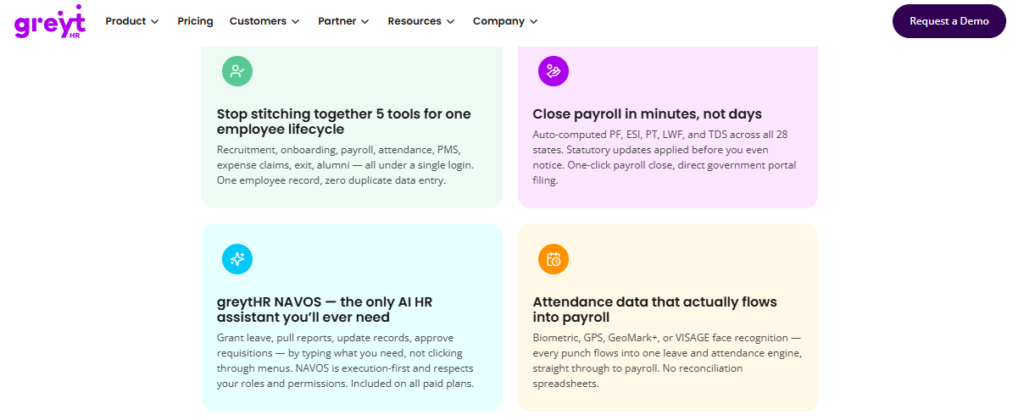
greytHR is a veteran Indian payroll and HR platform with a stable statutory engine and a large SMB install base. It serves compliance-first teams that want dependable payslips, leave, and attendance. On G2, ratings are mixed, with a decent UI but recurring flags on rigid configuration and slow support. It is primarily used by SMBs, though reviewers note limits on customisation and TDS handling.
🛠️ Core Services
- Payroll and payslips anchor the platform with statutory processing.
- Leave and holiday management cover standard workflows.
- Attendance monitoring works across location units.
- Tax declaration lets employees declare and pick tax regimes from their login.
- Employee self-service gives access to payslips and attendance.
🇮🇳 India-Specific Compliance & Localization
- PF / ESI / TDS support: Yes (though reviewers flag TDS revision limits)
- Labour law compliance: Moderate
- Payroll localization (India-specific): Yes
- Multi-state compliance handling: Limited (rigid customisation reported)
🎯 Who This Is Built For
- Compliance-first SMBs wanting a stable, proven payroll base.
- Budget-conscious teams comfortable with a simpler feature set.
⚠️ Who Should Skip This
- Teams needing flexible, company-specific policy configuration.
- Firms expecting fast, well-staffed support and modern mobile parity.
💰 Pricing Structure
- Plan Type(s): Tiered per-employee plans.
- Starting Price: request a quote for current slabs.
- Incremental Cost Drivers: Module scope and add-ons.
- Implementation Fee: reviewers report configuration effort and gaps.
- Cost at 200 Employees: request a quote. Cost at 500 Employees: request a quote.
🤝 Implementation & Support Reality
- Go-live timeline: reviewers cite manual correction effort during setup.
- Support channels: ticket plus callback, with reviewers reporting an under-trained team.
- Data migration: high dependency on the greytHR team for customisation.
For teams outgrowing rigid configuration, the honest gap is flexibility and support depth. Our payroll solution handles multi-state slabs on one instance, and if you are comparing, the HROne vs greytHR breakdown covers where each engine fits.
💬 Reviews
“GreytHR is fine software for payroll processing and I have been using it since 10 years. Better UI, simplicity and time for support. Reporting configuration, TDS filing, revising of TDS is not possible.”
Krishnanand B., Rating 3/5 greytHR G2 Verified Review
“GreytHR is not much good at customizing based on our requirements. From implementation onwards, there were issues with leave balance. We cannot properly implement our company policies due to the limitations of greytHR.”
Verified User in IT and Services, Rating 2/5 greytHR G2 Verified Review
1.5 Zoho People
Zoho People Low-cost HR for the Zoho ecosystem.
🏢 Overview
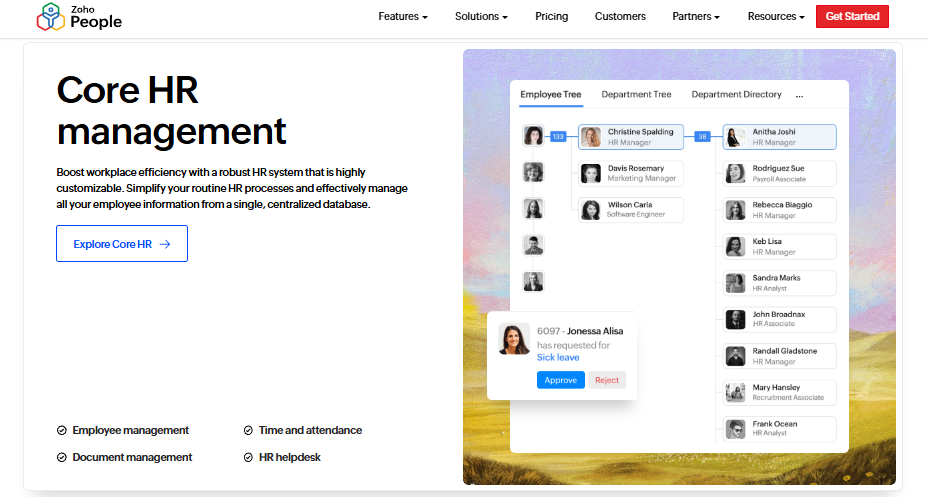
Zoho People is a low-priced HR tool that shines when you already run other Zoho apps. It serves startups and small teams wanting attendance, leave, and onboarding basics at a low entry price. On G2, ratings are mixed, with praise for onboarding and integration but flags on shallow depth and slow support. It is primarily used by SMBs inside the wider Zoho suite.
🛠️ Core Services
- Attendance and leave management with digital approvals.
- Onboarding lets candidates enter their own data, completing setup within a day.
- Zoho integration connects to Zoho Recruit and Zoho Payroll.
- Self-service lets employees check leave balances directly.
- LMS module added within the SaaS model.
🇮🇳 India-Specific Compliance & Localization
- PF / ESI / TDS support: Via Zoho Payroll (add-on integration)
- Labour law compliance: Basic (global generalist)
- Payroll localization (India-specific): Limited (under-serves CTC and FBP depth)
- Multi-state compliance handling: Limited
🎯 Who This Is Built For
- Startups already committed to the Zoho ecosystem.
- Small teams wanting low-cost attendance and leave basics.
⚠️ Who Should Skip This
- Mid-market firms needing deep India-specific CTC, FBP, and wage-code handling.
- Teams that cannot absorb slow support responses.
💰 Pricing Structure
- Plan Type(s): Per-user per-month, freemium entry.
- Starting Price: Low per-user entry, reviewers found purchase-stage pricing confusing.
- Incremental Cost Drivers: Add-on Zoho apps and higher tiers.
- Cost at 200 Employees: request a quote. Cost at 500 Employees: request a quote.
🤝 Implementation & Support Reality
- Go-live timeline: quick setup, supported by instructional videos.
- Support channels: email and ticket, reviewers report long response times.
- Data migration: light, self-serve onboarding.
The trade-off is clear. A low sticker price rarely covers India-specific statutory depth, and support gaps hurt at month-end. Our HR solution is built India-first, and the HROne vs Zoho People comparison shows where the depth difference lands.
💬 Reviews
“Candidates can enter their own information, making the onboarding process smooth. Its integration with other Zoho apps streamlines recruitment and payroll. The biggest drawback has been the lack of customer support.”
Dhana C., Rating 4/5 Zoho People G2 Verified Review
“Features are shallow and there is no depth in each application.”
Verified User in IT and Services, Rating 2.5/5 Zoho People G2 Verified Review
1.6 ZingHR
ZingHR Broad hire-to-retire modules with UI friction.
🏢 Overview
ZingHR is an Indian hire-to-retire platform offering a wide module range across learning, performance, and payroll. It serves enterprises wanting breadth in a single system. On G2, ratings skew low, with reviewers praising features but flagging an outdated UI, slow performance, and delayed support. It is primarily used by mid-to-large enterprises managing workforce data and payroll.
🛠️ Core Services
- Hire-to-retire modules span calendar, payroll, and learning.
- Payroll tools include tax deduction uploads, payslips, and a tax simulator.
- Performance management and NPS features.
- Helpdesk tracks HR queries.
- Workforce and core HR manage employee data.
🇮🇳 India-Specific Compliance & Localization
- PF / ESI / TDS support: Yes
- Labour law compliance: Moderate
- Payroll localization (India-specific): Yes
- Multi-state compliance handling: Yes (breadth available)
🎯 Who This Is Built For
- Enterprises wanting wide module coverage in one system.
- Teams that can tolerate a dated interface for feature breadth.
⚠️ Who Should Skip This
- Teams that need a fast, modern, stable mobile experience.
- Firms relying on quick, responsive support for payroll-critical issues.
💰 Pricing Structure
- Plan Type(s): Quote-based.
- Starting Price: request a quote.
- Incremental Cost Drivers: Customisation, which reviewers call expensive and time-consuming.
- Cost at 200 Employees: request a quote. Cost at 500 Employees: request a quote.
🤝 Implementation & Support Reality
- Go-live timeline: reviewers report long, incomplete implementations.
- Support channels: email-led, with reviewers citing delayed replies.
- Data migration: vendor-led, customisation needs time and effort.
Breadth without speed is a hard trade for a payroll manager. Our workforce management approach pairs module depth with a mobile-first, stable experience, and the HROne vs ZingHR comparison covers the performance gap directly.
💬 Reviews
“Ability to create multiple workstreams like calendar, payroll, learning. ZingHR has all that is needed to manage day to day activities. Outdated UI/UX. Customization is difficult and tech support is not great.”
Parth B., Rating 3.5/5 ZingHR G2 Verified Review
“System implementation experience was horrible, in 6 months the implementation was barely completed to 40%. Support is never on time. Replies to emails get delayed by days if not weeks.”
Sanmeet S., Rating 2/5 ZingHR G2 Verified Review
1.7 PeopleStrong
PeopleStrong Mobile-first self-service for Indian enterprises.
🏢 Overview
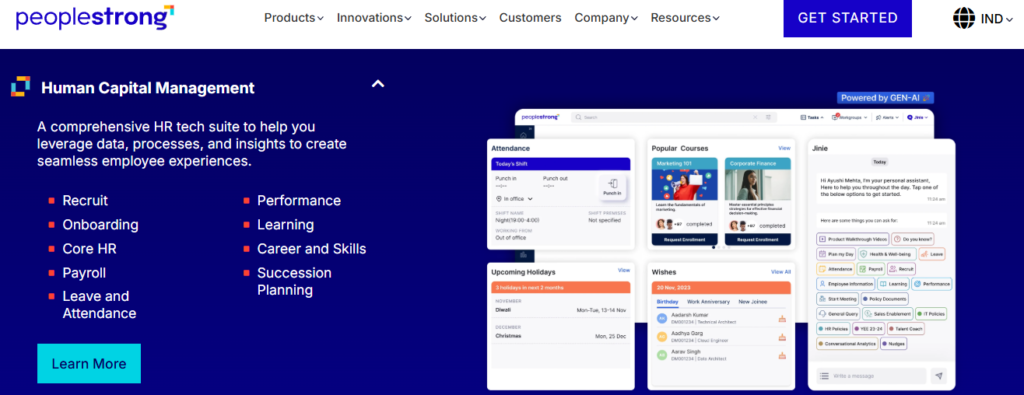
PeopleStrong is an Indian enterprise HCM with a strong mobile-first employee experience. It serves mid-to-large firms wanting clean self-service for claims, payslips, and attendance. On G2, ratings are solid, with reviewers praising mobile ease but flagging occasional lag and slow approvals. It is primarily used by enterprises consolidating everyday HR tasks into one app.
🛠️ Core Services
- Mobile self-service for attendance, leave, and payslips in a tap.
- Reimbursement and claims with clear status tracking.
- Payroll and payslip access in one place.
- KRA and performance tracking.
- Jinie assistant for quick employee help.
🇮🇳 India-Specific Compliance & Localization
- PF / ESI / TDS support: Yes
- Labour law compliance: Moderate to Strong
- Payroll localization (India-specific): Yes
- Multi-state compliance handling: Yes
🎯 Who This Is Built For
- Enterprises prioritising a strong mobile self-service experience.
- Teams wanting claims and payslip tracking in a single app.
⚠️ Who Should Skip This
- Desktop-heavy admins wanting a simplified web experience.
- Teams that cannot tolerate occasional approval and status lag.
💰 Pricing Structure
- Plan Type(s): Quote-based enterprise plans.
- Starting Price: request a quote.
- Incremental Cost Drivers: Module scope and enterprise scale.
- Cost at 200 Employees: request a quote. Cost at 500 Employees: request a quote.
🤝 Implementation & Support Reality
- Go-live timeline: enterprise-led implementation.
- Support channels: vendor-led.
- Data migration: vendor-managed.
PeopleStrong leads on mobile self-service, credit where due. Where a mid-market buyer benefits from HROne is the connective tissue between that mobile layer and a 127-workflow engine, backed by our mobile HR app with offline attendance. The HROne vs PeopleStrong comparison covers the depth-versus-experience trade.
💬 Reviews
“What I like most is how easy it is to manage reimbursements and claims, and to access my payslips all in one place. The reimbursement process can feel a bit slow at times, especially when approvals take longer than expected.”
Anusha, Rating 5/5 PeopleStrong G2 Verified Review
“It has way too many features and the desktop version isnt very useful because of the multiple options to get 1 job done. It can be simplified further for a smoother desktop version experience.”
Nikhil S., Rating 4/5 PeopleStrong G2 Verified Review
1.8 factoHR
factoHR Strong India payroll for budget-conscious SMEs.
🏢 Overview
factoHR is an SME-focused platform with dependable Indian payroll and attendance at an accessible price. It serves smaller teams that need solid PF, ESI, and TDS automation without enterprise overhead. It is primarily used by budget-conscious SMEs prioritising statutory accuracy over deep talent or analytics features.
🛠️ Core Services
- Payroll automation across PF, ESI, and TDS.
- Attendance and leave management.
- Core HR employee records.
- Mobile access for self-service.
- Statutory reports for compliance.
🇮🇳 India-Specific Compliance & Localization
- PF / ESI / TDS support: Yes (a core strength)
- Labour law compliance: Moderate
- Payroll localization (India-specific): Yes
- Multi-state compliance handling: Yes
🎯 Who This Is Built For
- SMEs wanting reliable India payroll on a tight budget.
- Teams that value statutory accuracy over broad feature depth.
⚠️ Who Should Skip This
- Enterprises needing deep talent, analytics, and workflow depth.
- Firms wanting a large ecosystem and integration breadth.
💰 Pricing Structure
- Plan Type(s): Per-employee tiered.
- Starting Price: budget-friendly, request a quote for slabs.
- Incremental Cost Drivers: Module add-ons.
- Cost at 200 Employees: request a quote. Cost at 500 Employees: request a quote.
🤝 Implementation & Support Reality
- Go-live timeline: quick for SME setups.
- Support channels: email and phone.
- Data migration: vendor-assisted.
factoHR does India payroll well for its segment. Where HROne extends the story is turning that payroll accuracy into full hire-to-retire depth with an ROI calculator that proves savings, and the HROne vs FactoHR comparison maps the breadth gap.
💬 Reviews
“Proper calculation of PF and ESI was a pain area for us before, but now with the HROne automated calculation process, results are up to the mark and following Indian tax compliances properly.”
Ajay K., Rating 5/5 HROne G2 Verified Review
1.9 Qandle
Qandle Modular HR you switch on as you need.
🏢 Overview
Qandle is a modular Indian HR platform that lets SMEs configure and pay for only the modules they need. It serves smaller teams that want flexibility without buying a full suite. It is primarily used by SMEs adopting HR tech in stages, with a smaller install base than the market leaders.
🛠️ Core Services
- Modular HR suite switched on by need.
- Payroll and attendance core modules.
- Performance and engagement modules.
- Onboarding workflows.
- Employee self-service portal.
🇮🇳 India-Specific Compliance & Localization
- PF / ESI / TDS support: Yes
- Labour law compliance: Moderate
- Payroll localization (India-specific): Yes
- Multi-state compliance handling: Moderate
🎯 Who This Is Built For
- SMEs wanting to adopt HR modules incrementally.
- Teams that value modular, pay-for-what-you-use pricing.
⚠️ Who Should Skip This
- Enterprises wanting a large ecosystem and deep integrations.
- Firms needing a big install base for peer reassurance.
💰 Pricing Structure
- Plan Type(s): Modular per-employee.
- Starting Price: request a quote by module.
- Incremental Cost Drivers: Each added module.
- Cost at 200 Employees: request a quote. Cost at 500 Employees: request a quote.
🤝 Implementation & Support Reality
- Go-live timeline: quick for modular setups.
- Support channels: email and ticket-led.
- Data migration: vendor-assisted.
Modular pricing is genuinely useful for staged adoption. HROne shares that philosophy, turn on only what you need, the whole hog, but pairs it with a 127-workflow spine and a core HCM foundation. The HROne vs Qandle comparison covers scale headroom.
💬 Reviews
“I love HROne for its cost efficiency and holistic approach. It is incredibly convenient and cost-effective for mid-level and enterprise customers.”
Priyanka S., Rating 5/5 HROne G2 Verified Review
1.10 Workday
Workday Deep global HCM for large enterprises.
🏢 Overview
Workday is a global enterprise HCM with deep functionality and strong analytics. It serves large, often multinational, organisations above 3,000 employees. It is primarily used by enterprises standardising HR across geographies, and it is priced and scoped well beyond the 100 to 5,000 employee mid-market sweet spot.
🛠️ Core Services
- Global HCM suite across the full lifecycle.
- Advanced analytics and reporting.
- Talent and learning management.
- Global payroll and compliance framework.
- Financial management integration.
🇮🇳 India-Specific Compliance & Localization
- PF / ESI / TDS support: Via configuration/partners
- Labour law compliance: Global framework, India via localisation
- Payroll localization (India-specific): Limited native depth
- Multi-state compliance handling: Via configuration
🎯 Who This Is Built For
- Large global enterprises standardising HR across countries.
- Organisations needing deep global analytics.
⚠️ Who Should Skip This
- Mid-market Indian firms of 100 to 5,000 employees on a defined budget.
- Teams wanting native India-first statutory depth out of the box.
💰 Pricing Structure
- Plan Type(s): Quote-based, high entry point.
- Starting Price: enterprise-scale, request a quote.
- Incremental Cost Drivers: Modules, partner delivery, and long implementation.
- Cost at 200 Employees: typically out of range. Cost at 500 Employees: request a quote.
🤝 Implementation & Support Reality
- Go-live timeline: multi-month, partner-delivered.
- Support channels: partner and enterprise support.
- Data migration: partner-managed.
Workday is a genuine leader at global scale. For a 100 to 5,000 employee Indian firm, the honest question is fit and cost, which is the middle-market lockout in practice. Our HR solution is purpose-built for that locked-out segment with native India statutory depth.
1.11 SAP SuccessFactors
SAP SuccessFactors Wide global modules, heavy customisation cost.
🏢 Overview
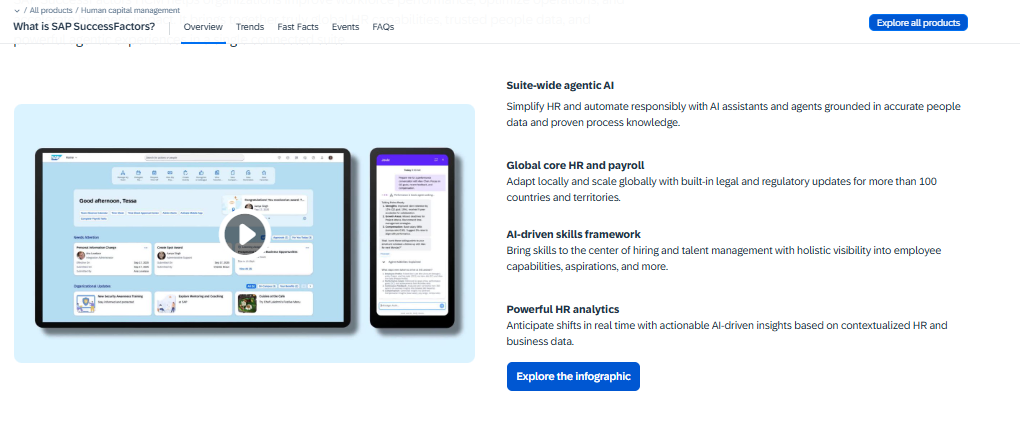
SAP SuccessFactors is a global enterprise HCM with wide module coverage across geographies. It serves large SAP-standardised organisations. On G2, ratings skew critical, with reviewers flagging a non-intuitive UI, freezes, and costly third-party customisation. It is primarily used by global enterprises already committed to the SAP stack.
🛠️ Core Services
- Global HCM modules across the lifecycle.
- Recruiting and ATS functionality.
- Learning management (LMS).
- Performance and compensation.
- Foundation layer for enterprise data.
🇮🇳 India-Specific Compliance & Localization
- PF / ESI / TDS support: Via configuration/partners
- Labour law compliance: Global framework, India via localisation
- Payroll localization (India-specific): Limited native depth
- Multi-state compliance handling: Via configuration
🎯 Who This Is Built For
- Global enterprises standardised on SAP.
- Organisations needing wide geographic module coverage.
⚠️ Who Should Skip This
- Mid-market firms wanting a user-friendly, low-maintenance system.
- Teams that cannot absorb costly third-party customisation.
💰 Pricing Structure
- Plan Type(s): Quote-based, high entry point.
- Starting Price: enterprise-scale, request a quote.
- Incremental Cost Drivers: Third-party customisation, which reviewers call costly.
- Cost at 200 Employees: typically out of range. Cost at 500 Employees: request a quote.
🤝 Implementation & Support Reality
- Go-live timeline: long, partner-delivered.
- Support channels: partner plus ticket, reviewers report low-touch service.
- Data migration: reviewers cite slow, costly exports.
SAP has real global weight. For the mid-market, needing back-end developers to change a leave policy is the friction that hurts. Our HR software lets HR teams adjust policies without a developer ticket, and the HROne vs SAP comparison covers the operating-model gap.
💬 Reviews
“Covers a wide range of HR modules in theory, but its not user-friendly. System often freezes. Customization requires third-party vendors, every change is costly. Ferrari price, Trabant value.”
Janka Z., Rating 0/5 SAP SuccessFactors G2 Verified Review
1.12 Oracle Cloud HCM
Oracle Cloud HCM Enterprise-scale analytics, heavy for mid-market.
🏢 Overview
Oracle Cloud HCM is a global enterprise HCM with strong analytics and deep scale. It serves large organisations, often already on the Oracle stack. It is primarily used by global enterprises needing robust reporting and integration, and like other legacy-scale suites, it is over-engineered for 100 to 5,000 employee firms.
🛠️ Core Services
- Global HCM suite across the lifecycle.
- Advanced analytics and workforce insights.
- Talent management.
- Global payroll framework.
- ERP integration across the Oracle stack.
🇮🇳 India-Specific Compliance & Localization
- PF / ESI / TDS support: Via configuration/partners
- Labour law compliance: Global framework, India via localisation
- Payroll localization (India-specific): Limited native depth
- Multi-state compliance handling: Via configuration
🎯 Who This Is Built For
- Global enterprises on the Oracle stack.
- Organisations needing strong analytics at scale.
⚠️ Who Should Skip This
- Mid-market Indian firms wanting a lean, India-first system.
- Teams that cannot justify heavy implementation and cost.
💰 Pricing Structure
- Plan Type(s): Quote-based, high entry point.
- Starting Price: enterprise-scale, request a quote.
- Incremental Cost Drivers: Modules, partner delivery, and implementation.
- Cost at 200 Employees: typically out of range. Cost at 500 Employees: request a quote.
🤝 Implementation & Support Reality
- Go-live timeline: multi-month, partner-delivered.
- Support channels: partner and enterprise support.
- Data migration: partner-managed.
Oracle is powerful where global scale and analytics are the priority. For a mid-market CHRO, HROne answers the same analytics need with India’s first inbuilt HROne AI and ROI Dashboard, without the enterprise overhead. That is the difference between over-engineered and purpose-built for the 100 to 5,000 employee reality.
💬 Reviews
“I like HROne for its zero-touch payroll and compliance automation. The InboxforHR centralizes every HR task into one simple inbox, cutting down administrative time by 60-70%.”
Waldon S., Rating 4/5 HROne G2 Verified Review
Q2. How Did We Score and Rank These 12 HCM Platforms?
We scored each platform on five weighted criteria totalling 100%: Module Breadth and Workflow Depth (30%), Statutory and Compliance Coverage (25%), Scalability and Configurability (20%), Implementation and Support Experience (15%), and Pricing Transparency (10%). Scores of 0 to 20 earn 1 star, rising to 5 stars for 81 to 100. HROne scores 5 stars on module breadth and statutory depth.
📊 The Rubric and Why Each Weight
I want the ranking to be checkable, not asserted. So here is the exact rubric, weighted for how an Indian mid-market buyer actually feels pain. Breadth carries the most weight because a system that misses half the lifecycle just moves the manual work elsewhere.
| Criterion | Weight | What we measured |
|---|---|---|
| Module Breadth & Workflow Depth | 30% | Native modules and pre-built workflows across hire-to-retire |
| Statutory & Compliance Coverage | 25% | PF, ESI, PT, and TDS automation and multi-state readiness |
| Scalability & Configurability | 20% | Growth via configuration, not re-implementation |
| Implementation & Support Experience | 15% | Go-live speed, support model, and migration reality |
| Pricing Transparency | 10% | Clear PEPM and honest implementation fees |
Star bands are as follows: 1 star (0 to 20), 2 stars (21 to 40), 3 stars (41 to 60), 4 stars (61 to 80), and 5 stars (81 to 100). You can pressure-test our weights against your own priorities using the HRMS evaluation checklist.
🧭 How to Re-Weight It for Your Context
The weights reflect a common Indian reality, but yours may differ. A pure payroll shop should push Statutory Coverage toward 40%. A fast-scaling startup should lift Scalability, since re-implementation is the tax nobody budgets for.
Here is the thing systems people forget. Software is not the saviour, the HR person is. The rubric scores tools, but the goal is freeing a human to do human work, not worshipping a dashboard. That belief shaped the 30% breadth weight, because scattered tools quietly hand tasks back to your team, a case we make in our take on HR solution design.
HROne earns its 5 stars on breadth and statutory depth honestly, through 30+ modules, 127 pre-built workflows, and India’s first inbuilt ROI Dashboard, not through brand noise. We would rather you apply this rubric yourself than take our word for it, and our ROI calculator lets you model the savings for your own headcount.
Q3. What Is HCM Software and How Is It Different From HRMS and HRIS?
HCM (Human Capital Management) software is a unified cloud platform managing the full employee lifecycle, core HR, payroll, attendance, recruitment, performance, learning, engagement, and analytics, while automating Indian statutory compliance like PF, ESI, PT, and TDS. HRIS is mainly a record database, HRMS adds payroll and attendance operations, and HCM is the broadest, adding talent, analytics, and strategy across hire-to-retire.
🔤 The Alphabet Soup, Sorted
The three terms confuse everyone, so here is the plain version. Think of them as three buckets that stack on top of each other.
- HRIS (Human Resource Information System): the database. It stores employee records, documents, and basic details.
- HRMS (Human Resource Management System): the database plus daily operations, like payroll and attendance.
- HCM (Human Capital Management): all of that, plus talent, analytics, and strategy across the whole lifecycle.
If you want the deeper primer, our core HCM overview breaks each layer down further.
🔗 A Concrete Example
Picture attendance flowing straight into payroll, then into an analytics dashboard. An HRIS just holds the attendance record. An HRMS runs the payroll from it. An HCM also tells the CHRO what that data means, like how many days a confirmation letter takes.
Here is the trap I see constantly. Many vendors sell “a simple database with a login” and stop there, stuck gathering data without doing much with it. My current thinking is that data collection alone is a default failure. The real question is, how do we put that data into action?
That is the honest test for a “just a database” vendor versus a true HCM. Ask whether the tool reports insight or only stores records. HROne sits in the action camp, because its ROI Dashboard converts saved hours into a rupee figure for the board, not just a row in a table, an approach our payroll software is built around.
Q4. Which HCM Software Has the Deepest Module Breadth and Truly Scales With You?
The deepest HCM platforms cover the full hire-to-retire spectrum. A true HCM needs roughly 10 modules and 127 workflows, from pre-boarding to exit separation, and scales through configuration, not re-implementation. Research links intelligent cloud HR to greater workforce agility. HROne, Darwinbox, and PeopleStrong lead on breadth, while enterprise-only suites like Workday often exclude 100 to 5,000 employee firms.
🐖 The “Whole Hog” Problem
Most buyers get sold the whole hog and eat a third of it. Then a lateral hire joins, and the ATS-only tool cannot run confirmation or exit. That gap, mid-implementation, is where the manual chasing quietly returns.
The fix is not more tools. It is one connected spine where every workflow triggers the next, so onboarding flows into confirmation, transfer, and exit clearance without email chases, which is exactly what our workforce management engine is designed to deliver.
📊 Module & Scalability Matrix
| Platform | Module Breadth | Scales Via | Not Recommended For |
|---|---|---|---|
| HROne | Deep (30+ modules, 127 workflows) | Configuration, HRV Studio low-code | Teams under 30 wanting a bare tool |
| Darwinbox | Deep enterprise suite | Vendor configuration | Teams needing same-day task closure |
| PeopleStrong | Broad, mobile-first | Vendor configuration | Desktop-heavy admins wanting simplicity |
| Keka | Moderate (core HR, payroll, PMS) | Config with limits | Multi-entity, shift-based firms |
| Workday | Deep global suite | Config, heavy implementation | Indian mid-market 100 to 5,000 |
🏎️ The Ferrari Test
Here is a research-backed reason breadth matters. Studies tie intelligent, cloud-based HR to stronger workforce agility, the ability to adapt fast. Depth on one platform is what makes that agility real, not a slide.
But depth is useless if only the vendor can drive it. I call this the Ferrari test. A powerful system that needs a developer to change a leave policy is a Ferrari you cannot start. Enterprise ERPs often fail here, and that is the mid-market lockout in practice, which is why our HR software lets HR teams reconfigure policies without a developer ticket.
At real scale, HROne completes up to 1.5 crore tasks a month, and its 127 workflows carry a person from offer to salary automatically. In a demo, ask three questions. Can your own admin change a policy alone? Does adding a module need re-implementation? Can it prove ROI to the board? For guidance on stress-testing scale, see our notes on scaling HR processes. One of our customers answered the first one plainly.
“The workflows are pretty handy as they allow us to map our policies automatically. The support team is always ready to help us with any issues.”
Rishiraj R., Rating 4/5 HROne G2 Verified Review
“Instead of using multiple tools or manual tracking for attendance, leave, payroll, performance reviews, and employee data, it brings everything into one platform.”
Saksham A., Rating 4/5 Darwinbox G2 Verified Review
Q5. Which HCM Software Handles Indian Statutory Compliance Best?
The strongest HCM platforms for Indian compliance automate PF (EPFO), ESI (ESIC), state-wise Professional Tax, TDS with Form 16 and 24Q, DPDP Act 2023 consent for biometric data, and POSH and Maternity Benefit workflows. They also stay current with the four Labour Codes, live since 21 November 2025. Most competitor tables show only binary PF and ESI checkmarks, while HROne, greytHR, and factoHR go deeper.
💸 Why Getting Filings Wrong Is Expensive
Compliance is not admin trivia, it is money and trust. Research shows about 1 in 5 payrolls contain an error, each costing roughly $291 to fix before penalties even land. In India, IRS-style late-deposit logic has its own parallel in PF and TDS interest and damages.
The bigger cost is people. Nearly 49% of workers say they will hunt for a new job after just two payroll mistakes. A payroll manager once told me a single wrong PF month cost her three resignations. That is the real stakes, not a checkbox, and it is why we treat PF, ESI, and TDS compliance as core rather than an add-on.
📋 Indian Statutory Coverage Matrix
| Statute / Rule | What a true HCM must automate | Depth to demand |
|---|---|---|
| PF (EPFO) | Contribution, ECR, reconciliation | Full auto-filing |
| ESI (ESIC) | Eligibility, contribution, filing | Full auto-filing |
| Professional Tax | State-wise slabs | Multi-state slabs |
| TDS | Form 16, 24Q generation | End-to-end |
| Labour Codes (2025) | 50% wage rule, gratuity for FTEs | Live readiness |
| DPDP Act 2023 | Consent for biometric data | Explicit consent flows |
| POSH & Maternity | Committee and leave workflows | Built-in workflows |
✅ How to Audit a Vendor Before Signing
The Labour Codes are in a hybrid phase, with final central rules expected around 1 April 2026. So ask pointed questions. Does the tool already handle the 50% wage rule that reshapes salary slips? Can it run a shadow payroll to test the impact? For multi-state teams, our guide to multi-state payroll compliance lays out the checks.
Here is where HROne earns its statutory stars. Its payroll solution with an auto-scheduler and group payout validation is built for multi-state, multi-entity reality, and Asia Healthcare Holdings runs 20 pan-India units on one instance. That is compliance depth as risk reduction, not a marketing checkmark.
“Proper calculation of PF and ESI was a pain area for us before, but now with the HROne automated calculation process, results are up to the mark and following Indian tax compliances properly.”
Ajay K., Rating 5/5 HROne G2 Verified Review
“Reporting configuration, TDS filing, revising of TDS is not possible, and there is limited visibility of income considered for TDS filing.”
Krishnanand B., Rating 3/5 greytHR G2 Verified Review
Q6. Which HCM Software Is Best for Your Company Size, Sector, and Budget?
For 100 to 5,000 employee mid-market firms in IT/ITeS, BFSI, Manufacturing, and Logistics, HROne, Keka, and Darwinbox fit best. Startups suit Zoho People and factoHR, while global enterprises lean to Workday, SAP, and Oracle. Pricing runs roughly ₹30 to ₹300 per employee per month, but watch implementation fees. Users praise intuitive dashboards and payroll accuracy while flagging email-only support and ROI-tracking gaps.
🏢 Fit by Size and Sector
Buyers self-identify by size and sector, so here is the honest map. Picture three protagonists.
- Startup (under 100): a founder wanting cheap, fast basics, Zoho People or factoHR.
- Mid-market (100 to 5,000): an HR ops lead in IT, BFSI, manufacturing, or logistics juggling multi-entity payroll, HROne, Keka, or Darwinbox.
- Global enterprise (3,000+): a CHRO standardising across countries, Workday, SAP, or Oracle.
Sector matters too. Shop-floor and field staff need vernacular mobile apps, in Tamil or Bengali, not just English. That vernacular shift is where India-tuned tools separate from global generalists, and it is central to our manufacturing HR and logistics HR solutions.
💰 Pricing and Hidden-Cost Checklist
| Segment | Typical PEPM | Watch out for |
|---|---|---|
| Startups | ₹30 to ₹80 | Shallow depth, slow support |
| Mid-market | ₹85 to ₹200 | Implementation fees, lock-in |
| Enterprise | ₹200 to ₹300+ | Long rollouts, partner costs |
The trap I see most is the implementation fee trauma. Some enterprise tools charge a heavy one-time fee, then bill subscription from day one while go-live drags for months. Ask for total cost of ownership over three years, not the sticker PEPM, and check it against our transparent pricing.
⚠️ The Complaints to Test in a Trial
Reviews are the honest counterpoint, so read the two-star ones. Recurring gripes cluster around email-only support and a missing way to prove ROI. Test both in a trial. Raise a Friday-evening support ticket, and ask the vendor to show a ROI report.
This is exactly the gap HROne was built to answer. A dedicated prior-HR SPOC (single point of contact) replaces the email queue, billing meters only after go-live, and India’s first inbuilt ROI Dashboard turns saved hours into a rupee figure for the board, which you can preview with our ROI calculator.
“I love HROne for its cost efficiency and holistic approach. It is incredibly convenient and cost-effective for mid-level and enterprise customers.”
Priyanka S., Rating 5/5 HROne G2 Verified Review
“The biggest drawback for me has been the lack of customer support. Whenever I try to reach out, it often takes a long time to get a response.”
Dhana C., Rating 4/5 Zoho People G2 Verified Review
Q7. How Do You Choose and Switch to the Right HCM Without It Breaking?
Choosing the right HCM comes down to five moves. Map your actual workflows before demos, score vendors on module breadth and statutory coverage, stress-test scalability with your deepest data layers, confirm support is a named human not an email queue, and demand total-cost clarity. Mid-year switching is not as risky as vendors claim, and with the right questions, it is manageable.
🧭 The 5-Step Selection Checklist
Here is the sequence I would run, in order.
- Map your real workflows first. List every task from pre-boarding to exit before you watch a single demo.
- Score on breadth and statutory depth. Use a weighted rubric, not gut feel, and lean on our HRMS evaluation checklist.
- Stress-test scalability. Load your messiest data layer, multi-entity, shift rosters, and see if it holds.
- Confirm support is human. Ask for a named SPOC, then test response time on a weekend.
- Demand total-cost clarity. Get three-year cost including implementation fees, add-ons, and per-entity charges.
One tactical win for Monday is to nominate a shadow admin, an internal person who learns the config, so you are never hostage to the vendor. Another is schedule-push analytics, where the system flags rostering gaps before they hit payroll, a strength of our workforce management engine.
🔄 The Mid-Year Migration Myth
Vendors love to say “never switch mid-year.” I think the standard read gets this backwards. The real danger is not the calendar, it is switching three times in four years because you picked shallow tools twice.
A clean migration is about method, not timing. Reverse-engineer from your go-live date, run a parallel payroll for one cycle, and validate statutory outputs against the last known-good run. Do that, and mid-year is manageable, a process we detail in our HRMS migration guide.
So here is what I am genuinely sitting with. If a tool cannot let your own admin change a leave policy without a developer, is it really yours? If you want, map your 127-odd workflows with our core HCM team, and tell us what you are building. I would rather hear your actual mess than pitch you a demo, so book a demo only when you are ready.














 Secures Top Spot in
