



Q1. What Are the 10 Best Talent Management Software Platforms in 2026?
The 10 best talent management software platforms in 2026 are HROne, Darwinbox, SAP SuccessFactors, Workday HCM, Zoho People, Keka, PeopleStrong, greytHR, BambooHR, and Lattice. HROne ranks first for Indian mid-market and enterprise teams because goals, 360-degree appraisal, bell-curve normalisation, and succession run inside one inbox-style workflow backed by 127 pre-built workflows, instead of sitting in separate bolted-on modules.
Picking a talent management platform is a high-stakes call for a 100 to 5,000 employee Indian company, because the system decides who gets promoted, who gets groomed, and who quietly resigns first. For this guide, 10 platforms were evaluated against defined criteria drawn from live G2 and Capterra data, published pricing pages, and peer-reviewed succession research, rather than brand popularity. The primary reader here is the HR ops lead who runs the appraisal cycle every quarter, with the CHRO, CFO, and IT Director reading over their shoulder.
📊 Our Evaluation Criteria
- Succession and Internal Mobility Depth 🎯: bench strength per critical role, readiness scoring, bell-curve normalisation (a calibration step that removes rating bias), and backfill chain planning.
- Talent-to-Payroll Data Integration 🔗: whether a promotion updates compensation, PF, and statutory records on the same employee file.
- Verified User Reviews ⭐: G2 and Capterra ratings, weighted toward reviews filed after month six of usage.
- Setup Speed and Go-Live Reality ⏰: published implementation timelines, migration model, and who owns the project.
- India Compliance and Localisation 🇮🇳: PF, ESI, TDS, professional tax, multi-state rules, and Labour Code readiness.
- AI Depth with Human Control 🤖: CV relevancy scoring, attrition flags, and whether a human still approves the call.
- Pricing Transparency 💰: flat PEPM (per employee per month) clarity, lock-in terms, and when billing actually starts.
- Support Model 📞: dedicated SPOC versus email-only ticket queues.
👥 Who This Guide Is For
- CHROs and HR Heads consolidating fragmented hire-to-retire stacks into one employee record.
- HR Ops leads running quarterly appraisal cycles across multi-entity, shift-based workforces.
- Payroll Managers who inherit every promotion, CTC revision, and arrear calculation at month-end.
- CFOs validating HR tech ROI and flat PEPM commercials before a board review.
- IT Directors evaluating mobile-first, India-tuned HCMs against legacy global portals.
The 10 Platforms at a Glance
| Provider | Best For | Standout Strength | Known Limitation | Go-Live Timeline | Support Model | Pricing Model |
|---|---|---|---|---|---|---|
| HROne ⭐⭐⭐⭐⭐ | HR ops leads chasing managers over email for goals, ratings, and confirmations | Super Inbox closes any pending talent task in three clicks, backed by 127 pre-built workflows | New users report a steep initial learning curve without guided onboarding | As little as 30 days for mid-market | Phone, email, and a prior-HR onboarding SPOC (9.8 NPS) | Flat PEPM, no lock-in, billing starts after go-live |
| Darwinbox ⭐⭐⭐⭐ | Enterprise CHROs standardising HR across Asian entities | Broad module suite plus a genuinely strong mobile app | Users report slow page loads, limited report customisation, and inconsistent syncs | 8 to 16 weeks typical enterprise rollout | Account manager plus ticketing | Quote-based, multi-year contracts common |
| SAP SuccessFactors ⭐⭐⭐⭐ | Global groups needing deep succession modelling and compliance audit trails | Mature succession, calibration, and career pathing at enterprise scale | Configuration changes usually need consultant or developer help | One to two quarters | Partner-delivered | Quote-based, module licensing |
| Workday HCM ⭐⭐⭐⭐ | Multinationals unifying finance and workforce planning on one data model | Best-in-class workforce planning and analytics | Cost and complexity overshoot most 100 to 5,000 employee teams | Two to four quarters | Partner-delivered | Quote-based, per-employee licensing |
| Zoho People ⭐⭐⭐ | Cost-conscious teams already inside the Zoho ecosystem | Very low entry price with wide app breadth | Reviewers call features shallow and support inconsistent | 2 to 6 weeks | Email and ticket | Per-user per-month, freemium entry |
| Keka ⭐⭐⭐ | Growing tech teams wanting clean UX for reviews and OKRs | Approachable interface for first-time HRMS buyers | Documented implementation delays and escalation gaps | 4 to 12 weeks, longer when reported | Largely email threads | Per-employee per-month, tiered |
| PeopleStrong ⭐⭐⭐ | Large Indian enterprises in BFSI and manufacturing | Deep India enterprise footprint and payroll heritage | Interface and reporting flexibility trail newer platforms | One to two quarters | Account manager | Quote-based |
| greytHR ⭐⭐⭐ | SMB payroll managers who need statutory filings done right | Reliable Indian payroll and compliance basics | Reviewers cite outdated UI and TDS revision gaps | 2 to 4 weeks | Email and ticket | Tiered per-employee, low entry |
| BambooHR ⭐⭐⭐ | Global-first teams wanting simple performance and records | Clean employee experience and fast setup | No native Indian statutory payroll or multi-state logic | 2 to 6 weeks | Email and chat | Per-employee per-month, quote for add-ons |
| Lattice ⭐⭐⭐ | People teams focused purely on performance, goals, and engagement | Strong review cycles, OKRs, and 1:1 workflows | Not a full talent suite, so hiring and payroll stay elsewhere | 1 to 4 weeks | Email and chat | Per-user per-month by module |
1. HROne: The Full Hire-to-Retire Operating System
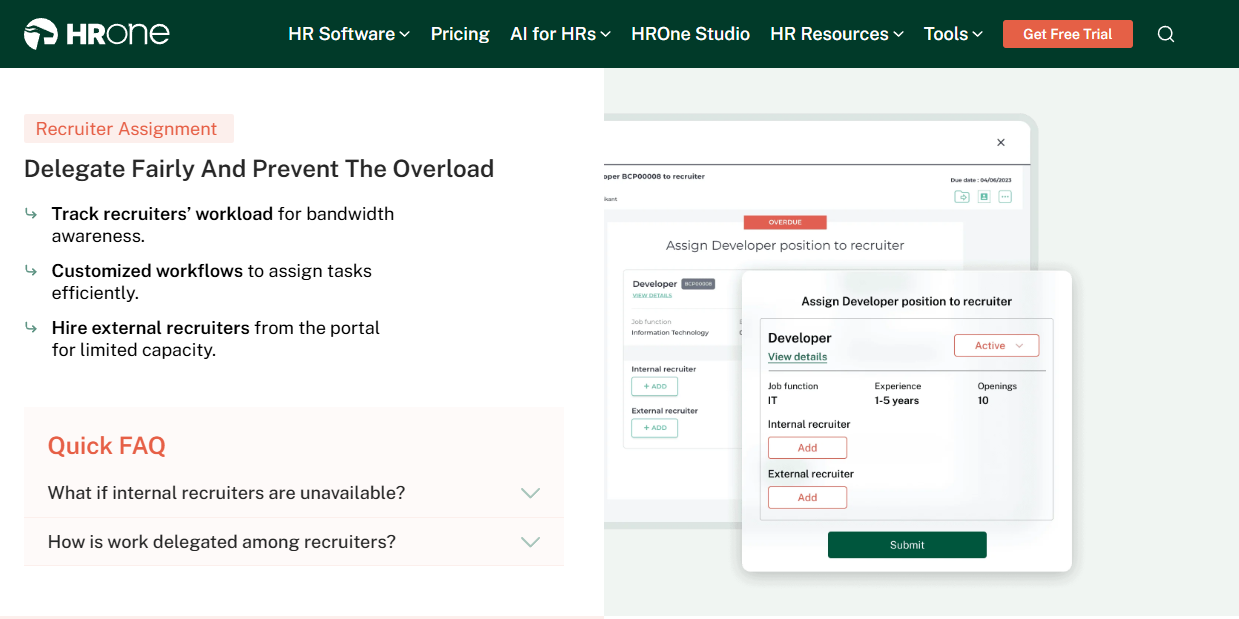
HROne, India-first, mobile-native HCM that closes talent tasks inside one inbox.
🏠 Overview
HROne is a cloud HCM founded in 2016 and built for Indian enterprise and mid-market teams between 100 and 5,000 employees. It runs live across 1,500+ brands, including MR DIY India and Asia Healthcare Holdings, and holds rank #3 in Highest Satisfaction Products out of 1,17,579 software globally. It is used most by teams stuck reconciling appraisal data across Excel, email, and a payroll vendor who never sees the ratings.
The design thesis is blunt. If an HR manager has to hunt for where a task lives, that is a design failure, not a training problem.
⚙️ Core Services
- Super Inbox surfaces every pending goal approval, rating, and confirmation in one Gmail-style stream, closing tasks in three clicks so HR stops opening five tabs. See the HR inbox in detail.
- 127 pre-built workflows define who does what by when across onboarding, confirmation, transfer, promotion, and exit clearance, which removes the manual chase over email.
- Performance and succession suite runs 360-degree appraisal, 9-box matrix, bell curve, and normalisation, so slates reflect calibrated ratings instead of the most generous manager. Explore performance management.
- One AI Suite stacks the most relevant CVs on top with visible relevancy scores (95%, 97%, 94%), parses expense receipts, and runs an employee AI agent for routine queries.
- ROI Dashboard, India’s first inbuilt version, calculates lifetime hours saved against average HR salary so the CHRO walks into a board review with a rupee figure. Model it yourself with the ROI calculator.
- HRV Studio low-code builder lets HR ship a visitor or vendor app without raising a developer ticket.
- 30+ modules span Core HR, recruitment, workforce, payroll, performance, and engagement on a single employee record.
🇮🇳 India-Specific Compliance and Localisation
- PF / ESI / TDS: Yes (automated calculation, filing, and reconciliation).
- Labour law compliance: Strong (wage-code FFS rules, multi-state statutory logic).
- Payroll localisation: Yes (CTC revisions, FBP declarations, arrear day calculation), handled inside the payroll software.
- Multi-state and multi-entity handling: Yes (Asia Healthcare Holdings runs 20 pan-India units on one instance).
✅ Who This Is Built For
- HR Ops lead manually collecting appraisal ratings over email, then normalising them in a spreadsheet at midnight.
- Payroll Manager firefighting CTC-revision arrears every month-end, because promotions land outside the payroll system.
- CHRO who cannot answer, in a board review, how many days a confirmation letter actually takes.
❌ Who Should Skip This
- Global-first companies with no Indian entity, where the statutory depth adds cost without payoff.
- Teams under 50 employees wanting a lightweight, spreadsheet-like review tool without structured workflows.
💰 Pricing Structure
- Plan Type(s): Flat PEPM subscription, module-based activation. Full details sit on the pricing page.
- Starting Price: Not publicly disclosed, request a quote.
- Tier-wise Breakdown: Not publicly disclosed, request a quote.
- Incremental Cost Drivers: Additional modules, extra legal entities, AI add-ons.
- Implementation Fee: Subscription meters only after go-live, so you are not billed during setup.
- Cost at 200 Employees: Not publicly disclosed | Cost at 500 Employees: Not publicly disclosed.
⏰ Implementation and Support Reality
- Go-live in as little as 30 days for mid-market rollouts, with appraisal cycles compressing to 15 days including bell curves.
- Support runs on phone, email, and a dedicated onboarding SPOC who has previously worked in HR, not a technical PM with a checklist.
- Data migration is vendor-led, with the SPOC owning configuration during setup. The HROne implementation guide maps each stage.
- Reported 9.8 NPS on implementation and support.
“Home section packed with all needy useful options like apply OD or Short leave, HR related feed wall, Celebration section for employee engagement, Survey and many more. Letters are now live means system generated for Confirmation and Relieved cases. Real time sync of biometric and mobile mark punch functionality available. Arrear day calculation is correct. Delivery team has expertise, energetic and helpful during configuration phase.”
– Deepak K., 5/5 HROne G2 – Verified Review
“While HROne does a great job overall, one thing I don’t like is that it can sometimes feel a bit overwhelming for new users. Certain features take time to understand, and without enough guided support, the learning curve can feel quite steep.”
– Nijanthan R., 3/5 HROne G2 – Verified Review
HROne takes position one here because the talent loop closes where HR already works: goals, 360-degree appraisal, normalisation, and succession all sit in the Super Inbox, wired to 127 pre-built workflows and the same employee record payroll runs on. Working with mid-market teams, what I keep seeing is that the chase, not the feature list, is what burns the HR calendar.
2. Darwinbox: Enterprise Brand Weight Across Asia
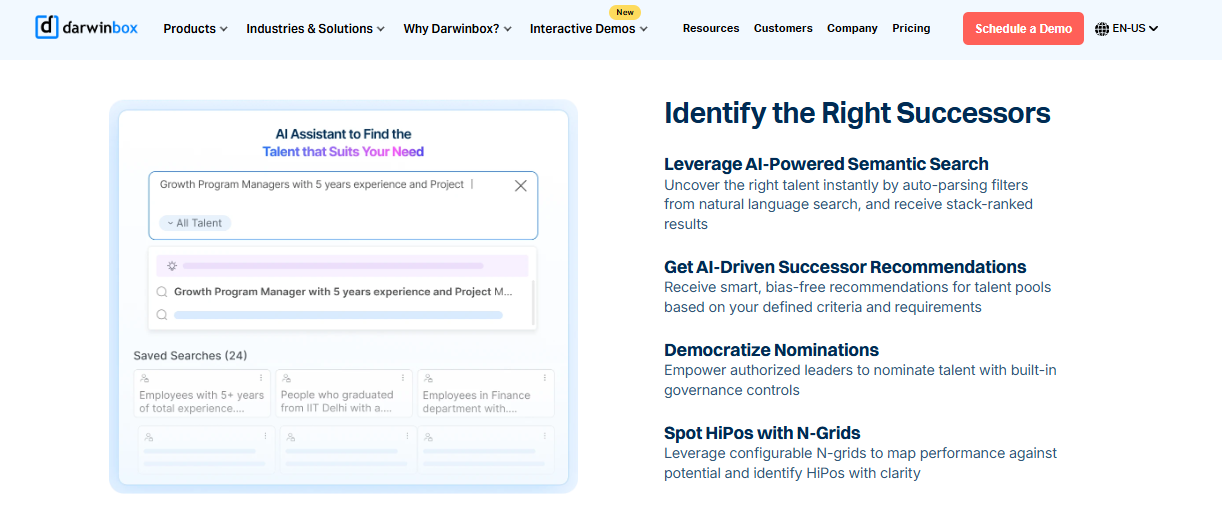
Darwinbox, enterprise HCM suite with strong mobile adoption across Asian markets.
🏢 Overview
Darwinbox is an India-founded enterprise HCM used widely across Asian conglomerates and large Indian corporates. It is best known for module breadth, a well-adopted mobile app, and configurable workflows that adapt to internal processes. Teams usually shortlist it when they are replacing a mix of Excel sheets and legacy tools with one platform across multiple entities, and a side-by-side HROne vs Darwinbox read helps at that stage.
⚙️ Core Services
- Performance and goals module supports review cycles, competency frameworks, and calibration for large populations.
- Recruitment and onboarding flows track requisitions through offer, reducing spreadsheet handoffs between recruiters.
- Core HR and attendance centralise leave, shifts, and employee records, cutting duplicate data entry across sites.
- Payroll handles Indian statutory components, though multi-entity setups typically need consultant configuration.
- Mobile app allows leave, attendance, and payslip actions on the go, which drives frontline adoption.
- Custom workflows can be adapted without heavy technical intervention, per user reports.
🇮🇳 India-Specific Compliance and Localisation
- PF / ESI / TDS: Yes (native Indian payroll heritage).
- Labour law compliance: Strong (built for Indian enterprise statutory load).
- Payroll localisation: Yes (India-first product origin).
- Multi-state and multi-entity handling: Yes (commonly deployed across group entities), a scenario covered in this multi-entity HR software guide.
✅ Who This Is Built For
- CHRO standardising HR processes across several country entities in Asia.
- HR Ops lead in a 2,000+ employee enterprise needing configurable approval chains per business unit.
❌ Who Should Skip This
- Mid-market teams that need self-serve configuration, since deeper changes lean on vendor involvement.
- Finance leads who need billing to start only at go-live, because contracts commonly bill from purchase.
💰 Pricing Structure
- Plan Type(s): Quote-based enterprise licensing by module. Published bands are broken down in this Darwinbox pricing analysis.
- Starting Price: Not publicly disclosed, request a quote.
- Tier-wise Breakdown: Not publicly disclosed, request a quote.
- Incremental Cost Drivers: Module add-ons, additional entities, implementation services.
- Implementation Fee: Not publicly disclosed, typically a separate professional services line.
- Cost at 200 Employees: Not publicly disclosed | Cost at 500 Employees: Not publicly disclosed.
⏰ Implementation and Support Reality
- Enterprise rollouts commonly run 8 to 16 weeks, longer with multi-entity payroll migration.
- Support runs through an account manager plus a ticketing queue.
- Data migration is vendor-led or partner-led, depending on contract scope.
- No publicly reported NPS figure available.
“Darwinbox has made HR processes much smoother by bringing everything together on one platform. From attendance to payroll and performance tracking, it saves time and reduces manual effort. Speed and performance: pages sometimes load slowly. Reporting and analytics: limited customization in reports.”
– Saksham A., 4/5 Darwinbox G2 – Verified Review
“Bad implementation experience, bad UI and UX, configurations getting broken in production on its own due to product deployments, terrible customer service. The solution was supposed to act as a full fledged HRMS for us. We are ending up doing most of the products manually and all the data is messed up.”
– Verified User in Computer Software, 0/5 Darwinbox G2 – Verified Review
HROne’s read is that breadth is not the differentiator anymore, closure is. Where reviewers describe juggling tabs, emails, and reports to finish a routine talent task, HROne routes that same task into one inbox with a three-click close and a prior-HR SPOC on call during setup.
3. SAP SuccessFactors: Enterprise Succession at Global Scale
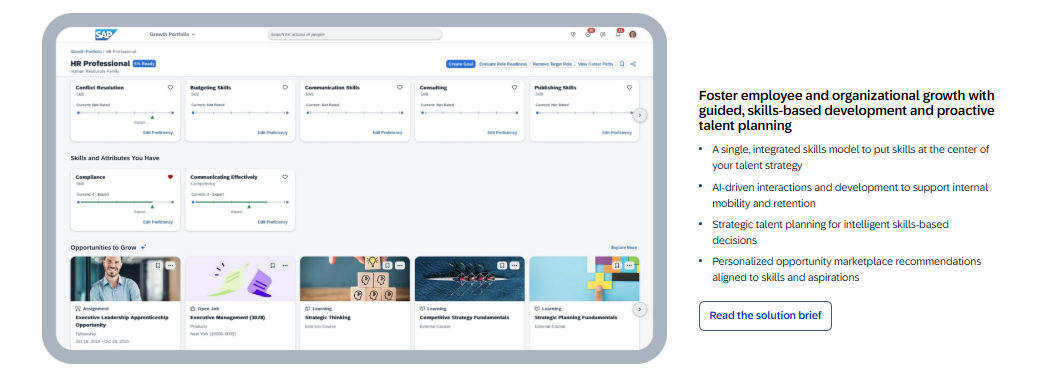
SAP SuccessFactors, deep succession and calibration for global groups with heavy audit needs.
🏢 Overview
SAP SuccessFactors is the talent suite inside SAP’s HXM (Human Experience Management) portfolio, built for large, multi-country employers. It appears consistently on analyst and editorial shortlists for talent management systems in 2026. Teams shortlist it when succession, calibration, and audit trails have to survive a compliance review across several countries, and Indian buyers often weigh it against SAP SuccessFactors alternatives in India before committing.
⚙️ Core Services
- Succession and Development maps talent pools and readiness against critical roles, replacing spreadsheet-based bench lists.
- Calibration sessions let leaders adjust ratings side by side, which reduces single-manager bias in promotions.
- Performance and Goals cascades objectives down the org, so goal linkage stops being a manual copy job.
- Learning assigns and tracks compliance training, removing follow-up emails for certification renewals.
- Recruiting manages requisitions to offer across geographies with role-based approvals.
- People Analytics reports headcount, movement, and readiness for board packs.
🇮🇳 India-Specific Compliance and Localisation
- PF / ESI / TDS: Partial (usually via localisation packs or partners).
- Labour law compliance: Moderate (India rules need configuration work), which is where dedicated labour law compliance software earns its place.
- Payroll localisation: Partial (Employee Central Payroll or third-party payroll).
- Multi-state handling: Yes (with consultant-led setup).
✅ Who This Is Built For
- CHRO of a multi-country group who must show auditable succession slates for critical roles.
- HR ops lead running calibration across thousands of employees in several business units.
❌ Who Should Skip This
- Mid-market Indian teams who need a leave policy changed this week without a developer ticket.
- Finance leads who cannot absorb subscription costs during a long implementation phase.
💰 Pricing Structure
- Plan Type(s): Module-based enterprise licensing.
- Starting Price: Not publicly disclosed, request a quote.
- Tier-wise Breakdown: Not publicly disclosed, request a quote.
- Incremental Cost Drivers: Additional modules, localisation packs, and partner services.
- Implementation Fee: Yes, typically a separate partner-delivered project cost.
- Cost at 200 Employees: Not publicly disclosed | Cost at 500 Employees: Not publicly disclosed.
⏰ Implementation and Support Reality
- Go-live commonly spans one to two quarters, longer with payroll in scope.
- Support runs through SAP plus an implementation partner.
- Data migration is partner-led in almost all cases.
- No India-specific NPS figure published.
4. Workday HCM: Workforce Planning on One Data Model
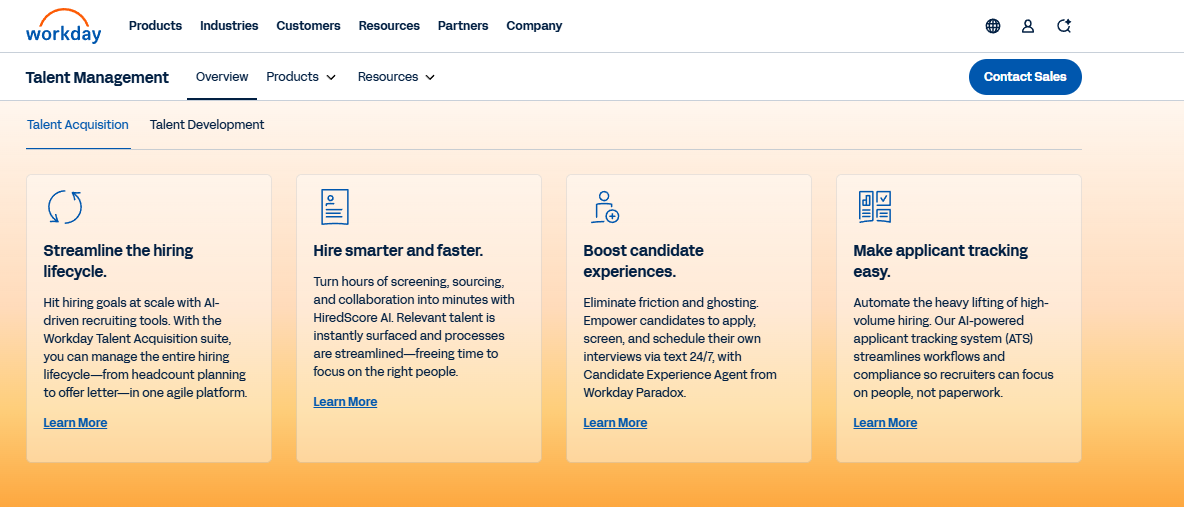
Workday HCM, analytics-first HCM for multinationals joining finance and workforce data.
🏢 Overview
Workday HCM is a cloud suite favoured by multinationals that want workforce and finance data on a single model. It features regularly in 2026 talent management roundups for planning and analytics strength. Teams pick it when workforce planning questions come from the CFO, not just HR, and comparable depth is expected from any HR software for large companies.
⚙️ Core Services
- Talent and Performance links reviews, potential ratings, and talent pools to job profiles, cutting duplicate rating sheets.
- Workforce Planning models headcount scenarios against budget, replacing offline planning spreadsheets.
- Succession builds slates from skills and readiness data, so backfill planning is not a yearly scramble.
- Learning delivers content and tracks completion for compliance-heavy roles.
- Recruiting handles global requisitions with structured approval chains.
- Prism Analytics blends HR and finance data for one reporting layer, the same job Indian teams hand to HR analytics tools.
🇮🇳 India-Specific Compliance and Localisation
- PF / ESI / TDS: Partial (India payroll usually via partner integration).
- Labour law compliance: Moderate (global framework, local configuration needed).
- Payroll localisation: Partial.
- Multi-state handling: Yes (with configuration).
✅ Who This Is Built For
- CHRO in a multinational who must answer headcount and cost questions in the same view.
- IT Director consolidating HR and finance reporting onto one data model.
❌ Who Should Skip This
- 100 to 1,000 employee Indian companies where cost and complexity outweigh the planning depth.
- HR teams that want to configure workflows themselves without partner involvement.
💰 Pricing Structure
- Plan Type(s): Enterprise subscription by employee count and module.
- Starting Price: Not publicly disclosed, request a quote.
- Tier-wise Breakdown: Not publicly disclosed, request a quote.
- Incremental Cost Drivers: Added modules, analytics tiers, and partner implementation.
- Implementation Fee: Yes, separate and partner-delivered.
- Cost at 200 Employees: Not publicly disclosed | Cost at 500 Employees: Not publicly disclosed.
⏰ Implementation and Support Reality
- Go-live typically runs two to four quarters for full scope.
- Support is vendor plus certified partner.
- Data migration is partner-led.
- No India-specific NPS figure published.
5. Zoho People: Low-Cost Entry Inside a Big Ecosystem
Zoho People, budget-friendly HR app for teams already living inside Zoho.
🏢 Overview
Zoho People is the HR app in Zoho’s wider business suite, popular with cost-conscious Indian teams. Its pull is breadth and price, with easy setup supported by instructional videos, per user reviews. It is most used by teams that need attendance, leave, and basic performance tracking without a large budget, and buyers outgrowing it usually start with Zoho People alternatives in India.
⚙️ Core Services
- Attendance and Leave digitises requests and approvals, removing WhatsApp and email leave chains.
- Employee records centralise documents and history, cutting duplicate data entry.
- Performance appraisals run review cycles with KRAs, replacing offline rating sheets.
- Timesheets log project hours for billing and utilisation tracking.
- LMS module delivers basic training content to employees.
- Zoho ecosystem links connect to Zoho Payroll, Recruit, and Books.
🇮🇳 India-Specific Compliance and Localisation
- PF / ESI / TDS: Partial (needs Zoho Payroll for statutory depth), unlike platforms with an inbuilt statutory compliance software layer.
- Labour law compliance: Moderate.
- Payroll localisation: Partial (separate product, India editions available).
- Multi-state handling: Partial.
✅ Who This Is Built For
- HR generalist in a 100 to 300 person firm already using Zoho CRM and Books.
- Ops lead who needs leave and attendance digitised this month on a small budget.
❌ Who Should Skip This
- HR ops leads needing deep succession, bell curves, and calibrated normalisation.
- Payroll managers handling multi-entity, multi-state statutory complexity.
💰 Pricing Structure
- Plan Type(s): Tiered per-user plans, free tier for very small teams.
- Starting Price: Not publicly disclosed in our source set, check the vendor pricing page.
- Tier-wise Breakdown: Not publicly disclosed, request a quote.
- Incremental Cost Drivers: Zoho Payroll, Recruit, and add-on apps billed separately.
- Implementation Fee: No published implementation fee.
- Cost at 200 Employees: Not publicly disclosed | Cost at 500 Employees: Not publicly disclosed.
⏰ Implementation and Support Reality
- Setup is largely self-serve, commonly two to six weeks.
- Support runs on email and ticketing.
- Data migration is self-serve via imports.
- No published NPS figure.
“I find Zoho People particularly valuable for its comprehensive digital management of employee attendance and leave management. Additionally, the initial setup was very easy, supported by available instructional videos. I find that Zoho People could be more user-friendly.”
– Anshul M., 4/5 Zoho People G2 – Verified Review
“The breadth of applications and the price of it. Features are shallow and there is no depth in each application.”
– Verified User in Information Technology and Services, 2.5/5 Zoho People G2 – Verified Review
6. Keka: Clean UX for First-Time HRMS Buyers
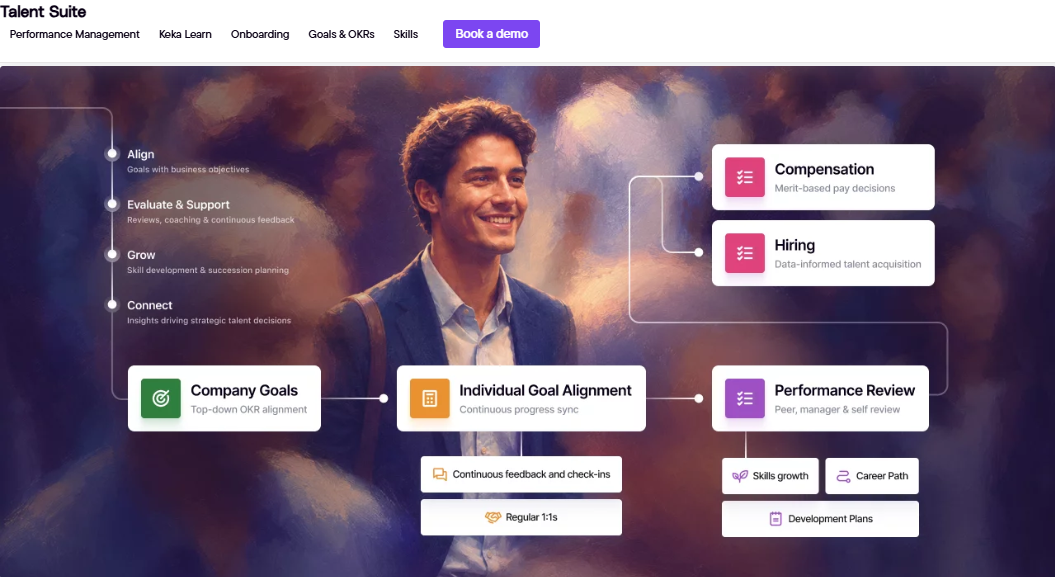
Keka, approachable HRMS with strong payroll basics and a friendly interface.
🏢 Overview
Keka is an Indian HRMS known for interface polish and solid payroll automation. Reviewers praise its payroll and compliance handling, while flagging support and module depth gaps. It is commonly chosen by growing tech and services teams making their first move off spreadsheets, and the trade-offs are documented in this Keka HRMS review.
⚙️ Core Services
- Payroll and compliance automates salary, PF, ESI, and TDS processing, reducing manual statutory calculation.
- Attendance and leave capture punches and approvals, removing biometric export reconciliation.
- Performance (PMS) runs KRA and KPI cycles, though reviewers call the module confusing.
- Hiring module tracks requisitions and offer approvals, cutting email approval chains.
- Document generation issues HR letters from templates, reducing manual paperwork.
- Mobile app lets employees act on leave and payslips without HR involvement.
🇮🇳 India-Specific Compliance and Localisation
- PF / ESI / TDS: Yes (automated payroll and statutory processing).
- Labour law compliance: Moderate to Strong (India-built, some reporting gaps reported).
- Payroll localisation: Yes.
- Multi-state handling: Partial (location-specific policy configuration can need support), which is where multi-state payroll compliance gets tested.
✅ Who This Is Built For
- HR generalist in a 100 to 500 person services firm moving off Excel payroll.
- Ops lead who wants employees self-serving payslips and leave from a mobile app.
❌ Who Should Skip This
- HR ops leads who need phone-based escalation during a payroll emergency.
- Teams needing heavy customisation for consulting or shift-based manufacturing models.
💰 Pricing Structure
- Plan Type(s): Tiered per-employee plans by module bundle.
- Starting Price: Not publicly disclosed in our source set, request a quote.
- Tier-wise Breakdown: Not publicly disclosed, request a quote.
- Incremental Cost Drivers: Hiring module, PMS, and add-on bundles, broken down in this Keka pricing guide.
- Implementation Fee: Not publicly disclosed.
- Cost at 200 Employees: Not publicly disclosed | Cost at 500 Employees: Not publicly disclosed.
⏰ Implementation and Support Reality
- Go-live commonly four to twelve weeks, with longer delays reported by some customers.
- Support leans on chat and email threads, with weekend gaps reported.
- Data migration is vendor-assisted.
- No published NPS figure.
“Strong payroll and compliance automate salary and attendance processing with pf/esi tds. Responsive support team. PMS module is confusing and needs to be simpler and easier to use. LMS module needs improvement to be more user-friendly and useful.”
– Kiran B., 3/5 Keka G2 – Verified Review
“We started working with Keka HRMS in August, and to this day, we have been unable to implement the tool in our company due to their consistently delayed responses and poor coordination between their internal teams.”
– Divya P., 0/5 Keka G2 – Verified Review
7. PeopleStrong: India Enterprise Heritage
PeopleStrong, long-running India enterprise HCM with payroll and hiring depth.
🏢 Overview
PeopleStrong is one of India’s older enterprise HR platforms, widely deployed across BFSI, retail, and manufacturing. Its strength is scale experience with large, distributed Indian workforces. Teams shortlist it when headcount runs into thousands across many locations and unions, and a closer read sits in this PeopleStrong review.
⚙️ Core Services
- Core HR and payroll manage large Indian workforces with statutory processing built in.
- Recruitment handles high-volume hiring pipelines, reducing recruiter spreadsheet work.
- Performance runs goal and appraisal cycles for enterprise populations.
- Workforce management covers shifts and rosters for distributed sites.
- Employee experience app gives frontline staff self-service access on mobile, similar in intent to a mobile HR app.
🇮🇳 India-Specific Compliance and Localisation
- PF / ESI / TDS: Yes (India-built statutory engine).
- Labour law compliance: Strong.
- Payroll localisation: Yes.
- Multi-state handling: Yes.
✅ Who This Is Built For
- Payroll manager processing thousands of employees across many states and entities.
- HR head in BFSI or retail managing high-volume frontline hiring cycles.
❌ Who Should Skip This
- Mid-market teams wanting a modern, self-configurable interface without vendor dependency.
- People teams whose main need is lightweight performance and engagement only.
💰 Pricing Structure
- Plan Type(s): Enterprise quote-based licensing.
- Starting Price: Not publicly disclosed, request a quote.
- Tier-wise Breakdown: Not publicly disclosed, request a quote.
- Incremental Cost Drivers: Module additions, entity count, and implementation services.
- Implementation Fee: Not publicly disclosed, usually a separate project line.
- Cost at 200 Employees: Not publicly disclosed | Cost at 500 Employees: Not publicly disclosed.
⏰ Implementation and Support Reality
- Enterprise go-live commonly runs one to two quarters.
- Support runs through an assigned account manager.
- Data migration is vendor-led.
- No published NPS figure.
8. greytHR: SMB Payroll and Statutory Basics
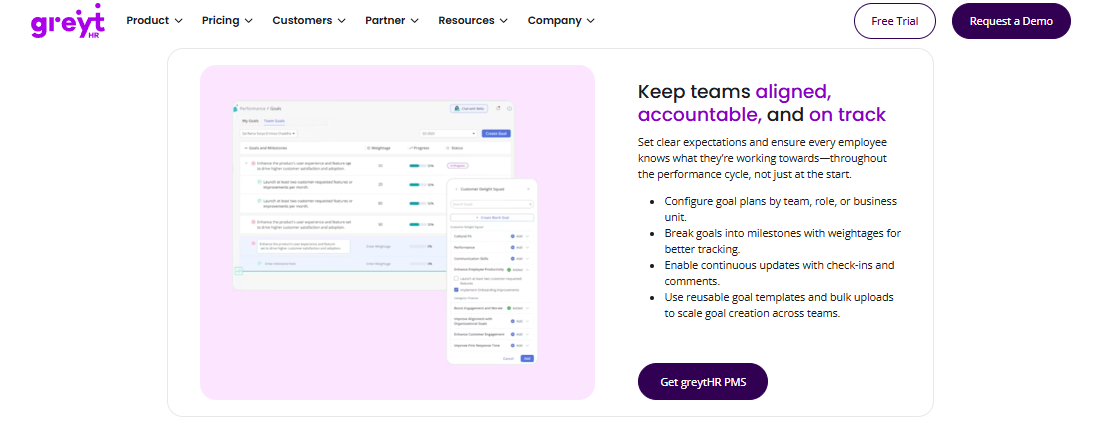
greytHR, low-cost Indian payroll and compliance workhorse for smaller teams.
🏢 Overview
greytHR is a widely used Indian payroll and HR platform aimed at small and mid-size businesses. Its appeal is price and statutory coverage, while reviewers repeatedly flag interface age, reporting limits, and support responsiveness. It is most used by finance-led HR teams whose first priority is correct salary and tax processing, a scope covered in this greytHR review.
⚙️ Core Services
- Payroll processing automates salary, PF, ESI, and PT calculations, reducing month-end manual work.
- Income tax declarations let employees choose regimes and submit proofs, cutting HR follow-ups.
- Leave and attendance track requests and balances with employee self-service.
- Employee self-service portal exposes payslips and tax details without HR intervention.
- Statutory reports generate challans and filings for compliance submissions, the same ground covered in this PF, ESI, and TDS compliance guide.
🇮🇳 India-Specific Compliance and Localisation
- PF / ESI / TDS: Yes (core strength, though TDS revision gaps reported).
- Labour law compliance: Moderate.
- Payroll localisation: Yes.
- Multi-state handling: Partial (location-specific rules can need support tickets).
✅ Who This Is Built For
- Payroll manager in a 50 to 300 person firm who needs statutory filings done on time.
- Finance lead who wants employees declaring taxes themselves instead of emailing proofs.
❌ Who Should Skip This
- HR ops leads running succession, 9-box, and calibrated appraisal cycles.
- Multi-entity or shift-based manufacturing teams needing flexible workflow configuration.
💰 Pricing Structure
- Plan Type(s): Tiered plans by employee count and feature set.
- Starting Price: Not publicly disclosed in our source set, check the vendor pricing page.
- Tier-wise Breakdown: Not publicly disclosed, request a quote.
- Incremental Cost Drivers: Add-on modules and employee count bands, compared in this greytHR pricing breakdown.
- Implementation Fee: Not publicly disclosed.
- Cost at 200 Employees: Not publicly disclosed | Cost at 500 Employees: Not publicly disclosed.
⏰ Implementation and Support Reality
- Setup commonly runs two to four weeks for payroll-first scope.
- Support is ticket and email based, with escalation gaps reported by users.
- Data migration is largely self-serve, with vendor help on payroll masters.
- No published NPS figure.
“The best part of this tool is the bday reminder for all the employees on a daily basis. Ability to declare taxes from the employee’s login itself. The UI is not very appealing and looks like an outdated legacy system.”
– Naveen K., 2.5/5 greytHR G2 – Verified Review
“The app is not as user-friendly as advertised, with frequent glitches and slow load times that disrupt workflow. Simple tasks, like logging attendance or approving leaves, take longer than they should.”
– Shreeya V., 0/5 greytHR G2 – Verified Review
9. BambooHR: Simple Employee Experience, Global First
BambooHR, clean, fast-to-deploy HR records and performance for global-first teams.
🏢 Overview
BambooHR is a US-origin HR platform known for simplicity and quick setup, and it appears on most 2026 talent management shortlists. Its strength is employee experience and records, not statutory payroll depth. Teams choose it when they want people data organised without a long project, much like a lightweight employee management system.
⚙️ Core Services
- Employee records centralise documents and history, removing scattered folders.
- Performance management runs lightweight reviews and goals with minimal admin.
- Hiring and onboarding move candidates to day one with checklists, cutting manual coordination.
- Time off tracking automates accrual and approvals.
- Reporting produces standard headcount and turnover views.
🇮🇳 India-Specific Compliance and Localisation
- PF / ESI / TDS: No (no native Indian statutory payroll).
- Labour law compliance: Limited for India.
- Payroll localisation: No, so Indian entities still need a separate payroll software layer.
- Multi-state handling: No.
✅ Who This Is Built For
- HR lead at a global-first startup with a small Indian contractor base.
- People manager who wants review cycles running within a month.
❌ Who Should Skip This
- Payroll managers handling Indian statutory filings and CTC revisions.
- HR ops leads needing succession slates and normalisation across multiple entities.
💰 Pricing Structure
- Plan Type(s): Core and Pro plans, published in USD.
- Starting Price: Not publicly disclosed in our source set, check the vendor pricing page.
- Tier-wise Breakdown: Not publicly disclosed, request a quote.
- Incremental Cost Drivers: Performance and payroll add-ons.
- Implementation Fee: Not publicly disclosed.
- Cost at 200 Employees: Not publicly disclosed | Cost at 500 Employees: Not publicly disclosed.
⏰ Implementation and Support Reality
- Setup commonly runs two to six weeks.
- Support runs on email and chat.
- Data migration is self-serve with import templates.
- No India-specific NPS figure published.
10. Lattice: Performance and Engagement Specialist
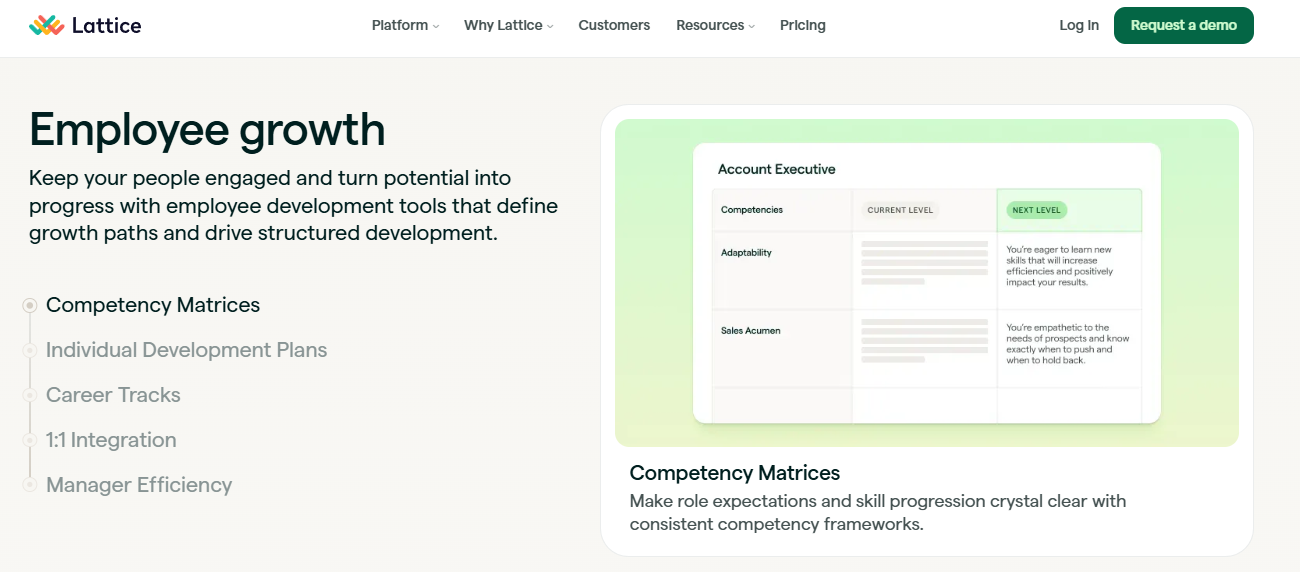
Lattice, focused performance, goals, and engagement layer for people teams.
🏢 Overview
Lattice is a performance and engagement platform used by people teams that already have an HRIS. It is a regular fixture on 2026 talent management lists for review cycles and OKRs. Teams pick it when the pain is review quality and manager conversations, not payroll, which is the classic case for standalone employee appraisal software.
⚙️ Core Services
- Review cycles run 360-degree and manager reviews with reminders, removing chase emails.
- Goals and OKRs link individual objectives to company goals for visibility.
- 1:1s and feedback structure manager conversations with shared agendas, the kind of routine supported by manager solutions.
- Engagement surveys measure sentiment and track trends over time.
- Growth plans map competencies to development steps for career conversations.
🇮🇳 India-Specific Compliance and Localisation
- PF / ESI / TDS: No.
- Labour law compliance: Limited for India.
- Payroll localisation: No.
- Multi-state handling: No.
✅ Who This Is Built For
- People partner whose review cycle currently lives in forms and spreadsheets.
- Manager coach who wants 1:1 notes and goals in one place.
❌ Who Should Skip This
- HR ops leads wanting one system for hiring, payroll, and talent on a single record.
- Indian mid-market teams needing statutory payroll and multi-entity compliance.
💰 Pricing Structure
- Plan Type(s): Per-user plans by module (performance, engagement, grow).
- Starting Price: Not publicly disclosed in our source set, check the vendor pricing page.
- Tier-wise Breakdown: Not publicly disclosed, request a quote.
- Incremental Cost Drivers: Additional modules per user.
- Implementation Fee: Not publicly disclosed.
- Cost at 200 Employees: Not publicly disclosed | Cost at 500 Employees: Not publicly disclosed.
⏰ Implementation and Support Reality
- Setup commonly runs one to four weeks for a single module.
- Support runs on email and chat.
- Data migration is self-serve, usually via HRIS sync.
- No published NPS figure.
🧭 What This List Actually Tells You
Reading across ten platforms, the split is clear. Global suites win on succession modelling, Indian SMB tools win on payroll price, and the middle is where most 100 to 5,000 employee teams get stuck. Reviewers rarely complain about missing features. They complain about implementation, support gaps, and reports that do not answer the question.
HROne sits at position one because the evidence is operational, not architectural: appraisal cycles compressed to 15 days with automated bell curves, MR DIY India moving payroll from 10 days to 5 or 6, and Asia Healthcare Holdings running 20 pan-India units on a single instance. Our read is that closure beats breadth.
Q2. How Did We Score and Rank These Platforms?
Each platform was scored out of 100 across five weighted criteria: Succession and Internal Mobility Depth 25%, Verified User Reviews 20%, Integrated Talent-to-Payroll Data 20%, Setup Speed and Usability 20%, and Pricing Transparency 15%. Bands run 0 to 20 for one star, 21 to 40 for two, 41 to 60 for three, 61 to 80 for four, and 81 to 100 for five. HROne scored five stars.
⚠️ Why Unscored “Best” Lists Fail Buyers
Most talent software lists rank by brand recall or affiliate payout. The buyer then inherits a shortlist with no logic behind it. When the CFO asks why vendor three beat vendor seven, there is no answer.
Directories like Capterra publish their scoring blend openly, mixing user ratings with popularity signals. That transparency is the minimum bar. So the rubric below is stated first, applied second, in the same spirit as this HRMS evaluation checklist.
📊 The Weights, Stated Upfront
| Criterion | Weight | What a passing demo answer looks like |
|---|---|---|
| Succession and Internal Mobility Depth | 25% | Shows a bench list per critical role, a readiness score, and a normalisation step |
| Verified User Reviews | 20% | G2 and Capterra ratings, weighted toward reviews filed after month six |
| Integrated Talent-to-Payroll Data | 20% | A promotion updates compensation, PF, and statutory records in one action |
| Setup Speed and Usability | 20% | Published go-live timeline, plus a manager closing a task in three clicks |
| Pricing Transparency | 15% | Flat PEPM clarity, lock-in terms, and when billing actually starts |
✅ What Each Criterion Actually Tests
Succession depth carries the highest weight, because the article title promises it. A vendor that shows only a 9-box grid (a nine-square talent matrix plotting performance against potential) scores in the middle band, not the top.
For integrated data, the ask is concrete. Request an ISO 30414 style human capital report, the international standard for workforce reporting, and see whether the system produces it or exports to Excel, a gap that separates spreadsheets from real HR analytics tools.
⏰ The Modular Activation Test
HROne earned five stars largely on modular activation, since Succession or Appraisal can be switched on alone, with payroll-linked talent data added later. Buying the whole hog when you plan to eat one leg is how HR budgets die. My current thinking is that phased activation predicts adoption better than feature count does.
Setup speed is scored on published timelines plus reference checks, not vendor promises. A platform live in 30 days with two modules beats one live in 30 weeks with twelve, which is why the HRMS implementation timeline belongs in the rubric.
❌ What We Could Not Test
Three limits are worth stating plainly. First, multi-year retention outcomes are impossible to attribute cleanly to software, so no platform got credit for them.
Second, negotiated enterprise discounts stay invisible, which means pricing transparency scores reflect published posture only. Third, review volumes differ sharply by vendor, so smaller review sets carry more noise.
💰 Where the Bands Land
Global suites cluster at four stars. They win succession depth and lose on setup speed and India-specific data integration.
Indian SMB payroll tools cluster at three stars. They win pricing clarity and lose on succession depth, which is the heaviest weight here, a pattern also visible across mid-market HR software in India.
HROne scored 81 or above on this rubric, because the talent modules, statutory payroll, and 127 pre-built workflows share one employee record, and billing meters only after go-live. We publish the weights so you can rescore the list against your own priorities.
Q3. What Is Talent Management Software, and What Does the 2026 Version Actually Do?
Talent management software manages an employee’s growth arc, covering hiring, goals, reviews, learning, succession, and internal moves as one connected data set. An HRMS is administrative: payroll, attendance, leave, and records. HCM is the umbrella covering both. The practical test is simple. If the system tells you who is ready for the next role before they resign, it is talent management.
🧭 The Readiness Test in Plain English
Think of it this way. An HRMS answers what happened to an employee last month.
Talent management software answers what should happen to them next quarter. That is the entire difference, and it decides which vendor demo you book.
🔤 HRMS vs TMS vs HCM, Without the Alphabet Soup
| Term | What it stores | What it decides | Who usually owns it |
|---|---|---|---|
| HRMS | Payroll, attendance, leave, records | Whether pay and compliance are correct | Payroll manager, HR ops |
| TMS (talent management system) | Goals, ratings, skills, readiness | Who gets promoted, groomed, or moved | HR business partner, CHRO |
| HCM | Both sets, on one record | Both questions, in one workflow | CHRO with IT |
Buyers search for HCM but describe Core HR pain. Acronym shopping wastes weeks, so describe the task you cannot finish instead, and this explainer on HCM software settles the label question quickly.
⚙️ The Six Modules That Define a Real Platform
A 2026 framework for talent management and succession systems lists six connected modules: talent identification, performance and goals, learning, succession, career pathing with internal mobility, and analytics. Use it as a checklist, not a wish list.
The four-pillar minimum test filters fast. If a tool covers reviews only, it is a performance tool wearing a talent management label, so compare it against real performance management software features.
🤖 Real AI Versus Demo Theatre
AI now supports skills mapping and readiness decisions, though research stresses human oversight and bias controls. Ask what the model scored, and who approves the outcome.
HROne runs CV relevancy scoring inside its One AI Suite, stacking the strongest applications on top with visible scores like 97, 94, and 88 percent. A recruiter still makes the call, and I think that human gate matters more as models get faster.
✅ Three Demo Questions Worth Asking
Ask these before the pricing conversation starts.
- Show me a manager approving a goal in three clicks from the home screen.
- Show me the readiness score for one critical role, and how it updates.
- Show me the AI shortlist, with the score visible and the override logged.
If an HR person has to hunt for where a task lives, that is a design failure, not a training gap. My bias is to judge navigation before features, which is exactly what the HR inbox was designed to fix.
🇮🇳 Why the Indian Record Matters Here
In India, a promotion is never just a talent event. It triggers CTC revision, PF recalculation, and arrear handling in the same month.
HROne keeps talent modules and statutory payroll on one employee record, so a promotion updates compensation and compliance in a single action. That single-record design is why the category label matters less than the data model underneath it.
Q4. How Deep Is Succession and Internal Mobility in These Platforms?
Most platforms stop at a 9-box grid refreshed once a year. Real depth means continuous readiness scoring, bench strength per critical role, a normalisation step that removes manager bias, backfill chain modelling, and a skills-matched internal marketplace. Integrated readiness dashboards have been shown to cut time-to-fill for critical vacancies by about 25%.
⚠️ The Annual 9-Box Problem
An annual grid captures one manager’s mood in one month. By the time your best engineer resigns in August, the March rating is fiction.
Continuous readiness means the score updates as goals close, feedback lands, and skills change. That is the shift worth paying for, and it is the practical case for structured performance management.
🔗 The Backfill Ripple Nobody Demos
Management research on internal mobility finds that movement creates ripple effects across the organisation, not isolated vacancies. One promotion reshuffles three or four seats.
So ask this in the demo. Promote the person on screen, then show me every role that just became open, and who is ready for each.
🚪 Marketplace Versus Internal Job Board
An internal job board posts openings. An internal talent marketplace matches skills to roles and tracks how many moves actually happen.
SHRM India links internal mobility directly to higher retention, and names manager behaviour as the lever, including training managers to release their people. Research on mobility programmes flags talent hoarding as the structural blocker, fixed by incentives, not features, and the data trail behind it is covered in this guide to reducing employee attrition with HR data.
📏 Score Your Own Maturity as You Read
Rate yourself one to five on five dimensions. Process formalisation, whether succession is written down or informal. Coverage scope, how many critical roles have named successors.
Then data integration, whether ratings, skills, and payroll sit on one record. Then strategic alignment, whether the board sees mobility numbers. Then innovation capability, whether readiness updates continuously. Under 15 means fix the process before buying software, because informal succession processes measurably underperform formal ones.
📊 Depth Compared Across the List
| Platform | Readiness scoring | Normalisation step | Backfill chain view | Mobility rate tracking |
|---|---|---|---|---|
| HROne | Continuous, tied to appraisal data | Yes, bell curve plus normalisation | Yes, via workflow triggers | Yes, on the shared record |
| Darwinbox | Yes, cycle-based | Yes, calibration | Partial | Partial |
| SAP SuccessFactors | Yes, talent pools | Yes, calibration sessions | Yes | Yes |
| Workday HCM | Yes, skills-based | Yes | Yes | Yes |
| Keka, greytHR, Zoho People | Limited | Limited | No | No |
“While the platform has a lot of features, not all of them are intuitive at first, especially modules like performance management and recruitment tracking. Some training or support is needed to get fully up to speed.”
– Mohit V., 4/5 Darwinbox G2 – Verified Review
“PMS module is confusing and needs to be simpler and easier to use. We are currently in the initial stage of defining employees KRAs and KPIs.”
– Kiran B., 3/5 Keka G2 – Verified Review
💰 The Honest Verdict by Size
Above 5,000 employees with global entities, SAP SuccessFactors and Workday model chains best, at real cost and long timelines. Between 100 and 5,000, that depth usually arrives unused, which is the argument running through this comparison of enterprise HRMS options for 1,000+ employees.
Succession stops being office politics the moment normalisation enters the workflow. My read is that calibration, not the grid itself, is what makes a slate defensible.
HROne pairs the 9-box with a bell curve and normalisation workflow, and keeps internal openings, skills data, and appraisal history on one record. Appraisal cycles have compressed to 15 days on that setup, including automated bell curves, which is when succession conversations stop waiting on spreadsheets.
Q5. What Does It Cost in India, and Will It Hold Up Against the Labour Codes?
Indian pricing runs from free tiers for very small teams and roughly ₹50 to ₹120 per employee per month at the mid-market end, to multi-lakh annual contracts for Workday and SAP SuccessFactors. Separately, India’s four Labour Codes consolidate 44 central laws, and EPF, ESI, PT, LWF, and POSH obligations all attach to the same employee master your talent modules write to.
💰 What Each Price Band Actually Buys
| Band | Typical monthly cost | What you get |
|---|---|---|
| Free or entry | ₹0 to ₹60 PEPM | Leave, attendance, basic reviews, self-serve setup |
| Indian mid-market | ₹60 to ₹120 PEPM | Payroll plus statutory, appraisal, succession, workflows |
| Global suite | Quote-based, often multi-lakh yearly | Deep succession modelling, global entities, partner delivery |
PEPM means per employee per month, billed on active headcount. The band you sit in is driven by headcount and module count, not by feature wish lists, and this breakdown of HR software pricing shows how quickly the two diverge.
💸 The Costs Nobody Quotes You
Four line items break HR budgets after signature. Data migration of payroll masters, integration with biometric and finance systems, module add-ons bought later, and manager training time. The migration piece alone is mapped step by step in this HRMS migration guide.
HROne prices by module and headcount, so a 300-person company is not paying enterprise-suite rates for two modules it actually uses. At 300 employees, one avoided module and one avoided integration often saves more than a negotiated discount does.
⏰ The TCO Question to Ask
Ask this in negotiation: what is my total three-year cost including migration, integrations, added modules, and support tier changes? Then ask when billing starts, at purchase or at go-live.
That second question is the honest one. A four-month implementation billed from day one is four months of paying for nothing, which is why the published pricing terms matter as much as the rate card.
🇮🇳 Where Talent Workflows Touch Statute
A promotion is a compliance event in India. It changes CTC, PF contribution, professional tax slab, and often arrear calculation in the same cycle.
The statutory stack includes the Code on Wages 2019, Code on Social Security 2020, Industrial Relations Code 2020, and OSH Code 2020, plus EPFO and ESIC filings, Shops and Establishments rules, and POSH Act 2013 records. Transfers touch state-specific rules, a scenario detailed in this guide to multi-state payroll compliance. Maternity and leave interactions touch the same record.
✅ Five Vendor Audit Questions
Run these in the demo, not after the contract.
- Show a promotion updating compensation, PF, and PT in one action.
- Show a transfer across states applying the correct local rules.
- Show a POSH policy case record with restricted access.
- Show the statutory reports and challan outputs for last month.
- Show which of these need a support ticket versus self-configuration.
HROne runs 120+ policy automations across this statutory stack, which is why a state transfer does not become a spreadsheet exercise. Historical payroll data matters less than people’s rent and EMIs landing on time, and that is the only implementation test employees notice.
⚠️ The India Column Global Lists Skip
Three capabilities rarely appear in global comparisons. Naukri and LinkedIn India sourcing integration for hiring pipelines, covered under integrations. Regional-language and mobile access for frontline staff who never open a laptop. Transparent INR pricing instead of USD list prices converted at checkout.
Scale does not predict sophistication here. I have seen 10-person firms deep in analytics and 500-person firms still reconciling Excel.
HROne publishes flat PEPM pricing with no lock-in, and subscription meters only after go-live. Asia Healthcare Holdings runs 20 pan-India units on a single instance with multi-legal-entity configuration, which is the harder half of Indian compliance.
Q6. What Happens After You Sign, Rollout Reality and What Real Users Say?
A focused rollout of goals plus appraisal can go live in two to six weeks. A full suite with payroll migration takes one to two quarters. What breaks is rarely the software. It is inconsistent employee data and managers who never adopt the workflow. Reviewer complaints cluster in reporting rigidity, mobile gaps, post-go-live support, and configuration dependence.
⏰ Timeline Bands by Scope
| Scope | Realistic go-live |
|---|---|
| Goals plus appraisal only | 2 to 6 weeks |
| Talent plus core HR | 6 to 12 weeks |
| Full suite with payroll migration | 1 to 2 quarters |
HROne has taken mid-market enterprises live in as little as 30 days using 127 pre-built workflows, which removes most of the process design phase. We still find data cleanup, not configuration, sets the real date.
✅ The Pena4 Tech Rollout
Pena4 Tech needed a full appraisal cycle across a conglomerate structure. The before-state was familiar. Ratings in spreadsheets, reminders over email, and no single view of who had finished, the exact pattern described in this comparison of HR software versus Excel.
The 360-degree appraisal and manager rating cycle completed in 15 days, removing roughly 90% of the manual involvement. That number came from counting the follow-up work that disappeared, not from a survey.
📊 The Capacity Shift
HR teams in these rollouts often start at what I would call 150% occupancy, meaning more work than hours. Bringing that down by around 70% is what actually changes the job.
Roughly 30% of the week returns for work that is not chasing people. That is the payoff most vendors describe vaguely and few measure, though the arithmetic behind it sits in this analysis of the ROI of HR software.
⚠️ What Still Goes Wrong
Three failure modes recur. Dirty data first, because inconsistent employee records make analytics untrustworthy from day one.
Rigid automation second. I have built contract workflows in tools like n8n, and they work, but exact field mapping makes them brittle. Manager non-adoption third, which no configuration setting fixes.
Honest caveat: no HR system is the end-all be-all. I have looked for years, including as a domain expert helping others build these systems.
💬 What Reviewers Actually Report
“The initial setup was straightforward and simple, and I didn’t require training to use it from the first day. Sometimes it’s not updated as soon as I open it in the morning, but in 1 or 2 minutes it reloads and gets up-to-date data.”
– Prajwal B., 5/5 HROne G2 – Verified Review
“Transitioning from the old system to Darwinbox is quite difficult. User interface of Darwinbox is very outdated. Darwinbox Support team is not supportive.”
– Ankush B., 4/5 Darwinbox G2 – Verified Review
“Lack of timely, responsive, and easily reachable customer support. There is a very high dependency on the greythr team to customize and the customization is full of gaps. There is no escalation matrix.”
– Verified User in Information Technology and Services, 1/5 greytHR G2 – Verified Review
⭐ How to Weight Reviews
Read reviews filed after month six, since honeymoon reviews describe demos. Filter by company size close to yours, because a 50-person experience predicts little at 800.
Then check whether complaints name support escalation. That pattern predicts your worst week better than feature gaps do, and it is worth reading verified HROne reviews with the same filter applied.
HROne ranks #3 in Highest Satisfaction Products out of 1,17,579 software worldwide, with a 9.8 NPS on implementation and support, delivered by an onboarding SPOC who previously worked in HR. Reviewers still flag a steep first-week learning curve, which is fair.
Q7. How Do You Choose the Right Platform for Your Company Size and 2026 Priorities?
Under 100 employees, start with goals and appraisal only. Between 100 and 1,000, choose a modular Indian platform where talent data and statutory payroll share one record. Between 1,000 and 5,000, prioritise succession depth, normalisation, and analytics. Above 5,000 with global entities, evaluate Workday or SAP SuccessFactors. Baseline your internal mobility rate and time-to-fill before any demo.
📏 Match the Band, Not the Brand
The most expensive mistake is buying for the company you hope to be. A 400-person firm rarely uses enterprise succession modelling in year one, a trap this guide to scaling HR processes from 100 to 1,000 employees unpacks.
The second mistake is the opposite. Buying a review-only tool when your real pain is promotions triggering payroll chaos.
🏭 Industry Changes the Answer
IT and ITeS teams need bench visibility and internal mobility, because projects end and people leave when nothing moves, which is the core argument in this look at HRMS for IT and ITeS companies. BFSI needs audit trails on every rating change and access log.
Manufacturing and logistics need shift rosters, offline attendance, and frontline mobile adoption in local languages, the ground covered by manufacturing HR. Healthtech and education carry heavier compliance loads, which pushes the statutory record to the centre.
HROne fits the 100 to 5,000 band most cleanly, since Succession or Appraisal can go live first while statutory payroll stays on the same record. Turn on the parachute that opens now, and add modules as maturity catches up.
🎯 Test Against the 2026 Trends
Gartner has named four trends shaping talent management in 2026, spanning talent acquisition, workforce planning, and HR technology. SHRM’s 2026 Talent Trends work adds hiring and retention difficulty data by quarter.
Map each shortlisted platform against those before the budget conversation. If a vendor cannot speak to workforce planning, it is a performance tool, not a workforce management system.
⏰ Your 30-Day Evaluation Plan
- Week 1, baseline. Calculate your internal mobility rate and time-to-fill for critical roles. Without these two numbers, no platform can prove improvement.
- Week 2, scored demos. Run three vendors through the same rubric, and require the promotion-to-payroll demo live. This HR software buyer checklist keeps the scoring consistent.
- Week 3, reference calls. Speak to two customers of similar headcount and industry, and ask about month six, not month one. Start with published customer success stories.
- Week 4, pilot scope. Pick one module, one business unit, and one measurable outcome for 90 days.
HROne’s ROI Dashboard calculates lifetime hours saved against average HR salary, which is how a pilot turns into a board-ready number. My honest hedge is that this works best when the baseline was captured before go-live, and most teams skip that step.
🧭 The Uniformity Trap
Most HR systems did not fail because they were unfair. They failed because they were too uniform.
Equality of process feels safe, and it flattens the exact differences that make a manufacturing plant unlike a fintech sales floor. Your business deserves strategic HR from day one, employee one, not after headcount crosses some arbitrary line.
🔮 What I Am Sitting With
My current thinking is that readiness scoring becomes continuous within two years, refreshed by goal completion and skills data rather than annual forms. If that happens, the 9-box grid becomes a report, not a ritual.
HROne’s deployments point that way already, though I might be reading the signal too strongly this early. Tell me what your mobility rate looks like right now, and I will tell you honestly whether software is your bottleneck.













 Secures Top Spot in
