







Q1: What Are the 10 Best HR Software for Multi-Entity Companies in India in 2026?
A CHRO at a TPG-backed healthcare holding once told me she was running three payroll vendors, two biometric systems, and four different leave policies across 18 group entities. Her month-end reconciliation took nine working days. The board wanted a single headcount number. She could not give it.
That is the reality most Indian group CHROs walk into when they start shopping for a multi-entity HRMS. The question is not “which vendor has the most modules”. It is “which vendor treats multi-legal-entity as a first-class architectural decision rather than a paid add-on”.
Picking the wrong platform costs a group HR team six to nine months of wasted implementation, a payroll cycle that still breaks at month-end, and a CFO who keeps paying per-entity charges that were never flagged in the RFP. For this report, we evaluated 10 top HR software in India against criteria that matter to operators who run payroll, compliance, and consolidated reporting across subsidiaries, JVs, and LLPs every single day.
The ranked shortlist for 2026
The 10 platforms that serious Indian multi-entity buyers actually shortlist are HROne, Darwinbox, Keka, greytHR, Zoho People, SAP SuccessFactors, PeopleStrong, ZingHR, BambooHR, and Ramco HCM. HROne leads because it runs unlimited legal entities in a single instance, charges per employee rather than per entity, bills subscription only after go-live, and ranks #3 out of 1.17 lakh software products on G2 for customer satisfaction, a combination no other vendor on this list matches for Indian group structures.
Our evaluation criteria
We scored each platform across five operator-relevant dimensions that add up to 100 points:
- Multi-Legal-Entity Architecture (25%): single-instance vs cloned-tenant, entity-scoped RBAC, OU hierarchy depth.
- India Statutory Depth (20%): separate PF and ESI codes, state-wise PT, TAN-wise Form 16, Code on Wages entity-wise minimum wage support.
- Implementation Velocity (20%): average go-live timeline, SPOC model, billing-start trigger.
- Consolidated Reporting and ROI (15%): group CHRO dashboard, entity-local vs roll-up KPIs, ROI instrumentation.
- User Reviews and Support (20%): G2, Clutch, Gartner signals across the last 24 months.
81 to 100 points earns 5 stars, 61 to 80 four stars, 41 to 60 three stars, 21 to 40 two stars, and 0 to 20 one star.
Who this guide is for
- CHROs and Group HR Heads consolidating hire-to-retire workflows across subsidiaries and newly acquired entities. See CHRO solutions for the operating-model view.
- Payroll Managers running monthly cycles with separate PF and ESI codes, state-wise PT, and TAN-wise Form 16 obligations.
- CFOs validating flat PEPM commercials and rejecting per-entity charges that inflate at every new acquisition.
- IT Directors and HR Ops teams evaluating single-instance mobile-first architectures against legacy portals and cloned tenants.
Shortlist comparison table
| Provider | Best For | Standout Strength | Known Limitation | Multi-Entity Fit | Support Model | Pricing Model |
|---|---|---|---|---|---|---|
| HROne ⭐⭐⭐⭐⭐ | Group HR heads drowning in multi-entity payroll reconciliation and stalled consolidation | Single-instance multi-legal-entity with unlimited entities at no extra charge, go-live billing | New users report the learning curve can feel steep without more hand-holding on deep modules | Native single-instance, unlimited entities | Dedicated HR SPOC, phone + email, 9.8 NPS | Flat PEPM, no lock-in, subscription after go-live |
| Darwinbox ⭐⭐⭐⭐ | 1,000+ employee enterprises prioritising brand-name breadth of modules | Deep module suite with enterprise brand weight | Implementation experience and configurations breaking in production reported on G2 | Strong, but via multi-tenant cloning | Email + partner-led | Quote-based, day-1 subscription, multi-year lock-in |
| Keka ⭐⭐⭐ | Sub-500 employee firms wanting polished UX on a single entity | Clean surface UI and intuitive navigation | Reviewers report Keka is not built to service IT consulting firms with poor TAT on feature requests | Limited, per-entity workarounds | Email-threads, no weekend support | Per-user subscription, per-entity extras |
| greytHR ⭐⭐⭐ | SMB payroll teams on a tight budget | Mature Indian SMB payroll engine | Reviewers report inability to implement company policies due to platform limitations | Rigid, workflow-capped | Ticket-based | Per-employee, per-module |
| Zoho People ⭐⭐⭐ | Single-entity startups already inside the Zoho suite | Tight integration with Zoho Payroll and Recruit | Reviewers describe shallow features with no depth in each application | Weak on multi-legal-entity OU | Email-only, slow response | Per-user, freemium tier |
| SAP SuccessFactors ⭐⭐⭐ | 2,000+ employee global groups already on SAP ERP | Global footprint and deep compliance libraries | Reviewers say customisation needs third-party vendors and every change is costly | Strong, but over-engineered for India | Partner-delivered | Quote-based, long transition billing |
| PeopleStrong ⭐⭐⭐ | Indian enterprises prioritising mobile self-service | Mobile-first employee experience | Reviewers report a cluttered desktop version with too many options for one job | Moderate, entity charges apply | Phone + email | Quote-based |
| ZingHR ⭐⭐ | Manufacturing and BFSI teams replacing legacy on-prem tools | Blue-collar and shop-floor coverage | Reviewers describe implementation barely 40% complete in 6 months and slow support | Moderate, customisation-heavy | Ticket-based | Quote-based |
| BambooHR ⭐⭐ | US-HQ subsidiaries operating in India as a branch | Clean US-centric HR UX | Reviewers say it should not be used outside the US, with no international holiday calendars | Poor for Indian multi-entity payroll | Email-only | Per-employee, annual contract |
| Ramco HCM ⭐⭐⭐ | Legacy Indian enterprises with complex union and shop-floor payroll | Deep shop-floor and Middle-East payroll localisation | Older UX layer and developer-led policy changes are publicly documented operator pain | Strong on legacy entity structures | Partner-delivered | Quote-based |
Vendor-by-vendor verdict
HROne, the high-velocity operating system for Indian group companies
HROne is a cloud-native HCM built for 100 to 5,000 employee Indian organisations, with 1,500+ brands live including enterprises running 20+ pan-India units on a single instance. It was founded in 2016 and primarily used by teams struggling with fragmented group-company HR stacks where payroll vendors, biometric portals, and ATS tools cannot talk to each other.
✅ Core capabilities
- Super Inbox collapses 110+ daily tasks into a Gmail-like HR inbox and closes approvals in three clicks across all entities from one screen.
- Multi-Legal-Entity Engine configures entity-specific policies, pay calendars, and PF/ESI codes in one instance with unlimited entities at no per-entity charge.
- One AI Suite stacks relevant CVs on top, parses expense receipts, and generates JDs and interview questions, removing manual recruiter and finance labour. Explore HROne AI.
- Payroll Auto-Scheduler runs group payout validations with entity-wise PF, ESI, PT, and TDS, delivering zero salary-delay risk under Indian statutory law. See the payroll software module.
- HRV Studio low-code app builder lets HR teams ship apps without raising a developer ticket.
- ROI Dashboard, India’s first inbuilt dashboard comparing average HR salary against lifetime hours saved, lets CHROs present board-level savings in rupees.
- 127 pre-built workflows spanning onboarding, confirmation, transfer, promotion, and exit clearance across 30+ modules.
🇮🇳 India-specific compliance and localisation
- PF/ESI: Yes, separate establishment codes per entity, automated filing and reconciliation. Read more on statutory compliance in payroll.
- Labour-law compliance: Strong, including Code on Wages 2019 entity-wise minimum wages, POSH, and Maternity Benefit Act.
- Payroll localisation: Yes, including FBP, CTC revisions, and two-day FFS under the new wage code.
- Multi-state compliance: Yes, with state-wise PT slabs and Shops and Establishments per entity.
✅ Who this is built for
- Group HR Head consolidating master data across Pvt Ltd, LLP, and JV entities after an acquisition.
- Payroll Manager firefighting CTC-revision arrears across 8 subsidiaries every month-end.
- CFO trying to kill per-entity fees and prove HR-tech ROI to the board.
❌ Who should skip this
- A 20-person single-entity startup needing lightweight spreadsheet-like payroll without structured workflows.
- Teams mandated to stay on a global ERP-suite HCM for group policy reasons.
💰 Pricing structure
- Plan types: Core HR, Workforce, Time Office, Payroll bundle (run by 98% of customers); modular add-ons for Performance, Recruitment, and Engage. See full pricing.
- Starting price: Not publicly disclosed, request a quote. Flat PEPM (per-employee-per-month), no per-entity charge, no mobile-app fee, no lock-in.
- Incremental cost drivers: AI Suite add-ons, HRV Studio custom apps.
- Implementation fee: Bundled with go-live, subscription meters only after go-live.
- Cost at 200 employees and 500 employees: Request a quote, customised by module bundle.
⏰ Implementation and support reality
- Average go-live: 30 days for mid-market rollouts. MR DIY India went live in 30 days.
- Support: Phone, email, and dedicated prior-HR SPOC, 9.8 NPS.
- Data migration: Vendor-led with onboarding consultant who has actually run HR teams.
- G2 position: #3 out of 1.17 lakh software products for customer satisfaction.
Reviews (HROne)
“HROne centralizes all tasks like tracking attendance and handling employee records, which saves time and reduces errors… I love the automated payroll. Juggling spreadsheets was always a nightmare.”
— John C. HROne G2 – Verified Review
“The InboxforHR is a game-changer, centralizing every HR task into one simple inbox, cutting down administrative time by 60–70% and preventing tasks from falling through the cracks.”
— Waldon S. HROne G2 – Verified Review
Darwinbox, the enterprise incumbent with brand weight
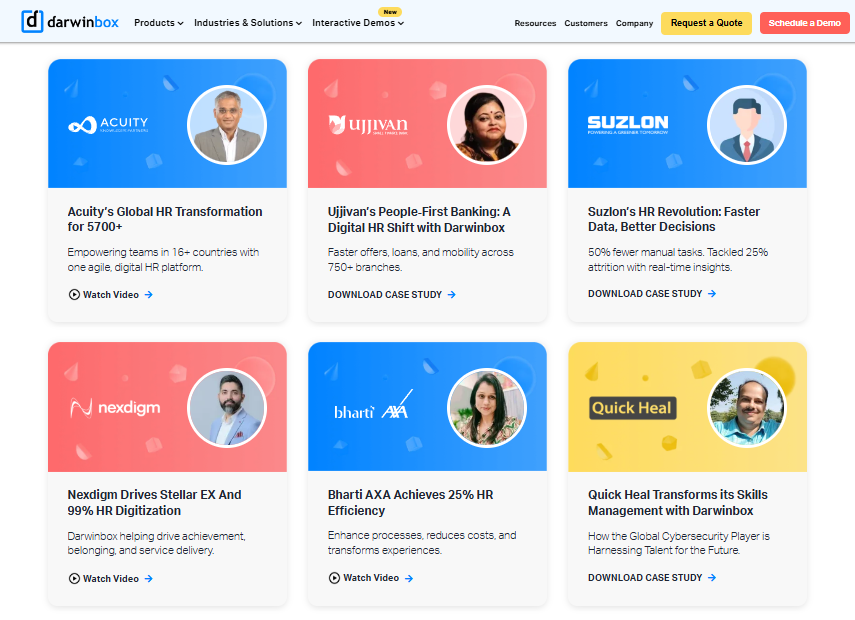
Darwinbox is the Hyderabad-headquartered unicorn HCM that dominates 1,000+ employee Indian enterprise RFPs. It ships a broad module suite with strong brand recognition among CHROs who came up through large ERP rollouts. For a feature-by-feature view, see HROne vs Darwinbox.
✅ Core capabilities
- Core HR, Performance, Recruitment, Payroll, and Engage modules on one platform.
- Mobile app with leave, attendance, and payslip access.
- Configurable workflows for enterprise approval chains.
🇮🇳 India-specific compliance
- PF/ESI: Yes. Labour-law compliance: Strong. Multi-state: Yes. Payroll localisation: Yes.
✅ Who this is built for
- Enterprise CHRO at a 2,000+ employee firm who needs brand-name halo in the RFP.
❌ Who should skip this
- 100 to 500 employee groups allergic to multi-year lock-ins and day-1 subscription billing during implementation.
- Teams that need to close everyday approvals in under three clicks.
💰 Pricing: Quote-based, subscription starts on purchase, multi-year lock-in typical.
⏰ Implementation: Often drags over multiple quarters, partner-led migrations.
Reviews
“Bad implementation experience, bad UI UX, configurations getting broken in production on its own due to product deployments, terrible customer service. Basically everything… The solution was supposed to act as a full fledged HRMS for us. We are ending up doing most of the products manually and all the data is messed up.”
— Verified User in Computer Software Darwinbox G2 – Verified Review
“Transitioning from the old system to Darwinbox is quite difficult. User interface of Darwinbox is very outdated. Darwinbox Support team is not supportive.”
— Ankush B. Darwinbox G2 – Verified Review
Keka, polished UX capped by single-entity assumptions
Keka is a Hyderabad-based HCM that wins sub-500 employee Indian firms on surface UX. It delivers clean navigation and a decent mobile app, but multi-legal-entity buyers consistently run into workflow caps. For a side-by-side view, see HROne vs Keka.
- ✅ Core: Core HR, Payroll, PMS, Leave, Project tracking, Hiro ATS.
- 🇮🇳 PF/ESI: Yes. Multi-state: Partial. Payroll: Yes, single-entity first.
- ✅ Built for: HR Ops lead at a 200-person single-entity IT services firm.
- ❌ Skip if: You run multi-entity payroll with state-specific PT slabs and CTC revision arrears every month.
- 💰 Pricing: Per-user subscription, per-entity charges apply. ⏰ Implementation: Reference-check flags 6+ months to stabilise.
Reviews
“We started working with Keka HRMS in August, and to this day, we have been unable to implement the tool in our company due to their consistently delayed responses and poor coordination between their internal teams.”
— Divya P. Keka G2 – Verified Review
“I have been Keka user since 2021, and the service is decreasing day by day… Keka is not built to service IT consulting firms.”
— Verified User in Consulting Keka G2 – Verified Review
greytHR, SMB payroll engine that caps at complexity
greytHR is a Bengaluru-based payroll-first HRMS with deep Indian SMB adoption. It handles basic PF, ESI, and TDS filings reliably, but multi-entity configuration and custom leave policies consistently break. For a deeper comparison, see HROne vs greytHR.
- ✅ Core: Payroll, Leave, Attendance, Employee self-service.
- 🇮🇳 PF/ESI: Yes. Multi-state: Partial. Payroll: Yes, SMB-first.
- ✅ Built for: 50 to 300 employee SMB payroll managers on a budget.
- ❌ Skip if: You run shift-based manufacturing, multi-legal-entity groups, or need flexible workflow configuration.
- 💰 Per-employee per-module pricing.
Reviews
“We cannot properly implement our company policies due to the limitations of greytHR.”
— Verified User in IT and Services greytHR G2 – Verified Review
“They have an under-trained team handling tickets… Managers cant mark leaves on behalf of their direct reports, unlike other HR tools where they cover this as a basic feature.”
— Verified User in IT and Services greytHR G2 – Verified Review
Zoho People, shallow on Indian multi-entity depth
Zoho People is the HR module inside the broader Zoho suite. It integrates tightly with Zoho Payroll and Zoho Recruit, which is attractive for single-entity startups already on Zoho One. For a feature contrast, see HROne vs Zoho People.
- ✅ Core: Employee database, Leave, Attendance, basic Performance, tight Zoho suite integration.
- 🇮🇳 PF/ESI: Partial. Multi-state: Limited. Payroll: Via Zoho Payroll, single-entity first.
- ✅ Built for: 20 to 150 employee single-entity startups already standardised on Zoho.
- ❌ Skip if: You run multi-legal-entity OU structures, FBP, CTC revisions, or new wage-code FFS.
- 💰 Per-user, freemium tier available.
Reviews
“Features are shallow and there is no depth in each application.”
— Verified User in Computer Software Zoho People G2 – Verified Review
“The biggest drawback for me has been the lack of customer support… the mobile application is quite limited, I cant access most features on it.”
— Dhana C. Zoho People G2 – Verified Review
SAP SuccessFactors, global suite over-engineered for Indian reality
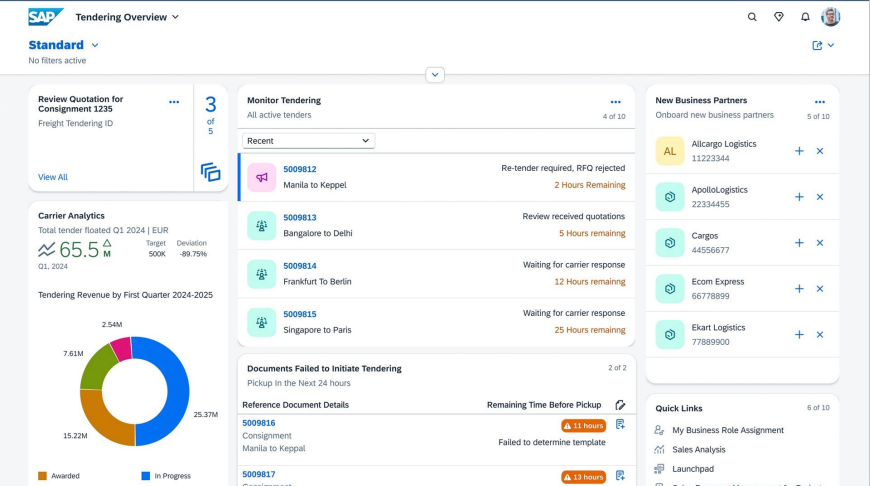
SAP SuccessFactors is the cloud HCM arm of SAP, commonly shortlisted at 2,000+ employee groups already running SAP ERP. It brings deep global compliance libraries but is famously heavy on Indian localisation. For a head-to-head view, see HROne vs SAP.
- ✅ Core: Employee Central, Recruiting, Performance, LMS, Compensation.
- 🇮🇳 PF/ESI: Yes, via partner localisation. Multi-state: Yes. Payroll: Via SAP Payroll or third-party.
- ✅ Built for: 2,000+ employee global Indian groups with SAP ERP already live.
- ❌ Skip if: You need to change a leave policy without raising a developer ticket.
- 💰 Quote-based, subscription starts during transition.
Reviews
“Customization requires third-party vendors, every change is costly. Extremely expensive for what it delivers. Ferrari price, Trabant value.”
— Janka Z. SAP SuccessFactors G2 – Verified Review
“The most basic functionality is missing or severely flawed. If I could, I would take back our decision to implement the software.”
— Verified User in Internet SAP SuccessFactors G2 – Verified Review
PeopleStrong, mobile-first with entity-charge friction
PeopleStrong is a Gurugram-based HCM with strong adoption across Indian manufacturing and services. It is one of the cleaner mobile experiences in the Indian market, especially for employee self-service. For a comparison, see HROne vs PeopleStrong.
- ✅ Core: Core HR, Payroll, Talent, Recruitment, mobile self-service.
- 🇮🇳 PF/ESI: Yes. Multi-state: Yes. Payroll: Yes.
- ✅ Built for: 500 to 2,000 employee Indian enterprises prioritising mobile adoption.
- ❌ Skip if: You want a desktop-first power-user console and flat PEPM without per-entity charges.
- 💰 Quote-based.
Reviews
“It has way too many features and the desktop version isnt very useful because of the multiple options to get 1 job done. It can be simplified further for a smoother desktop version experience.”
— Nikhil S. PeopleStrong G2 – Verified Review
ZingHR, blue-collar coverage with implementation risk
ZingHR is a Mumbai-based HCM popular in manufacturing, BFSI, and pharma for shop-floor and field-force workflows. For a feature comparison, see HROne vs ZingHR.
- ✅ Core: Workforce, Payroll, Performance, Learning, mobile attendance.
- 🇮🇳 PF/ESI: Yes. Multi-state: Yes. Payroll: Yes.
- ✅ Built for: Manufacturing and BFSI groups with shop-floor headcount and field-force attendance.
- ❌ Skip if: You expect a fast go-live or polished modern UX.
- 💰 Quote-based.
Reviews
“System implementation experience was horrible, in 6 months the implementation was barely completed to 40%. Support is never on time. Replies to emails get delayed by days if not weeks.”
— Sanmeet S. ZingHR G2 – Verified Review
“App simply doesnt work, countless tries to troubleshoot have be unfruitful. I cannot do anything on my mobile, be it apply for leaves or submit a reimbursement.”
— Piyush G. ZingHR G2 – Verified Review
BambooHR, strong in the US, weak on Indian multi-entity
BambooHR is a Utah-based SMB HRIS widely used by US-headquartered companies. Indian buyers consider it mostly when a US parent standardises the stack globally.
- ✅ Core: Employee database, Time-off, basic ATS, US-centric payroll.
- 🇮🇳 PF/ESI: No native support. Multi-state (India): Limited. Payroll (India): No.
- ✅ Built for: US-HQ companies operating a small Indian branch office.
- ❌ Skip if: You need Indian statutory payroll, FBP, or multi-entity PF/ESI codes.
- 💰 Per-employee annual, continuous price increases.
Reviews
“Shouldnt be used outside of the US… No option for adding international holiday calendars but US one is built-in.”
— Verified User in Computer Software BambooHR G2 – Verified Review
“Biggest issue is how much they have increased prices and continue to do so. They know that switching HRMS is painful.”
— Josh A. BambooHR G2 – Verified Review
Ramco HCM, legacy depth, modern UX gap
Ramco HCM is a Chennai-based platform strong in shop-floor, union payroll, and Middle East localisation.
- ✅ Core: Global payroll, Time and Attendance, Talent, shop-floor support.
- 🇮🇳 PF/ESI: Yes. Multi-state: Yes. Payroll: Yes (deep).
- ✅ Built for: Legacy Indian enterprises with complex union and shift-based payroll.
- ❌ Skip if: You want a modern mobile-first UX or low-code policy configuration.
- 💰 Quote-based, partner-delivered.
Karan’s take, bouquet vs garden
Working with 2,000+ HR teams, what I have felt is that mid-market Indian groups do not fail at features. They fail at the data-model choice they made three years ago.
A bouquet of modules, stitched together from three vendors, looks great on day one and wilts by month-end. A garden, built as one ecosystem on a single multi-entity data model, compounds. It is the difference between documenting your subsidiaries and actually driving their performance.
That is why HROne is positioned at #1 on this list. Not because every competitor is weak. Because when a CFO asks “how much are we saving across 12 entities this quarter”, only one architecture answers in rupees, not in PowerPoint. Book a demo to see the multi-entity engine live.
Run unlimited entities on one instance, billed only after go-live
Flat PEPM, no per-entity charge, dedicated prior-HR SPOC, and India’s first inbuilt ROI Dashboard for the board. See why 1,500+ Indian groups picked HROne.
Q2: How Did We Score These Multi-Entity HRMS Tools?
A CHRO at a Pune pharma group emailed me last February with a shortlist of four HRMS vendors and a single question: “They all claim multi-entity. How do I actually compare them?” She had 11 legal entities. Six states. A CFO asking about per-entity fees. A 90-day window to decide.
This rubric is the one I sent her. It is not theoretical. It is the filter that separates vendors who built for single-entity SMBs first from the ones who designed the data model for Indian group companies from day one. If you want a parallel buyer view, the how to choose HRIS HRMS software guide pairs well with this rubric.
The rubric, in plain English
Each platform was scored out of 100 across five operator-relevant dimensions. Together, they cover what actually breaks at month-end, not what looks nice on a feature grid.
| Dimension | Weight | What It Means in Plain English |
|---|---|---|
| Multi-Legal-Entity Architecture | 25% | Can every entity live in one database, or does each get its own clone? |
| India Statutory Depth | 20% | Does it handle separate PF and ESI codes, state-wise PT, and TAN-wise Form 16 out of the box? |
| Implementation Velocity | 20% | How fast does go-live happen, and does the vendor bill during setup? |
| Consolidated Reporting and ROI | 15% | Can the group CHRO see one headcount number across all entities? |
| User Reviews and Support | 20% | Do G2 and Clutch signals from the last 24 months back the sales pitch? |
How to use this rubric in your RFP on Monday
- Send the five dimensions to every shortlisted vendor. Ask each to self-score with evidence.
- Get two customer references for each vendor with similar entity counts. Browse customer success stories for examples.
- Score each vendor independently. Compare your score to their self-score. The gap tells you how honest the sales team is.
- Run a live demo with a group-level headcount query. If it takes more than three clicks, mark down architecture.
Why implementation velocity earns 20 points
Working with 2,000+ HR teams, what I have felt is that a multi-entity rollout slipping by a quarter burns more money than any missing module. Deloitte’s 2024 Global Payroll Benchmarking Survey found multi-entity payrolls have three times the compliance incidents of single-entity setups, and each extra month of delay compounds that risk. For pricing-side discipline, see HR software pricing transparency.
A vendor billing subscription from day one while implementation drags six months is not cheaper. You are paying for air.
The star bands
- ⭐ 0 to 20: fundamental gaps on Indian multi-entity payroll.
- ⭐⭐ 21 to 40: works only for single-entity or US-HQ setups.
- ⭐⭐⭐ 41 to 60: fine for one mid-market entity, strained at group scale.
- ⭐⭐⭐⭐ 61 to 80: solid multi-entity fit with known trade-offs.
- ⭐⭐⭐⭐⭐ 81 to 100: native single-instance, full statutory depth, documented go-live velocity.
Why HROne clears 5 stars in 2026
HROne is the only vendor on this shortlist that scores above 81 on all five dimensions at once: unlimited legal entities in one instance at no per-entity charge, separate PF and ESI codes with state-wise PT and TAN-wise Form 16 shipping out of the box, a 30-day go-live benchmark documented for MR DIY India, an inbuilt ROI Dashboard for the board, and a #3 rank on G2 across 1.17 lakh software products.
Every other shortlisted vendor lost points on at least one dimension, whether per-entity pricing, developer-led policy changes, or implementation drag past six months. The rubric is transparent. Re-score any vendor with this sheet and see where the weight lands.
Q3: What Is a Multi-Entity HRMS and Why Can’t Indian Group Companies Get a Single HR Report Today?
A CHRO at a 1,800-person TPG-backed group texted me last March asking a simple question: “How many people do we have?” Three subsidiaries. One LLP. Four payroll vendors. She could not answer for nine days. That is the integration debt most Indian group HR teams are carrying right now.
The definition, in plain English
A multi-entity HRMS stores multiple legal persons, Pvt Ltd companies, LLPs, JVs, and registered branches, under one org tree with entity-scoped policies, pay calendars, and permissions, while rolling analytics up to the group. Indian groups cannot produce a single HR report because 72% run more than one legal entity, but only 28% unify them inside one HCM, according to NASSCOM’s 2025 India HR Tech Landscape. The other 72% stitch a payroll vendor, a biometric tool, an ATS, and Excel together, so master data never reconciles. For an India-tuned engine, see the core HCM module.
A concrete Indian example
Imagine a mid-market holding company with three Pvt Ltd subsidiaries and one LLP. Each has a separate PAN, TAN, PF establishment code, ESI sub-code, and Shops and Establishments registration under the applicable state act. Each may sit in a different state with its own professional tax slab. The CHRO needs one consolidated headcount, attrition, and CTC view. The finance controller needs four separate payroll runs, four Form 16 populations, and four TDS challans. Both should come from the same instance. State-wise PT mechanics are explained in professional tax slab rates.
Entity, sub-entity, and business unit hierarchy
The clean hierarchy looks like this:
- Group (holding company): consolidated analytics, board reporting, and ROI roll-up.
- Legal Entity: separate PAN, TAN, PF code, ESI code, and S&E registration.
- Business Unit: functional split (retail, warehouse, corporate) inside an entity.
- Location: state-level instance for PT and labour-law application.
- Cost Centre: GL mapping to finance, used in the payroll journal.
The situation, complication, and question
Situation: Indian groups run parallel stacks because most HRMS platforms were built for single-entity SMBs first, then retrofitted for multi-entity. Complication: Gartner’s 2024 Market Guide for Integrated HR Service Management found enterprises with more than three legal entities run fragmented HR stacks that produce 15 to 20% payroll error rates and weeks of manual reconciliation each month. Question: if the modules are broadly similar across vendors, why can’t the group CHRO still get one clean report?
Why this is a data-model failure, not a feature gap
Answer: because most platforms fake multi-entity by cloning tenants. Each entity becomes a separate database. You pay per entity. You reconcile master data between entities by hand. A true multi-entity architecture stores all entities in one data model, with entity-scoped row-level security, so the same query that returns “my entity’s headcount” to an entity admin returns “group headcount” to the CHRO. The persona view for group HR heads sits at CHRO solutions.
Karan’s take, navigation is a design failure
What my experience of shipping HROne tells me is that Indian CHROs are not short on modules. They are short on one screen that surfaces every pending task across every entity. When you force a group HR head to juggle four tabs, four dashboards, and four email threads to close a confirmation letter, navigation itself becomes the bottleneck. The fix is not more features. It is ending the chase with a unified HR inbox.
Q4: How Does a Single-Instance Multi-Entity Data Model Actually Work?
Most vendors will tell you they support multi-entity. Ask them this instead: “Is it one database with entity-scoped access, or is each entity a cloned tenant?” The answer changes the economics, the reconciliation effort, and the board report entirely.
The architectural principle
Unify data in one instance using an entity-scoped model: employees roll up to a business unit, business units roll up to a legal entity, and legal entities roll up to the group. Apply role-based access control, the rule that defines who sees which records, so an entity admin sees only their people while the group CHRO sees everyone. Configure policies, pay calendars, and approval chains at the entity level, not the tenant level, so analytics consolidate automatically without duplicate master data. The underlying platform is described on the HR software page.
The five-step setup you can run on Monday
- Define the org tree. Write out Group, Legal Entity, Business Unit, Location, and Cost Centre as five formal levels. Do this on paper before touching any system.
- Map every entity to its statutory IDs. For each legal entity, lock down the PAN, TAN, PF establishment code, ESI sub-code, S&E registration, and applicable state PT slab. Compliance basics live in statutory compliance in payroll.
- Set RBAC at the entity level. Entity admin, payroll manager, and HR generalist roles see only their legal entity. Group CHRO and CFO see everything. Do not use tenant-level cloning to enforce this.
- Configure policies per entity. Leave types, pay calendars, FBP (Flexible Benefits Plan) baskets, and approval chains attach to the legal entity, not the tenant. A policy change in entity A must not leak into entity B. See leave management for entity-scoped leave configuration.
- Validate with a consolidated report. Run a group headcount by gender, grade, and entity on day one. If the number matches the sum of the four entity-level reports, the data model is working.
Single instance versus cloned tenant, side by side
| Dimension | True Single-Instance | Cloned Tenant (faux multi-entity) |
|---|---|---|
| Database | One, with entity-scoped RBAC | N databases, one per entity |
| Master data reconciliation | Automatic | Manual, at every month-end |
| Per-entity pricing | Flat, no extra charge | Per-entity fee typical |
| Consolidated analytics | One query | N queries, stitched in Excel |
| Inter-entity transfer | One workflow | Export, import, and reconcile |
| Implementation time per new entity | Days | Weeks |
Why this is an architecture decision, not a feature tick-box
Working with 2,000+ HR teams, what I have felt is that “multi-entity” on a sales slide and “multi-entity” in a data model are different things. Multi-tenant architecture patents from Workday, Oracle, and SAP SuccessFactors describe exactly this split, where true multi-tenancy isolates rows inside one schema, while legacy systems clone tenants and call it multi-entity. For a category-level primer, see cloud vs on-premises HR software.
Karan’s take on the real test
Most HRMS platforms fake multi-entity by cloning tenants. The real test is one data model with entity-scoped RBAC, and that is credible only from a team that actually built the engine, not licensed it. What my experience of shipping HROne tells me is this: when Asia Healthcare Holdings configured 20 pan-India units on a single instance with different state minimum wages, it worked because the architecture was designed that way from day one, not retrofitted after a sales call.
A quick sanity check for your RFP: ask every shortlisted vendor to demo a group-level headcount query and an entity-level query from the same screen, with RBAC enforced live. The ones that can do it in three clicks are single-instance. The ones that open a second browser tab are not. Book a demo if you want to see this run on a live multi-entity tenant.
Stop reconciling subsidiaries in Excel. Run them on one instance.
HROne configures unlimited legal entities, entity-scoped RBAC, and consolidated CHRO reporting on a single tenant, with subscription billed only after go-live.
Q5: Which HCM Software Supports Multi-Entity Payroll and Indian Statutory Compliance?
A payroll manager at a 1,200-person Mumbai holding once told me she ran three parallel Excel trackers every month just to reconcile PF codes across four subsidiaries. Three. For PF alone. That is the hidden cost of multi-entity payroll on a platform that was designed for a single entity first. For a deeper view on entity-wise payroll mechanics, see payroll software.
The short answer on vendor capability
HROne, Darwinbox, Ramco, SAP SuccessFactors (with localisation), and PeopleStrong natively support multi-entity Indian payroll: separate PF and ESI establishment codes, state-wise professional tax (PT), TAN-wise Form 16, entity-wise minimum wages under the Code on Wages 2019, and separate POSH Internal Committees. Keka, greytHR, and Zoho People rely on workarounds or paid add-ons. HROne is the only vendor on this list that charges no per-entity fee and bills subscription only after go-live. The compliance philosophy is detailed in statutory compliance in payroll.
Vendor capability matrix
| Vendor | Separate PF/ESI Codes | State-wise PT | TAN-wise Form 16 | Per-Entity Charges | Go-Live Billing |
|---|---|---|---|---|---|
| HROne | ✅ Native | ✅ Native | ✅ Native | ❌ None, flat PEPM | ✅ Yes |
| Darwinbox | ✅ Native | ✅ Native | ✅ Native | ⚠️ Often applies | ❌ Day-1 billing |
| Ramco HCM | ✅ Native | ✅ Native | ✅ Native | ⚠️ Applies | ❌ Day-1 |
| SAP SuccessFactors | ✅ Via localisation | ✅ Via partner | ✅ Via partner | ⚠️ Applies | ❌ Day-1 |
| PeopleStrong | ✅ Native | ✅ Native | ✅ Native | ⚠️ Applies | ❌ Day-1 |
| Keka | ⚠️ Workaround | ⚠️ Partial | ⚠️ Partial | ⚠️ Applies | ❌ Day-1 |
| greytHR | ⚠️ Limited | ✅ Yes | ✅ Yes | ⚠️ Applies | ❌ Day-1 |
| Zoho People | ❌ Weak | ⚠️ Via Zoho Payroll | ⚠️ Limited | ⚠️ Applies | ❌ Day-1 |
The India compliance matrix every multi-entity HRMS must clear
| Statute | Requirement | What the HRMS Must Do |
|---|---|---|
| Code on Wages, 2019 | Entity-wise minimum wage | Configure state-specific and entity-specific wage floors |
| EPF & MP Act, 1952 | Separate establishment code per entity | Multiple PF codes, UAN portability |
| ESI Act, 1948 | State-wise sub-codes | Per-entity ESI sub-code mapping |
| Income Tax Act, Sec 192 | TAN-wise Form 16 | Split Form 16 for transfers |
| Professional Tax (state) | State-specific slabs | Per-location PT calendar |
| Shops and Establishments (state) | Per-entity registration | Entity-wise returns |
| POSH Act, 2013 | Separate IC per establishment | Entity-level IC workflow. See POSH policy |
| Maternity Benefit Act, 1961 | Applies per establishment (10+) | Entity-level headcount trigger |
| Labour Welfare Fund (state) | State-wise contribution | Entity and state mapping |
| LWF annual filings | Per entity | Auto-schedule per entity |
Why per-entity pricing is a tax on growth
Working with 2,000+ HR teams, what I have felt is that per-entity pricing silently punishes every Indian group that acquires a new subsidiary. You pay for three entities on day one, then ₹X more for entity four the moment it goes live. What my experience of shipping HROne tells me is that this model was never HR-first. It was finance-first. We killed it inside HROne deliberately, flat PEPM, unlimited entities, no exceptions. Compare commercial models on pricing.
The Asia Healthcare Holdings vignette
Asia Healthcare Holdings, a TPG-backed group, configured 20 pan-India units with different state-applicable minimum wages on a single HROne instance. That configuration is traditionally “very difficult” to get right in standard systems, because each unit needed its own wage floor, its own PT slab, its own PF code, and a consolidated group view on top. The point is not the module list. It is that the engine treated every entity as a first-class object from day one. For sector context, see healthcare HR.
Q6: How Do You Move an Employee Between Subsidiaries and Absorb a Newly Acquired Entity in 30-60-90 Days?
A CHRO at a Bengaluru conglomerate once called me in April, three days before Form 16 generation, because their new acquisition had 180 mid-year transferees and nobody had split the Form 16 under Section 192(2). The tax team was ready to revolt. This is the file the SERP never writes, so here it is.
Part A: the inter-entity transfer playbook
An inter-entity transfer needs Form 16 splitting at the transfer date under Section 192(2), UAN porting to the receiving entity’s PF code, leave balance carry-forward with liability booked on the releasing entity, and probation reset only if treated as re-hire. Do it wrong, and the employee gets two mismatched Form 16s, the PF balance sits on the old UAN, and leave encashment becomes a finance dispute. Refresher: leave encashment.
The six-step transfer flow
- Initiate the transfer request in the HRMS with effective date and receiving entity.
- Tax treatment: close payroll on the old TAN up to the transfer date, open on the new TAN from day one, and generate two Form 16 parts under Section 192(2).
- UAN port: trigger the PF transfer from the releasing entity’s establishment code to the receiving entity’s code, keeping UAN continuous. Background reading on online PF withdrawal.
- Leave carry: transfer earned leave with provision booked on the releasing entity’s books, paid out or carried forward per policy.
- Offer letter with revised CTC on the new entity’s letterhead, signed before day one.
- Day-1 access: new payroll calendar, new policy manual, RBAC permissions re-mapped, and reporting manager updated. Tighten the experience with onboarding process.
⚠️ What most teams get wrong: they forget Part B of Form 16, they leave probation unchanged when it should reset, and they book the leave liability on the wrong entity. Finance finds out in August.
Part B: the 30-60-90 M&A absorption playbook
| Days 1 to 30: Stabilise | Days 31 to 60: Harmonise | Days 61 to 90: Consolidate |
|---|---|---|
| Master-data audit on acquired entity | Policy harmonisation (leave, FBP, appraisal) | Consolidated group reporting live |
| PF, ESI, PT, and TAN mapping locked | Pay-calendar merge to group cycle | GL mapping signed off with CFO |
| RBAC roles created | ROI Dashboard baseline captured | First group payroll runs clean |
| Payroll on acquired entity runs on old policy | Employee comms on new policy go out | Board-ready MIS shipped |
Where projects actually stall
Working with 1,500+ HR teams, what I have felt is that absorption projects do not stall on features. They stall on three things, every time:
- Master data: inconsistent employee IDs, missing PAN, and duplicate UAN across entities.
- GL mapping: the acquired entity’s chart of accounts does not match the group. Finance holds up payroll cutover.
- PF code migration: EPFO portal backlog on UAN transfers, not a platform issue but a sequencing issue.
Plan for these three on day one, not day sixty. That is the difference between a clean absorption and a three-quarter integration drag.
Q7: What Does a Group CHRO Dashboard Look Like and How Do You Choose a Multi-Entity HRMS Without Getting Burned?
I walked into a board review with a CHRO last August. Her CEO asked a single question: “How much did HR save us this quarter across the group?” She had no number. Not because there was no saving, but because her HRMS had no instrumentation to capture it. That is the gap this final section closes.
Part A: the group CHRO dashboard
A working group CHRO dashboard rolls up headcount, attrition, CTC, diversity ratio, and hiring velocity across entities, while keeping grievance counts, payroll exceptions, and statutory filings entity-local. The persona view sits on CHRO solutions.
Roll-up versus entity-local KPIs
| Roll-Up KPIs (Group View) | Entity-Local KPIs |
|---|---|
| Total headcount | Grievance counts |
| Attrition rate by grade | Payroll exceptions |
| CTC movement quarter-on-quarter | Statutory filing status |
| Diversity ratio | Entity-wise Form 16 issuance |
| Hiring velocity (days to fill) | Local labour audit findings |
| Lifetime hours saved (ROI Dashboard) | POSH IC caseload |
The MR DIY India story captures what this looks like in practice: after consolidating to a single instance, their payroll cycle dropped from 10 days to 5 to 6 days. Read the MRDIY case study. India’s first inbuilt ROI Dashboard then compared average HR salary against lifetime hours saved, giving the CEO a ballpark figure in rupees, not a deck. Quantify your own with the ROI calculator.
Part B: the 25-criteria buyer checklist
Group into five buckets. Score each out of 5. If your shortlisted vendor scores below 4 on any bucket, keep looking. Pair this with how to choose HRIS HRMS software.
- Architecture: single-instance data model, entity-scoped RBAC, unlimited entities, OU hierarchy depth, and front-end configurator.
- Compliance: separate PF and ESI codes, state-wise PT, TAN-wise Form 16, POSH IC, and Maternity Act trigger.
- Implementation: average go-live, SPOC model, prior-HR consultants, data-migration support, and parallel-run support.
- Pricing: flat PEPM, no per-entity charge, no lock-in, go-live billing, and transparent AI add-ons.
- Support: phone, email, and SPOC, 24-hour turnaround, published NPS, and knowledge base depth.
Four RFP questions to ask every vendor
- Does subscription start on purchase or after go-live?
- Is pricing per employee or per entity?
- Can a leave policy be changed in the front end, or does it need a developer?
- How many legal entities can run in one instance without extra charges?
⚠️ Red-flag sidebar: multi-year lock-in, day-1 subscription billing during a six-month implementation, developer-only policy configuration, per-entity fees buried in the MSA, and a project manager who has never run payroll. For a buyer-side primer on traps, read HRIS buyer pitfalls.
Reviews from the field
“HROne centralizes all tasks like tracking attendance and handling employee records, which saves time and reduces errors… I love the automated payroll. Juggling spreadsheets was always a nightmare.”
— John C. HROne G2 – Verified Review
“Bad implementation experience, bad UI UX, configurations getting broken in production on its own due to product deployments, terrible customer service. Basically everything.”
— Verified User in Computer Software Darwinbox G2 – Verified Review
“We started working with Keka HRMS in August, and to this day, we have been unable to implement the tool in our company due to their consistently delayed responses and poor coordination.”
— Divya P. Keka G2 – Verified Review
Cockpit, not directory
What my experience of shipping HROne tells me is this: legacy systems build a directory of your subsidiaries. The right platform builds a cockpit for their performance. Subscription after go-live was a founder-led decision because procurement risk kills mid-market deals faster than any feature gap.
If the vendor you are evaluating cannot answer the four RFP questions above in one email, that is the signal. Keep looking. Book a demo if you want to test these four questions live on a multi-entity tenant.
Show your CEO the savings, in rupees, across every entity
HROne’s inbuilt ROI Dashboard, single-instance multi-entity engine, and prior-HR onboarding SPOC make consolidated CHRO reporting board-ready from day one.
References
Research Papers
- Deloitte. “Global Payroll Benchmarking Survey 2024” Deloitte Consulting, 2024.
- NASSCOM. “India HR Tech Landscape 2025” NASSCOM Research, 2025.
- Gartner. “Market Guide for Integrated HR Service Management” Gartner Research, 2024.
- SHRM India. “State of HR Technology 2025” SHRM India Research, 2025.
Patents
- Patent US 8,438,654 B1. Workday Inc. “Multi-tenant data architecture.” Assignee: Workday Inc. Filed: September 2012.
Official Docs / Indian Statutes
- Ministry of Labour and Employment, Government of India, “The Code on Wages, 2019,” Gazette Notification, 8 August 2019.
- Employees’ Provident Funds and Miscellaneous Provisions Act, 1952, EPFO, Government of India. “EPF & MP Act, 1952.”
- Central Board of Direct Taxes, “Income Tax Act, 1961, Section 192 and Form 16 issuance rules,” Ministry of Finance.
- HROne. “Multi-Legal-Entity Configuration Documentation” Published: 2026.
- HROne. “Asia Healthcare Holdings Multi-Entity Configuration Case” Published: 2025.
Blogs
- G2. “Best HR Software 2026, Customer Satisfaction Rankings.” Published: Winter 2026 Grid Report.













 Secures Top Spot in
