

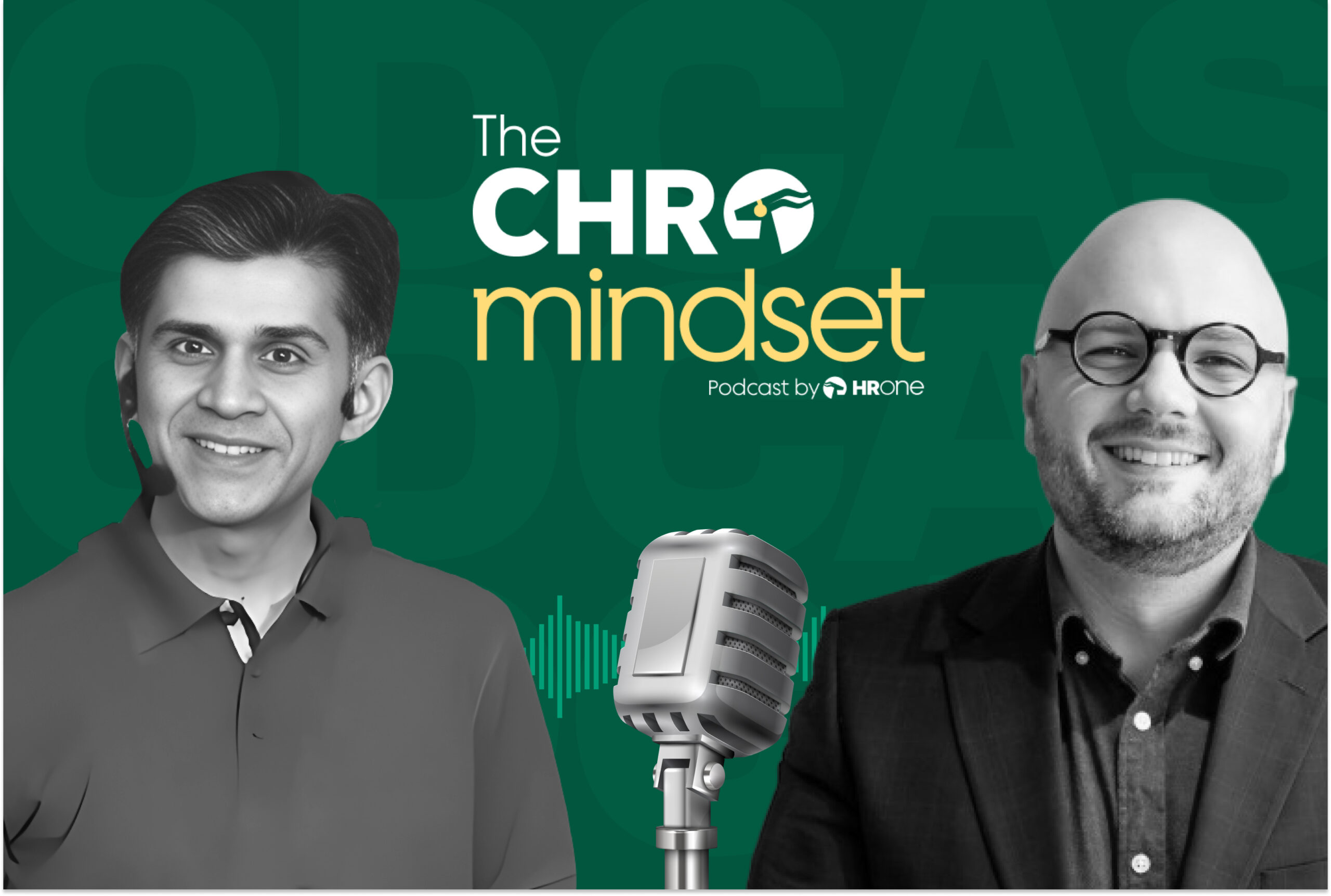


In this episode, Dieter Veldsman delivers a gentle reality check (the kind that stings a little). The world of work isn’t just evolving; it’s doing a full system upgrade, and the old operating manual isn’t loading anymore.
From AI reshaping decisions to skills outgrowing job titles, the conversation unpacks why keeping things “as is” is the riskiest strategy of all.
This isn’t about tweaking processes or renaming functions. It’s about stepping up, rethinking the role, and deciding whether to lead the change… or attend meetings about it later.
Watch this episode if you are:
If you’re an HR manager, leader, or a CHRO who’s dealing with:
- Work that feels “strategic” but somehow still circles back to operations
- AI sounding exciting, but also a little unclear on where you fit in
- Plenty of experience, but no clear direction on what’s next for your growth
- If you want to listen to the full episode, then switch now to The CHRO Mindset Podcast on Spotify.
Top Three Insights You Will Find in This Episode
1. Start Shaping Work, Not Just Supporting It
The expectation has moved beyond supporting business strategy to actively designing how work gets done. This means stepping into workforce planning, capability building, and organizational design not just execution. Staying focused only on operations may keep things running, but it limits long-term influence.
To remain relevant, the shift has to be intentional: move closer to business decisions, challenge existing ways of working, and take ownership of how teams are structured and perform.
The role is no longer about enabling from the sidelines. It’s about stepping in early and shaping outcomes where they actually begin.
2. Take Ownership of AI, Don’t Just Adopt It
AI is already changing how decisions are made and how work flows across organizations. The question is not whether to use it, but how deeply to own its impact. Simply implementing tools is not enough.
The real value comes from guiding how AI is applied to people, performance, and productivity. This requires understanding both the technology and the business context. Step into conversations early, define use cases, and ensure AI is solving meaningful problems.
If this ownership is not taken, decisions around AI will move elsewhere and so will the influence that comes with them.
3. Build the Skills You Expect from Others
As organizations move toward skills-based models, the same standard must be applied internally. Relying only on experience is no longer sufficient in a fast-changing environment.
The focus now needs to shift toward building structured capabilities: business acumen, data literacy, digital understanding, and critical thinking. These are not future skills; they are current requirements. Investing in them strengthens both credibility and effectiveness.
The ability to guide others depends on practicing the same discipline. Start by identifying gaps, prioritizing development, and making skill-building a continuous effort, not a one-time initiative.
Most HR professionals fear listening to the bold truths, but if you are brave enough to give it a face down, then read this latest read that uncovers 5 life-changing insights for HRs.
No Prep. Only Perspectives
Q1: What’s the biggest problem with HR decisions today?
Dieter Veldsman: Too many are still driven by instinct, not evidence.
Q2: One shift HR can’t ignore right now?
Dieter Veldsman: Moving from process ownership to shaping how work actually happens.
Q3: AI in one line?
Dieter Veldsman: A forcing function—it exposes where work is broken.
Q4: Why do good people strategies fail?
Dieter Veldsman: They don’t survive real-world complexity and constraints.
Q5: What holds HR back the most?
Dieter Veldsman: The gap between what it knows and what it actually does.
Q6: One thing HR needs to build urgently?
Dieter Veldsman: Data literacy with business context.
FAQ: How to shift toward the AI the right way
1. What is the biggest challenge in HR decision-making today?
The biggest challenge in HR decision-making today is the continued reliance on intuition over evidence. While experience plays an important role, many critical decisions such as hiring, promotions, and performance evaluations are still influenced by assumptions, biases, or incomplete information.
This can lead to inconsistent and sometimes unfair outcomes. As organizations become more complex, this approach becomes less effective. The shift toward data-driven HR is essential to improve accuracy, transparency, and impact.
By combining human judgment with reliable data and analytics, HR teams can make more informed decisions that align better with both business goals and employee needs.
So, what are the takeaways for you?
- Audit where decisions rely only on instinct
- Start using basic workforce data before advanced analytics
- Combine experience with evidence, not replace it
2. How is AI transforming HR and people management?
AI is transforming HR and people management by fundamentally changing how decisions are made and how work is executed. It enables automation of repetitive tasks such as resume screening, payroll processing, and employee queries, freeing up time for more strategic activities.
Beyond efficiency, AI provides deeper insights through advanced analytics, helping HR teams identify trends in hiring, engagement, and attrition. This allows for more proactive and informed decision-making.
However, the real impact of AI lies in how it reshapes roles and responsibilities, pushing HR to move beyond administration and take a more active role in designing better work systems and experiences.
Looking for takeaways? Here they are!
- Start with one high-impact use case (e.g., hiring or payroll)
- Use AI for insights, not just automation
- Redesign workflows instead of layering AI on top
3. Why do HR strategies often fail in organizations?
HR strategies often fail not because they are poorly designed, but because they struggle to translate into real-world execution. Many strategies look strong in theory but do not account for organizational complexity, competing priorities, or practical constraints.
Lack of alignment with business goals, limited leadership buy-in, and insufficient use of data further weaken their impact. Additionally, there is often a gap between what HR knows should be done and what actually gets implemented.
To succeed, HR strategies must be grounded in reality, supported by evidence, and adaptable to changing conditions, ensuring they can be effectively executed within the organization.
Here are the takeaways for you:
- Stress-test strategies against real-world constraints
- Align closely with business priorities early
- Focus on execution, not just planning
4. What skills are essential for the future of HR professionals?
The future of HR requires a broader and more integrated skill set than ever before. In addition to traditional expertise, HR professionals need strong business acumen to understand organizational priorities and drive meaningful impact.
Data literacy is becoming critical, enabling HR to interpret analytics and make evidence-based decisions. Digital and AI-related skills are also increasingly important as technology reshapes the workplace. Alongside these, critical thinking and problem-solving abilities help navigate complex challenges.
The shift toward skills-based organizations means HR must not only advocate for these capabilities but also actively build and demonstrate them to remain effective and credible.
These are the takeaways you are looking for:
- Identify your top 2–3 skill gaps and start there
- Build data and business understanding alongside HR expertise
- Make learning continuous, not occasional
5. What does it mean to be a data-driven HR function?
A data-driven HR function uses evidence and analytics as the foundation for decision-making rather than relying primarily on intuition or past experience. This involves collecting and analyzing workforce data related to hiring, performance, engagement, and retention.
By leveraging these insights, HR can identify patterns, predict trends, and make more informed decisions that improve organizational outcomes. Being data-driven also means integrating data into everyday processes, from talent acquisition to workforce planning.
It enhances transparency, reduces bias, and increases accountability. Ultimately, it allows HR to move from a reactive role to a proactive, strategic function that contributes directly to business success.
Takeaways for you:
- Start tracking a few key metrics consistently
- Use data in everyday decisions, not just reports
- Focus on insights that drive action, not just dashboards








 Secures Top Spot in
