







Most HR systems didn’t fail because they were unfair.
They failed because they were too uniform.
Equality feels safe. It reduces noise. It avoids complaints.
But as organizations scale, sameness starts hiding performance gaps instead of solving them.
The debate around HR equity vs equality is no longer philosophical. It’s operational. And shifting toward equity requires more than policy edits, it requires leadership courage.
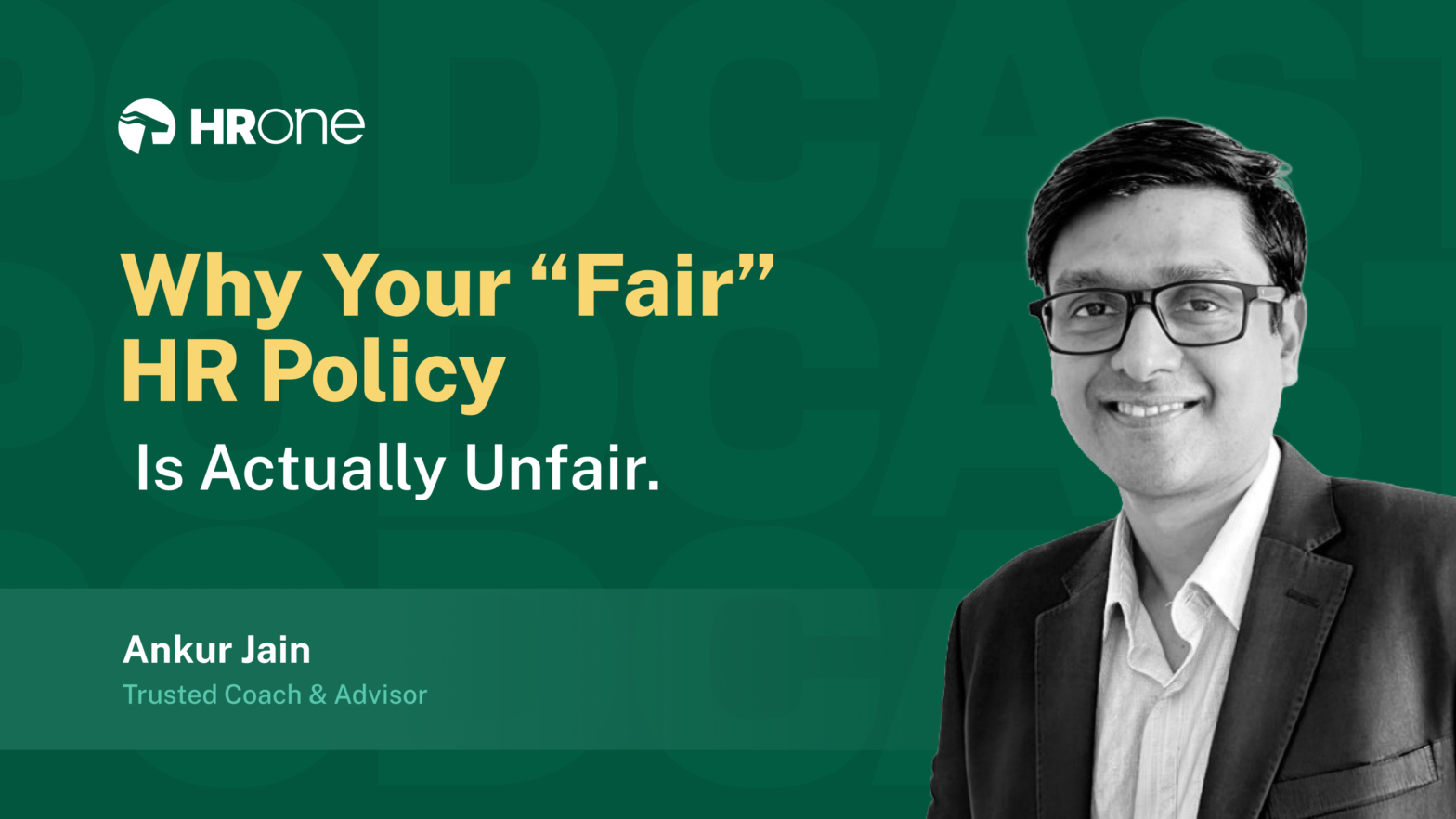
And something similar was decoded by Ankur Jain, Head of HR, Mosaic Wellness, who recently was welcomed as a guest on The CHRO Mindset Podcast. And this read is inspired by his insights on why equity is more important than maintaining equality in HR.
So, if you are ready to make the shift that’s big and much needed in HR in 2026, then let’s get it going here:
Bu wait, if you are up to for the full-fledges episode on Spotify, then jump on, here’s the link.
1.Rethink HR Equity vs Equality: Redefine What “Fair” Mean
In many organizations, “fair” quietly means “everyone gets the same.”
Same increment percentage.
Same learning allocation.
Same promotion timeline.
But fairness in a business context should reflect contribution, not comfort.
The first real shift in the HR equity vs equality conversation is this: say out loud that contribution is uneven.
Some employees generate disproportionate value. Some roles carry strategic weight.
Some teams are mission-critical at certain stages of growth.
If outcomes don’t reflect that, the system slowly loses credibility.
Start with reflection:
- Are we rewarding effort or measurable outcomes?
- Do our policies protect low performance?
- Would our top contributors say this system differentiates meaningfully?
Redefining fairness is uncomfortable. But until fairness is tied to impact, equity remains a theory.
2.Embed Equity in HR Practices Instead of Defaulting to Sameness
Strong Equity in HR practices don’t appear automatically. They are designed intentionally.
One of the biggest equality habits in HR is dividing resources evenly because it “feels balanced.” Learning budgets split by headcount. Increment pools distributed proportionally. Promotions paced uniformly.
It looks clean. It ignores strategy.
Equity asks a different question:
Where will additional investment create future value?
That may mean:
- Investing more in innovation-heavy teams during expansion
- Fast-tracking high-impact contributors
- Allocating development budgets based on strategic relevance
This doesn’t mean ignoring others.
It means aligning people investment with business direction.
If someone challenges a differentiated decision, equity holds up when leaders can explain the reasoning calmly and clearly.
Without clarity, differentiation feels biased.
With clarity, it feels strategic.
3.Modernize Fair Performance Management in HR for Uneven Impact
The world of work is becoming increasingly asymmetric.
AI tools, automation, and digital leverage are amplifying output differences. A high performer using the right tools can now generate significantly more value than before.
This is why Fair performance management in HR cannot rely on routine cycles and equal increments.
Equal growth paths in unequal contribution environments eventually feel unfair to top performers.
To strengthen performance credibility:
- Define role-specific impact metrics
- Separate potential from proven results
- Calibrate ratings across teams
Ensure reward distribution reflects performance distribution
Fair performance management is not about being harsh. It’s about being honest.
If increments and promotions are mostly uniform, the organization is signaling that performance variation doesn’t matter.
And that message, over time, weakens culture.
5.Maintain Transparency: Stabilize HR Equity vs Equality Decisions
Differentiation without transparency is dangerous.
Differentiation with transparency builds trust.
In the ongoing shift from HR equity vs equality, transparency becomes the anchor.
Employees don’t always expect identical outcomes. But they do expect clarity.
That means:
- Clear promotion criteria
- Defined performance expectations
- A visible compensation philosophy
Managers trained to explain decisions with evidence
The simplest test of strong Equity in HR practices is this:
If someone questions a promotion or increment, can the reasoning be defended without hesitation?
If leaders avoid the conversation, equality feels safer. But transparency is what makes equity sustainable.
5.Make Asymmetry Intentional: The Leadership Side of Equity in HR Practices
Here’s the truth most organizations avoid. Leaders already create asymmetry.
They give more access to certain employees.
They offer stretch assignments selectively.
They trust some individuals with bigger risks.
The issue in the HR equity vs equality debate isn’t whether asymmetry exists. It’s whether it’s conscious.
When access and sponsorship are based on familiarity, bias creeps in.
When they’re based on measurable impact, equity strengthens.
To make asymmetry intentional:
- Review who gets high-visibility projects
- Examine leadership time allocation
- Align succession planning with performance data
Ensure exposure reflects contribution, not comfort.
Intentional asymmetry is equity. Unexamined asymmetry is favoritism.
The Deeper Shift Behind Equity in HR Practices
The move from equality to equity isn’t about being aggressive. It’s about being precise.
Equality protects harmony. Equity protects performance.
As organizations evolve, the difference between the two becomes sharper.
If your performance system doesn’t differentiate meaningfully, your top performers will notice.
If your resource allocation doesn’t reflect strategic value, your business will feel it.
The future belongs to organizations that understand this:
- HR equity vs equality is a leadership choice
- Sustainable Equity in HR practices requires transparency
- Strong Fair performance management in HR must reflect real impact
The final question for HR leaders isn’t whether someone might feel uncomfortable.
It’s whether your systems truly reflect the value people create.
That’s where equality ends. And equity begins.

















 Secures Top Spot in
